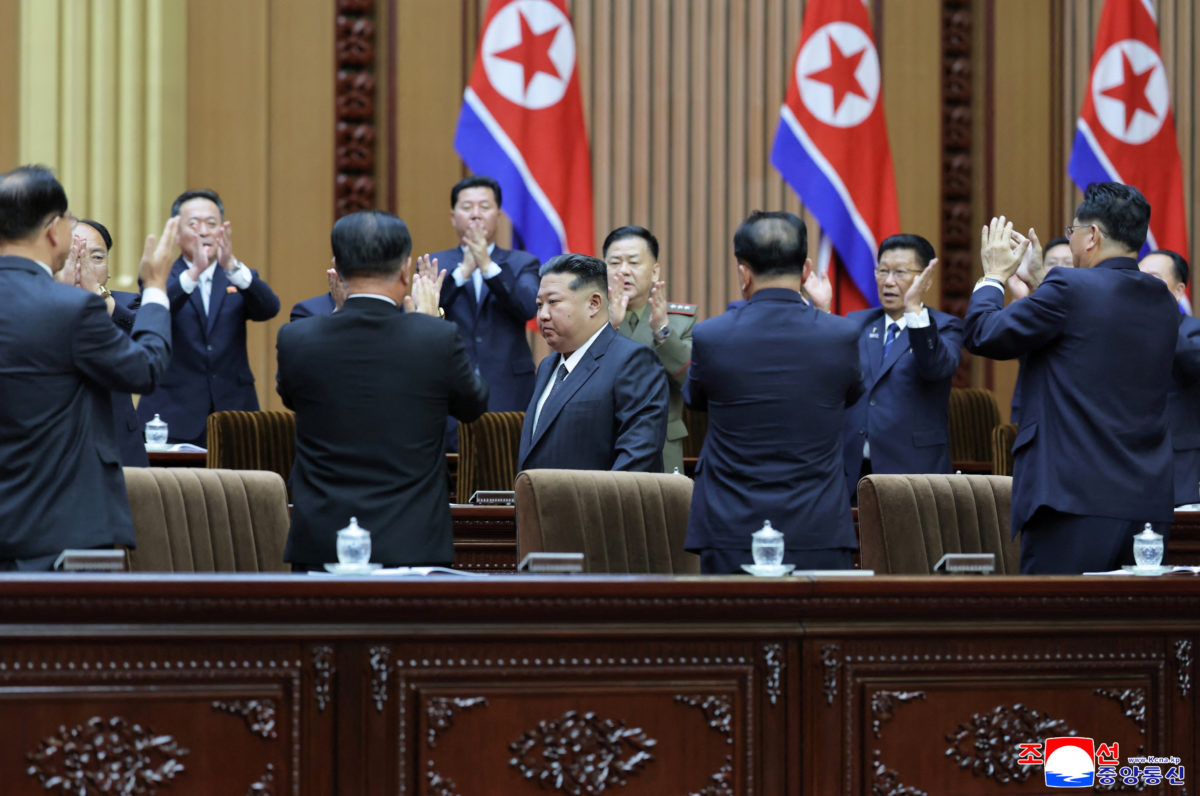
North Korea’s Kim Yo Jong dismissed U.S. denuclearization demands as an “anachronistic dream” on Sunday, hours before Chinese President Xi Jinping arrived for his first visit to Pyongyang in seven years. The statement, delivered by Kim Jong Un’s sister, marked a defiant escalation as North Korea accelerates nuclear expansion—while China and Russia maneuver to shape the region’s future. Xi’s trip, analysts say, is designed to counter Pyongyang’s growing ties with Moscow, even as Kim seeks international recognition for his nuclear arsenal.
Kim Yo Jong’s Nuclear Defiance: Why the U.S. Push Is Now “Dead on Arrival”
Kim Yo Jong’s Sunday statement—delivered via North Korea’s state media—was a direct rebuttal to U.S. diplomacy, framing denuclearization as a relic of a failed 2019 Trump-Kim summit. “The U.S. assertion to backbite the status of the DPRK as a nuclear weapons state has no legally binding force,” she declared, using the official abbreviation for North Korea. Reuters reported that she dismissed as “false information” a U.S. claim that President Donald Trump and Chinese leader Xi Jinping had agreed to denuclearization goals during their Beijing summit last month.
Her language was blunt: “Some officials in the United States have failed to wake from their escapist and anachronistic dream.” The phrase echoed North Korea’s long-standing stance—one that gained urgency after Kim Jong Un’s 2019 diplomacy with Trump collapsed. Since then, Pyongyang has shifted from negotiations to exponential nuclear expansion, as Kim himself announced during a visit to a new uranium enrichment plant last week. “North Korea will bolster the country’s nuclear forces at an exponential rate,” he stated, according to AP reporting. The plant’s disclosure—believed to be a uranium enrichment facility—was timed to signal Pyongyang’s determination ahead of Xi’s arrival.
Xi Jinping’s Mission: Reasserting China’s Influence Over North Korea
Xi’s visit to Pyongyang, announced Friday, is his first since 2019—a deliberate move to counterbalance North Korea’s deepening ties with Russia. While Kim has sent troops and weapons to support Moscow’s war in Ukraine, China remains North Korea’s largest trading partner and aid provider. Analysts, including William Yang of the International Crisis Group, warn that Xi’s trip is a calculated effort to reassert Beijing’s influence over Pyongyang. “As North Korea builds closer ties with Russia, China seeks to use Xi’s trip to safeguard its strategic interests in northeast Asia,” Yang told AP News.
The timing is critical. Xi hosted both Trump and Russian President Vladimir Putin in Beijing within weeks of each other—a diplomatic balancing act that underscores China’s role as mediator. Yet North Korea’s nuclear ambitions complicate the picture. While Chinese Foreign Ministry spokesperson Mao Ning emphasized “sound and stable” relations, she made no mention of denuclearization, a tacit acknowledgment that Pyongyang’s nuclear status is now a fait accompli. “The traditional friendly and cooperative relations between China and the DPRK have continued to develop,” Mao said, but the absence of pressure on Kim’s arsenal suggests Beijing is prioritizing stability over disarmament.
The Nuclear Timeline: How Kim’s Arsenal Became “Irreversible”
North Korea’s nuclear trajectory has accelerated since 2019, when Trump’s diplomacy stalled.
- 2019: Trump-Kim summit collapses; North Korea halts negotiations, shifts to weapons expansion.
- June 2026: Kim visits uranium enrichment plant, announces plans to increase missile production capacity 2.5 times over five years.
- June 2026: Kim Yo Jong’s statement dismisses U.S. denuclearization demands as “false information.”
- June 2026: Xi Jinping arrives in Pyongyang for first visit since 2019.
The plant’s disclosure is particularly significant. While North Korea has not confirmed it’s an enrichment facility, experts say its purpose is clear: to produce material for nuclear bombs at an exponential rate. Kim’s visit to the site, where he called for “steadily beefing up the nuclear war deterrent for self-defense,” signals that Pyongyang views its arsenal as non-negotiable. “This is an irreversible final conclusion to be carried out unconditionally,” Kim Yo Jong stated, framing the expansion as a response to U.S.-South Korea “ceaseless arms build-ups.”
What’s Next? The Stakes for China, the U.S., and Kim’s Gambit
Xi’s visit will likely focus on economic assistance—something Pyongyang desperately needs—but denuclearization is off the table. Analysts predict China will avoid direct pressure on Kim, instead offering aid in exchange for limited cooperation on regional stability. Meanwhile, the U.S. faces a dilemma: its demand for denuclearization is now publicly rejected by North Korea, and its leverage has eroded. Kim’s strategy is clear: force international recognition of his nuclear status before engaging in arms reduction talks.
The bigger question is whether China can deliver. With Russia providing military support and the U.S. isolated diplomatically, Pyongyang has few incentives to compromise. “Kim wants international recognition as a nuclear state so he can demand the lifting of sanctions,” one expert told AP. The next 30 days will reveal whether Xi’s trip shifts the balance—or whether North Korea’s nuclear ambitions become permanent.
The stakes couldn’t be higher. If Kim succeeds in cementing his nuclear status, the region’s security architecture will fracture further. China’s role as mediator may prove decisive—but only if Beijing is willing to challenge Pyongyang’s red lines. For now, the message from Kim Yo Jong is unmistakable: the U.S. dream of denuclearization is dead.
