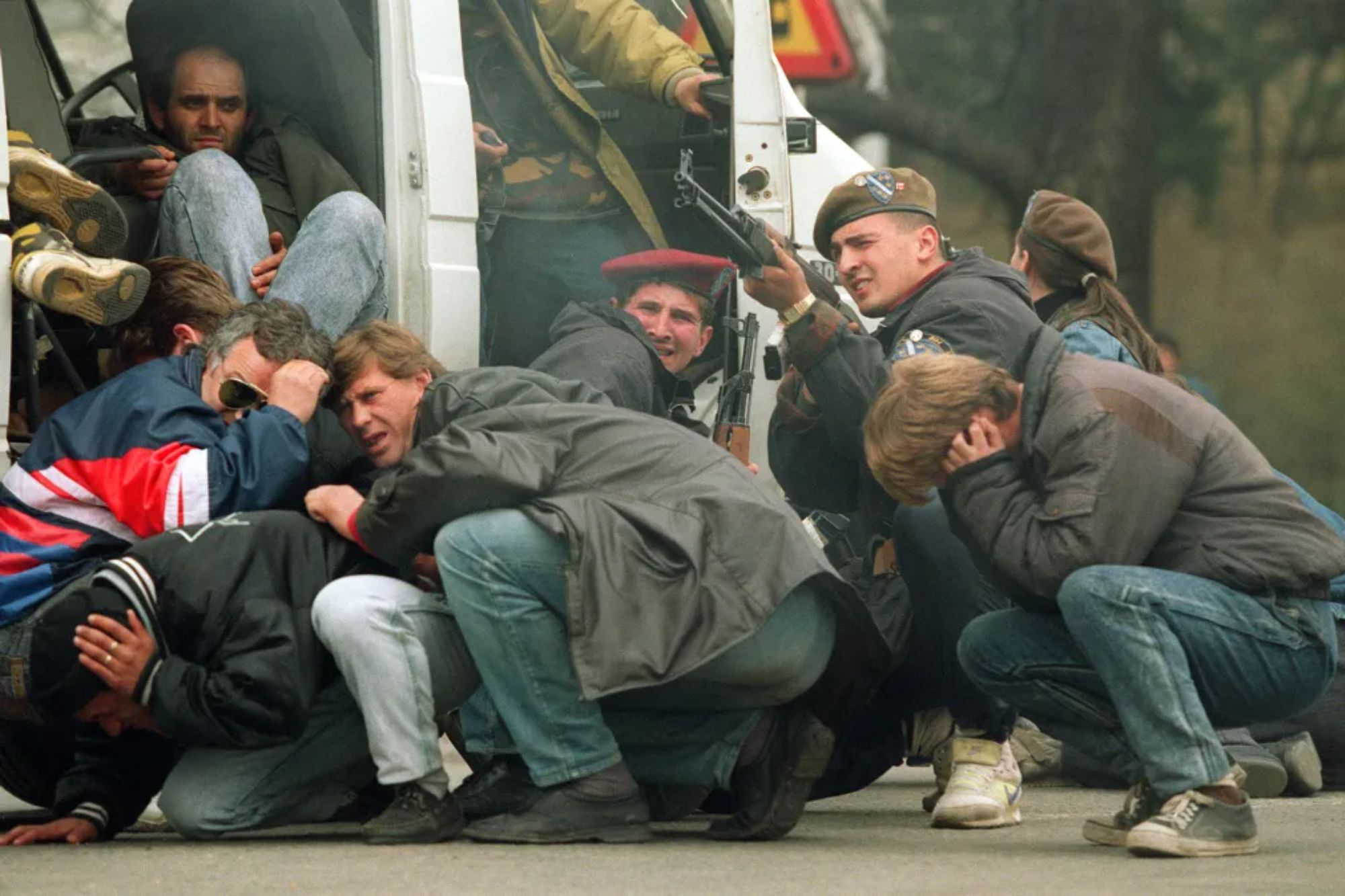
An Italian aristocrat is under investigation for allegedly participating in the “Sarajevo Safari” killings, where wealthy foreigners paid to shoot civilians during the Bosnian war, according to reports. The suspect, from a Milanese family, is accused of joining Serbian snipers in the 1990s to target Muslims, with investigators seizing a photo and silencer linked to the case.
Alleged Role of the Aristocrat and His Circle
The unidentified man, described as an aristocrat with a passion for military weaponry, allegedly traveled to Sarajevo during the 1992-1996 siege to “hunt” civilians, according to investigative journalist Ezio Gavazzeni. A witness reported that the man boasted about his “safari” to friends, claiming he was accompanied by others who “spent the weekend… being snipers and shooting Muslims,” Gavazzeni told nypost.com. His ex-partner provided police with a photo of a permit used to enter war zones and tally sheets of alleged kills, though the man’s identity remains undisclosed.
Italian prosecutors have questioned four suspects linked to the “human safaris,” with one home raided in Alessandria, 60 miles south of Milan, where a silencer was recovered. The suspect’s alleged associates included individuals from Germany, France, and the UK, as noted by former Serbian tank unit volunteer Aleksandar Licanin, who told nypost.com that the foreigners “wore expensive leather jackets” and were “helped to find targets” at the Jewish cemetery.
Historical Context: The Siege of Sarajevo
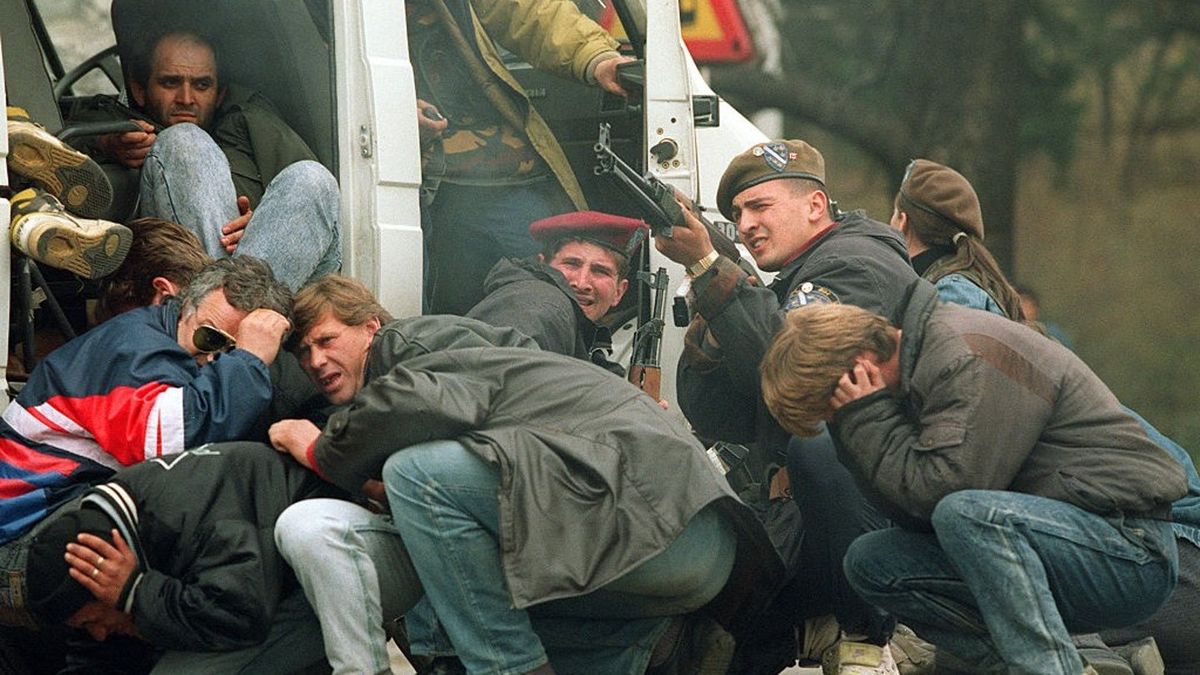
The Siege of Sarajevo, which lasted from April 1992 to February 1996, remains the longest siege of a capital city in the history of modern warfare. During this period, the city was encircled by the Army of Republika Srpska (VRS). Civilians within the city were subjected to constant shelling and sniper fire from surrounding hills. The International Criminal Tribunal for the former Yugoslavia (ICTY) later established that the campaign of sniping and shelling was intended to spread terror among the civilian population. The “Sarajevo Safari” allegations represent a grim, specific subset of these broader war crimes, suggesting that the conflict was not only a site of political and ethnic violence but also a destination for individuals seeking to engage in extrajudicial killing for sport.
Testimonies and the 1993 SISMI File
A critical piece of evidence emerged from a file opened in 1993 by Sarajevo’s secret services (SISMI), which documented five Italians intercepted on the hills around the city. Ezio Gavazzeni, who first uncovered the file, stated that “there were set rates” for targeting civilians, with prices varying by age and gender. For instance, “100 million lire [£45,000] for a child or young girl; 70 million [£30,000] for a woman; 50 million [£22,000] for a man; and just under 20 million [£9,000] for a very elderly person,” Gavazzeni told ladbible.com. These rates were corroborated by a Croatian journalist’s investigation, as cited in a ladbible.com article.
The ex-wife of one suspect described her partner’s nightmares over “the people he’d murdered,” according to ladbible.com. She also claimed he had “no remorse” and described the “safaris” as a “thrill.” Meanwhile, a file from 1993, confirmed by three testimonies, suggests the phenomenon was not isolated but part of a documented pattern, as reported by ladbible.com.
Legal and Diplomatic Implications
The investigation into the “Sarajevo Safari” highlights the ongoing efforts to address war crimes committed during the breakup of Yugoslavia. While the ICTY in The Hague concluded its work in 2017, domestic courts in Bosnia and Herzegovina and other nations continue to pursue leads regarding atrocities. The involvement of foreign nationals in the conflict has long been a subject of scrutiny, with international volunteers appearing on various sides of the front lines. The current Italian probe underscores the difficulty of prosecuting crimes that occurred decades ago, particularly when evidence relies on historical intelligence files, such as those from SISMI, and witness testimonies that have only surfaced years after the events.
Seized Evidence and Ongoing Investigations
Italian police seized a photo and silencer during a raid in Alessandria, which they believe could link to the “weekend snipers” who targeted civilians from the mountains during the Bosnian war. The photo, showing a suspect in uniform, is believed to be from Bosnia and Herzegovina, while the silencer was found during the search, according to vijesti.me. The suspects, aged 64 to 80, have denied the charges, but prosecutors allege they were involved in murders of women, the elderly, and children between 1992 and 1995.
The investigation is currently being managed by Italian authorities who are working to verify the authenticity of the “tally sheets” and permit documents provided by witnesses. As legal proceedings advance, the focus remains on whether these individuals can be held accountable for specific acts of murder, given the challenges of establishing jurisdiction and gathering physical evidence from a conflict zone that has been inactive for nearly three decades.
Find more reporting in our World section.
