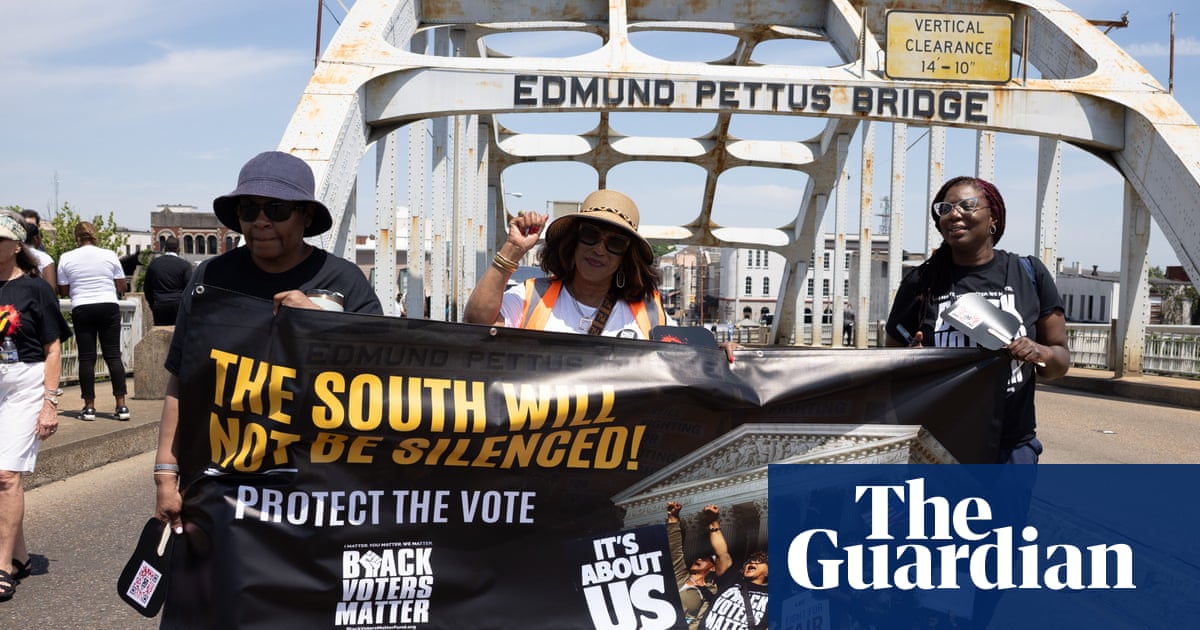
Alabama’s attorney general filed an emergency appeal with the U.S. Supreme Court on Wednesday, May 27, 2026, seeking to use a congressional map that dilutes Black voting power in the state’s upcoming midterm elections—despite a federal court ruling that the plan violates the Constitution. The move comes as the Supreme Court’s recent gutting of the Voting Rights Act has emboldened Republican-led redistricting efforts nationwide, with Alabama’s case now testing the limits of the high court’s new precedent.
How the Alabama Map Became a Flashpoint in the Voting Rights Fight
The Alabama case is the first major test of how far the Supreme Court’s April ruling in Louisiana v. Callais will allow states to redraw congressional districts with racial intent. In that decision, the Court struck down a Black-majority district in Louisiana while leaving open the possibility that maps drawn to intentionally discriminate could still be challenged—though proving such intent is now nearly impossible. Alabama’s Republican leadership argues that its 2023 map, which creates just one majority-Black district in a state where Black residents make up 27% of the population, does not discriminate. Federal judges disagreed, calling the plan “intentionally discriminatory” and ordering Alabama to use a court-drawn map with two majority-Black districts for the 2026 elections. The conflict centers on a map approved by Alabama’s GOP-controlled legislature in 2023 but never used. That plan, which would give Republicans a 6-1 advantage in Alabama’s seven congressional districts, was blocked by a three-judge panel in May 2026 after the judges determined it violated the Constitution by diluting Black voting power. The panel’s decision—issued just days before Alabama’s primary—forced the state to revert to a court-ordered map that created two districts where Black voters hold a majority or near-majority. Democrats, who have won both of those districts in recent elections, celebrated the ruling as a victory for fair representation.Yet Alabama’s attorney general, Steve Marshall, framed the dispute as a matter of legislative authority. “We again cannot understand the 2023 Plan as anything other than intentionally discriminatory,” the federal judges wrote in their ruling, a sentiment Marshall dismissed in a statement. “In my mind, it is not a matter of whether we win this case, only when,” he said, signaling confidence the Supreme Court would side with the state.

The Supreme Court’s Role: A Test of Callais and the Purcell Principle
Alabama’s emergency appeal to the Supreme Court hinges on two legal doctrines: the Court’s recent Callais decision and the Purcell principle, which bars courts from altering election rules too close to a contest. The state argues that the lower court’s ruling—issued just days before the May 6 primary—violated Purcell by upending the map too late. “A stay is warranted so that Alabama is not again precluded from using its legislatively enacted 2023 Plan based on a decision that defies Callais, manipulates the Purcell principle, and offends the Constitution’s promise of equal protection for all,” Alabama’s filing stated. The Callais ruling, which weakened the Voting Rights Act by making it harder to prove racial gerrymandering, has already reshaped redistricting battles across the South. In Alabama, the Supreme Court’s decision to revisit the case could either reinforce the state’s argument that its map is lawful or force it to adopt a more inclusive plan—one that could shift political power in a state where Democrats have increasingly relied on Black voters to win congressional seats.The Trump-appointed judges on the three-judge panel that blocked Alabama’s map split on the issue, with two voting to uphold the ruling and one dissenting. The majority opinion, written by Judge Stanley Marcus—a Bill Clinton appointee—directly contradicted Alabama’s claim that the 2023 map was neutral. “The court recognized what we already knew: the Alabama legislature’s repeated refusal to provide Black Alabamians with fair representation in Congress is racial discrimination,” said Davin Rosborough, deputy director of the ACLU’s voting rights project, which represented plaintiffs in the case.

For more on this story, see Congressional Black Caucus Calls on Apple, Amazon, Starbucks to Oppose Republican Redistricting.
“What we must remember is the long history of voter suppression in the South and how many people fought and died for their right to vote. Black voters deserve a voice and a seat at the table, and if Alabama won’t provide one, we will demand one in the courts, in the legislature and in the streets.”
What’s at Stake: Politics, Power, and the Future of Voting Rights
The Timeline: How We Got Here—and What Happens Next
The Bigger Picture: What This Means for Voting Rights Nationwide
The Alabama case is part of a larger pattern: since the Supreme Court’s 2013 decision in Shelby County v. Holder, which gutted a key provision of the Voting Rights Act, states have redrawn districts with little federal oversight. The Callais ruling has made it even harder to challenge discriminatory maps, as the burden of proof now rests on plaintiffs to show not just disparate impact but intentional discrimination—a standard that is nearly impossible to meet. In Alabama, the fight over redistricting is also a fight over history. The state has a long record of suppressing Black voting rights, from poll taxes to literacy tests to gerrymandering. The current battle over congressional maps is the latest chapter in that story. As Rosborough noted, the struggle for fair representation in Alabama is not just a legal issue—it’s a moral one. For now, the focus is on the Supreme Court. The justices’ decision in Alabama’s case could set a precedent that reshapes voting rights battles for years to come. If the Court sides with the state, it could signal the end of meaningful federal oversight of redistricting—a development that would have profound implications for minority voters across the country. One thing is clear: this fight is far from over.For more on the legal arguments in Alabama’s case, see the state’s emergency filing to the Supreme Court here. The ACLU’s response to the ruling can be found here, and CNBC’s breakdown of the timeline is available here.
