
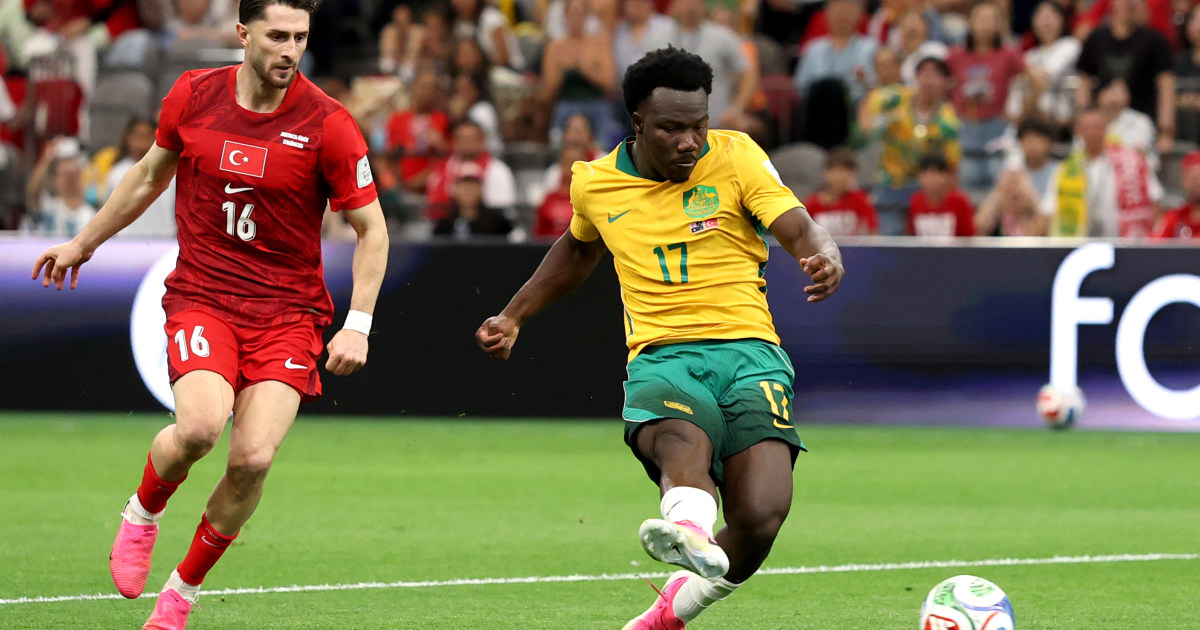
Australia secured a 2-0 victory over Turkey in Group D of the 2026 World Cup, boosting their chances of advancing to the knockout stages to 85% according to The Athletic’s projections. The win in Vancouver on June 14, 2026, saw 20-year-old Nestory Irankunda and Connor Metcalfe score, while goalkeeper Patrick Beach made eight saves, including a critical stop in the first half. Turkey, despite 30 shots and 72% possession, failed to score, with their expected goals total at 1.3, the lowest for a team without a goal since 2006.
How Australia’s Tactical Discipline Secured the Win
Australia’s strategy of letting Turkey control possession while waiting for counterattacks proved decisive. Turkey’s coach, Vincenzo Montella, acknowledged the Socceroos’ resilience, stating, “I respect Australia very much. I was expecting that they would play in this way.” The Socceroos’ approach mirrored their 2022 World Cup campaign, where they advanced from a group featuring France and Denmark. This time, however, their defense was even sturdier, with Beach, making only his third international appearance, earning praise for his “outstanding” performance, per The New York Times.
Turkey’s missed opportunities were stark. Despite 30 shots, they managed only two on-target efforts, both saved by Beach. The Athletic noted that Turkey’s expected goals (xG) of 1.3 was the lowest for a non-scoring team since Portugal’s 2006 exit against England. NBC News highlighted that Turkey’s free-kick danger in the 57th minute, taken by Arda Güler, was blocked by Beach, a moment that encapsulated the Socceroos’ defensive composure.
Irankunda’s Historic Contribution and Cultural Impact
Irankunda, Australia’s youngest-ever World Cup goal scorer, opened the scoring in the 27th minute with a low shot past Turkey’s goalkeeper, Ugurcan Cakir. The goal, which came less than a minute after a hydration break, was a testament to his composure under pressure. The 20-year-old, a Burundian refugee who arrived in Australia at three months old, has become a symbol of the nation’s multicultural identity. His celebration—punching the corner flag in tribute to Tim Cahill—underscored the emotional weight of the victory.
Irankunda’s performance also addressed pre-match tensions. Turkey captain Hakan Calhanoglu had claimed his team had “more qualities and a more talented team,” a remark that Irankunda called “extra motivation.” “Obviously we don’t like people to talk bad about us because we’re a great team. People underestimate us,” he said, per NBC News. The Socceroos’ response to such rhetoric has been a recurring theme in their campaign, with coach Tony Popovic emphasizing “mental toughness” in a pre-game interview.
Turkey’s Path Forward and Group D Dynamics
The loss leaves Turkey with a 52% chance of advancing, according to Opta, though their focus shifts to Paraguay, whom they will face next. Montella, who guided Turkey to the 2024 European Championship semifinals, acknowledged the setback but remained confident. “This is football. As for the critics, nobody has underestimated Australia, actually,” he said, per NBC News. Turkey’s 2002 World Cup semifinal run remains a benchmark, but their current campaign faces challenges, including a lack of firepower compared to the U.S. and Paraguay.
Group D’s dynamics now hinge on the U.S.-Paraguay match, which the Socceroos will aim to exploit. The U.S. have more evident talent, but Australia’s disciplined style and home support in Vancouver—where they drew 15,000 fans—could prove decisive. The Athletic’s analysis suggests Australia’s 85% chance of advancement is tied to their ability to replicate their defensive solidity against stronger opponents.
What This Means for the 2026 World Cup Narrative
Australia’s victory reshapes the narrative of the 2026 World Cup, proving that underdog teams can thrive with tactical precision. The Socceroos’ success mirrors the 2010 Ghana team, which reached the quarterfinals as a Group of Death underdog. However, their path is steeper: the U.S. and Paraguay pose greater threats than Ghana’s 2010 group opponents. Still, the win highlights the growing competitiveness of teams from Oceania and the CONCACAF region, which have historically struggled in World Cup qualifiers.

For Turkey, the loss underscores the need for offensive creativity. Despite their 72% possession and 30 shots, they lacked the clinical edge to capitalize. Their 2002 semifinal run featured a more balanced attack, with players like Hakan Şükür and Emre Belözoğlu. This year’s squad, while technically gifted, lacks that finishing flair. As the group stage progresses, their ability to adapt will determine whether they can reclaim their status as dark horses.
The Socceroos’ victory also raises questions about the future of Australian soccer. Irankunda’s emergence as a global talent—already linked to moves to European clubs—signals a new era of homegrown stars. Meanwhile, Beach’s performance could cement his place as the nation’s No. 1 goalkeeper, a role he has filled in Popovic’s surprise starting lineup. The match’s legacy may lie in how it redefines Australia’s role on the world stage, from a regional power to a credible World Cup contender.
As the tournament moves to the next phase, the spotlight will shift to the U.S.-Paraguay clash and Australia’s ability to maintain their momentum. For now, the Socceroos have proven that underestimating them is a dangerous proposition.
Find more reporting in our Sports section.
