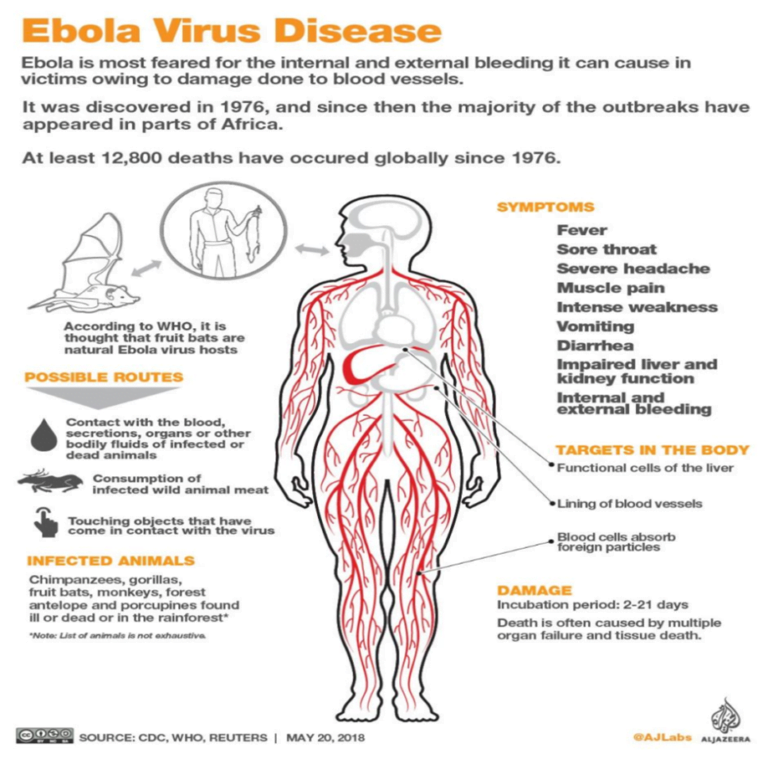
Ebola is a severe viral disease transmitted through direct contact with the bodily fluids of infected individuals or contaminated materials. As of May 20, 2026, health authorities emphasize that the virus is not spread through casual social interaction, coughing, or sneezing, distinguishing its transmission profile from respiratory illnesses like influenza or measles.
Defining Ebola Transmission
The medical distinction between contagious and infectious diseases remains a central focus for public health communication. While influenza and measles are frequently cited as examples of highly contagious respiratory illnesses that spread through aerosolized particles or close proximity, Ebola operates under a different biological mechanism.
According to established medical definitions, a disease is considered contagious if it can be transmitted by direct or indirect contact with an infected person or contaminated objects. Ebola is classified as a transmissible disease that requires contact with the blood, secretions, organs, or other bodily fluids of infected people, or with surfaces and materials contaminated with these fluids. Unlike airborne pathogens, Ebola does not typically spread through the air, meaning that casual contact in public settings does not carry the same risk profile as respiratory viruses.
Distinguishing Ebola from Respiratory Pathogens
Public health experts and dictionary definitions of contagion consistently highlight the difference between the transmission of viruses like the flu—which can be passed on by coughing or sneezing near others—and contact-based diseases. Because Ebola is not aerosolized, the primary risk factors are localized to caregivers, family members in direct contact with patients, or individuals handling the remains of those who have succumbed to the virus.
This distinction is critical for understanding the nature of an outbreak. While the term contagious
is often used colloquially to describe anything that spreads from person to person, medical terminology reserves more precise distinctions for how that spread occurs. The influenza virus, for instance, is a respiratory illness, whereas Ebola is categorized by its reliance on the physical transfer of infectious agents through bodily contact.
Assessing Risk and Public Concern
The level of concern regarding an Ebola outbreak is often driven by the severity of the disease rather than the ease of its transmission. Because the virus is not spread through standard social interaction, the risk to the general public remains low compared to highly transmissible respiratory viruses.
Medical resources note that while the concept of contagiousness dates back to ancient times, the modern understanding of infectious agents—such as the specific viruses and bacteria that cause disease—allows for more targeted intervention strategies. Effective containment of Ebola historically relies on isolating infected individuals and rigorous contact tracing to break the chain of transmission. By preventing direct contact with bodily fluids, health agencies can effectively curb the spread of the virus, a strategy that is inherently different from managing airborne outbreaks.
Clinical Perspectives on Contagion
In clinical practice, the terms contagious
and infectious
are often distinguished to provide clarity to both healthcare providers and the public. While an infectious disease is caused by an infectious agent, a contagious disease specifically highlights the capability of being transmitted by contact. Ebola serves as a primary example of a disease where contact protocols are the defining barrier against spread.
For the average individual, the distinction is significant: while fear can be contagious
in a social or psychological sense, the physical transmission of Ebola requires specific, avoidable physical interactions. As of May 20, 2026, the guidance from health institutions remains focused on hygiene, the use of personal protective equipment in clinical settings, and the avoidance of direct contact with the fluids of those suspected to be ill, rather than the broad social distancing measures often required for airborne pathogens.
Operational Protocols and Containment
The operational framework for managing Ebola-related risks emphasizes the necessity of physical barriers. In environments where the virus is present, strict adherence to barrier nursing techniques—including the systematic use of gloves, gowns, and face shields—is mandated to prevent the transfer of infectious bodily fluids. Unlike respiratory viruses, which may necessitate high-efficiency particulate air filtration or specialized ventilation systems to address airborne particles, the containment of Ebola centers on the physical isolation of the patient and the rigorous decontamination of the immediate environment.
Health authorities maintain that the absence of aerosol transmission significantly alters the public health response compared to the management of influenza. Because Ebola does not utilize respiratory droplets as a primary vector, public health officials do not recommend standard respiratory protective measures, such as universal masking in public spaces, as a primary defense against the virus. Instead, the focus remains on the identification of symptomatic individuals and the subsequent restriction of direct physical contact.
The distinction between the two modes of transmission remains a foundational element of contemporary medical training and public safety policy. By maintaining a clear understanding of what constitutes a contact-based versus an airborne threat, agencies aim to minimize public alarm while ensuring that resources are concentrated on the specific, identified risks associated with the physical handling of infected materials and fluids.
