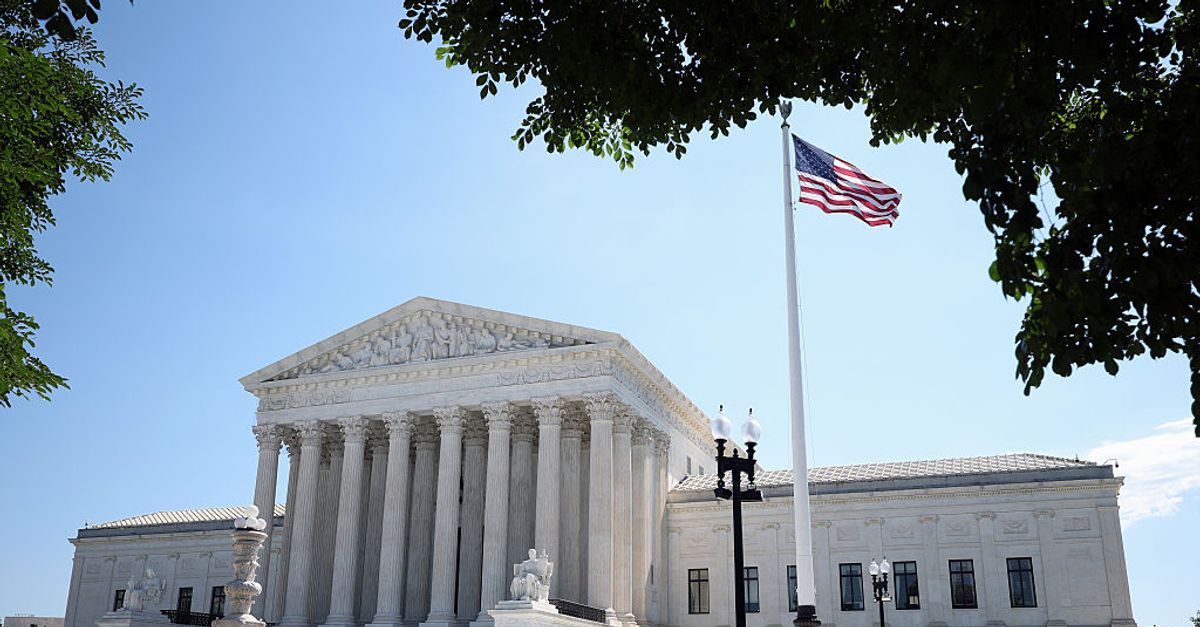
The Supreme Court on Thursday ruled 8-1 in favor of the Federal Communications Commission (FCC), upholding its power to impose penalties on AT&T and Verizon for failing to secure customer location data—while also granting the telecom giants a rare procedural win that could reshape how federal agencies enforce regulations. The decision, led by Chief Justice John Roberts, preserves the FCC’s authority to issue fines without immediate payment requirements, but leaves open the question of whether other industries will now challenge agency orders more aggressively.
A $100 Million Fine—But No Rush to Pay
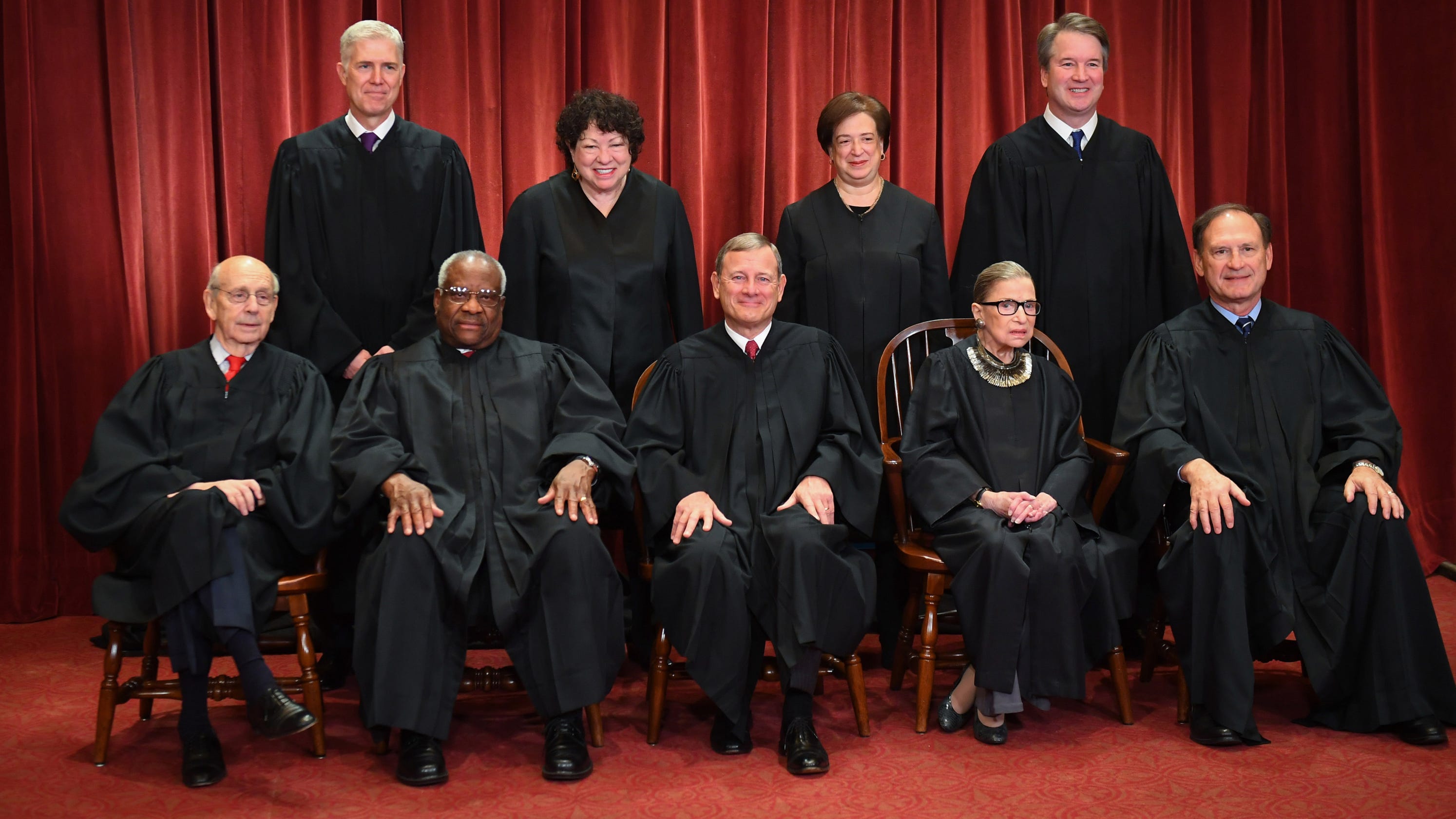
Supreme Court justices
The Supreme Court’s ruling on Thursday clears the way for the FCC to collect $100 million in combined penalties against AT&T and Verizon—though the companies won’t have to cough up the money immediately. The justices, in an 8-1 decision, rejected the telecom giants’ argument that the FCC’s enforcement process violated their Seventh Amendment right to a jury trial. But they also ruled that the FCC’s orders—assessing $57 million against AT&T and $47 million against Verizon—do not *require* the companies to pay upfront. Instead, the fines remain in limbo until the Department of Justice files a lawsuit to enforce them, at which point the carriers could demand a jury trial.
The ruling is a tactical victory for the FCC, which had faced a legal challenge from AT&T and Verizon over whether its penalty system was constitutional. The companies had argued that the FCC’s process—issuing fines without a jury—violated their rights. But Chief Justice Roberts, writing for the majority, dismissed that claim, stating that the FCC’s orders “do not settle the carriers’ legal obligations” and that the companies still have the chance to challenge the fines in court later.
Justice Clarence Thomas dissented, arguing that the decision leaves too much discretion with regulators. His concern: the FCC could keep issuing fines without ever forcing companies to pay, creating a “de facto” penalty system that bypasses judicial review.
The decision is particularly significant because it involves a core question of administrative law: How much power do federal agencies have to enforce rules without going through the full court process? The FCC’s authority to impose fines without immediate payment requirements is now firmly in place—but the ruling also sends a signal to other industries: if you’re hit with a big penalty, you may have more time to fight it in court before paying.
The Legal Battle That Could Reshape Regulatory Enforcement
cluster (priority): SCOTUSblog
The case, FCC v. AT&T, began in 2024 when the FCC determined that both companies had failed to adequately protect customer location data—violating federal privacy laws. The penalties were part of a broader crackdown on telecom companies that had been accused of mishandling sensitive consumer information, including real-time GPS tracking data.
AT&T and Verizon took their case to the Supreme Court after lower courts split on whether the FCC’s process was constitutional. The U.S. Court of Appeals for the 5th Circuit sided with AT&T, throwing out the FCC’s order, while the 2nd Circuit ruled against Verizon. The Supreme Court’s intervention was seen as a chance to clarify once and for all whether agencies like the FCC could impose fines without giving companies a full jury trial upfront.
Roberts’ opinion hinged on the idea that the FCC’s orders were not final judgments—they were merely preliminary steps. The companies still had the right to challenge the fines in court, and if the government wanted to collect, it would have to prove its case to a jury. “At day’s end,” Roberts wrote, “a forfeiture order is simply the Commission’s own determination. Its only legal effect is to enable the Department of Justice to file a suit to recover for the carriers’ suspected violations.”
This distinction is critical. By ruling that the FCC’s orders do not *require* immediate payment, the Court effectively gave AT&T and Verizon a reprieve—at least for now. But it also left the door open for the FCC to keep issuing fines, knowing that companies will have to fight them in court before any money changes hands.
What This Means for Other Industries—and Future FCC Cases
Telecom Compliance and the Universal Service Fund: What’s Next After the Supreme Court Ruling?
The ruling has immediate implications for how federal agencies enforce regulations. The FCC’s power to impose fines without immediate payment requirements is now firmly established—but the decision could also embolden other companies to challenge agency orders in court before paying up.
Doug Orvis, a veteran telecom attorney, told reporters that the decision “preserves the right to trial by jury in ‘Suits at common law’” and applies broadly. “It will be interesting to see what happens going forward,” he said. “Companies may now be more willing to litigate, knowing they can delay payment while the legal battle plays out.”
The environmental group Earthjustice, which had supported the FCC’s authority, praised the ruling as a win for regulatory enforcement. “By rejecting this unsupported attack on agency authority, the Court’s decision safeguards the government’s ability to enforce laws that protect people, communities, and the environment,” said Caroline Flynn, the group’s Supreme Court counsel.
But not everyone is celebrating. The libertarian New Civil Liberties Alliance (NCLA) warned that the decision could encourage more companies to challenge agency orders in court—even if they ultimately lose. “In fact, it may even buttress their willingness to challenge future agency orders in federal court before paying any penalties,” said Mark Chenoweth, the alliance’s president.
The ruling also comes at a time when the Supreme Court’s conservative majority has been increasingly skeptical of federal agency power. Earlier this year, the Court overturned a decades-old precedent that had given regulators an advantage in court, and in 2022, it stripped another agency of a major tool in fighting securities fraud. This decision, however, marks a rare instance where the Court sided with the government—at least on the issue of regulatory authority.
The Next Steps: What Happens Now?
cluster (priority): news.google.com
So what’s next for AT&T, Verizon, and the FCC? The immediate effect is that the $100 million in fines remains unpaid—at least for now. The companies can continue to challenge the penalties in court, and if the Department of Justice decides to pursue enforcement, the case could drag on for years.
But the broader question is whether this ruling will encourage other industries to take a similar approach. If companies see that they can delay payment while fighting fines in court, we may see more legal challenges—not just from telecom giants, but from corporations in sectors like finance, energy, and healthcare.
The FCC itself may also face more pushback. While the Court upheld its authority to impose fines, the decision could make it harder for the agency to collect those fines quickly. If companies know they can litigate for years before paying, they may be more likely to do so—even if they ultimately lose.
For now, the ruling is a mixed bag. The FCC wins the right to keep issuing fines, but the companies get a delay in payment. The long-term impact, however, could be significant—especially if other industries start using this legal strategy to challenge regulatory actions.
One thing is clear: the Supreme Court’s decision has set a new precedent for how federal agencies enforce rules. And in a time when regulatory battles are increasingly common, this ruling could have far-reaching consequences—not just for telecom companies, but for businesses across the country.
The question now is whether this will lead to more litigation—or whether companies will simply accept the fines and move on. Either way, the legal landscape for regulatory enforcement has shifted. And the next few years will tell us just how much.
Claire Donovan coordinates breaking-news coverage across global time zones. She has reported on elections, social movements, and investigative stories in over ten countries. Known for her calm leadership under pressure, Claire guarantees Globally Pulse delivers news that is fast, factual, and fair.