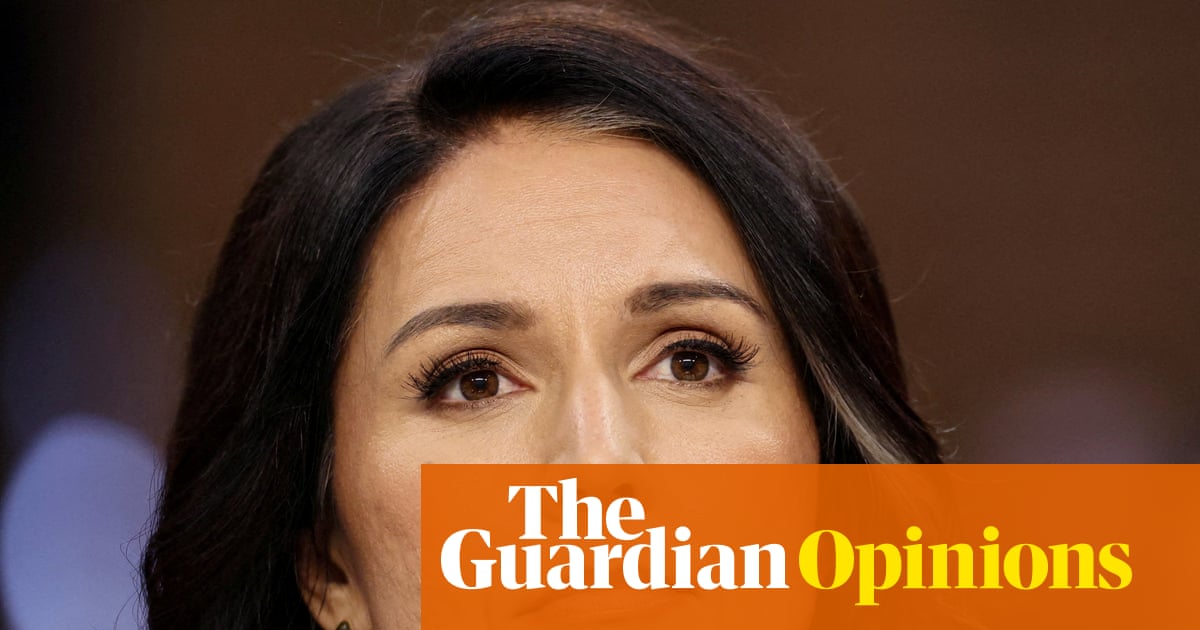
Tulsi Gabbard, the first Hindu elected to Congress and a decorated Army Reserve officer, resigned Sunday as President Donald Trump’s director of national intelligence—her final act in a political career defined by dramatic shifts, from anti-war crusader to Trump loyalist, only to be undone by the very wars she once opposed. Her departure, announced Friday, comes as Trump weighs a potential escalation in Iran that Gabbard had long warned against, and as her husband battles a rare form of bone cancer. The resignation marks the end of a turbulent tenure where her principles clashed with the administration’s foreign policy aggression, leaving behind a legacy as both a critic of regime-change wars and a figure who, in her final years, became a reluctant enabler of them.
Gabbard’s Resignation Letter and the Whispers of a Forced Exit
Gabbard’s resignation letter to Trump, obtained by NPR, frames her departure as a personal one: "His strength and love have sustained me through every challenge," she wrote of her husband, Abraham. "I cannot in good conscience ask him to face this fight alone while I continue in this demanding and time-consuming position." But the timing—and the whispers of a forced exit—suggest deeper currents. As early as last month, the White House had reportedly begun discussions about replacing Gabbard, who had overseen all 18 U.S. intelligence agencies since her confirmation in February 2025. Trump’s own public response, posted on Truth Social, was curiously detached: "She did an incredible job, and we will miss her." Yet the subtext was clear: Gabbard’s loyalty had limits, and her resistance to Trump’s foreign policy ambitions had become a liability.
Exclusion from Key Iran War Planning and the Collapse of Her Anti-Interventionist Stance
The resignation also arrives as Trump’s national security team finalizes plans for a potential new offensive against Iran—a conflict Gabbard had publicly opposed since her days as a congresswoman. In January, she was excluded from White House planning meetings for "Operation Epic Fury," the administration’s code name for the escalation, reportedly because her past criticism of U.S. interventionism made her an unreliable ally. Her absence from key briefings to Congress on the Iran war, and the resignation of her top aide, Joe Kent, in protest of the conflict, underscored her isolation within the administration.
The Political Pivot: From Anti-War Crusader to Trump Loyalist
Gabbard’s political odyssey reads like a cautionary tale about the cost of ideological flexibility. As recently as 2016, she was a rising star in the Democratic Party, resigning as vice chair of the DNC to endorse Bernie Sanders over Hillary Clinton, citing her "strong belief that we must end the interventionist, regime change policies that have cost us so much." Her 2020 presidential campaign even sold "No War with Iran" T-shirts—a stark contrast to her current role. Yet by 2024, she had pivoted sharply, becoming a vocal Trump supporter and conservative media figure, defending his election claims and attacking the Biden administration’s foreign policy.

The shift was so abrupt it left even allies bewildered. "She made a mockery of what she’d always presented as her core principles," one observer wrote in MS NOW. The turning point came in February 2026, when Trump launched "Operation Epic Fury"—a war Gabbard had long warned would be disastrous. She stayed silent. She attended no planning meetings. And when her aide, Joe Kent, resigned in protest, writing "I cannot in good conscience support the ongoing war in Iran," Gabbard offered no public support for his stance.
The contradiction was glaring. In 2017, she had drawn backlash for meeting with Syrian dictator Bashar al-Assad, calling him a "strategic partner" in the fight against ISIS—a position that alienated hawks in her own party. Yet by 2025, she was defending Trump’s hawkish turn, even as she privately clashed with him over intelligence assessments. Last June, when Trump pressured her to downplay Iran’s nuclear progress to justify a strike, she reportedly resisted—but the damage was done. Her credibility as an anti-war voice had eroded.
From Anti-War Advocate to Oversight of a War She Opposed
The Iran conflict was the breaking point. Gabbard’s resistance to U.S. intervention in the region dated back to her 2012 election, when she became the first Hindu in Congress. She had voted against the Iraq War, criticized Obama’s Syria intervention, and warned against regime-change operations in Venezuela. Yet as director of national intelligence, she found herself in the unenviable position of overseeing intelligence that could either justify or undermine Trump’s war plans.

In January, when the administration announced plans to abduct Venezuelan President Nicolás Maduro and bring him to New York for trial, Gabbard was excluded from discussions—another sign of her marginalization. By February, when Trump announced "Operation Epic Fury," she was sidelined entirely. The war’s goals were murky: one day Trump threatened to "wipe out Iranian civilization," the next he claimed progress in negotiations. Gabbard, who had once called for diplomacy with Tehran, now found herself overseeing an intelligence apparatus that was being weaponized to sell a war she privately doubted.
The irony was not lost on critics. "She stuck around, and she toed the line," noted MS NOW. "That loyalty wasn’t reciprocated." Gabbard’s final act—resigning to care for her husband—may have been the only principled stand she could make without outright defiance. But the message was clear: in Trump’s Washington, even a loyalist who once shared his skepticism of the deep state could become expendable when her objections became too loud.
Uncertainty at the ODNI and the Future of U.S. Foreign Policy
What Comes Next: A Vacuum at the Top of U.S.
With Gabbard’s departure, the Office of the Director of National Intelligence (ODNI) enters a period of uncertainty. Trump has named Aaron Lukas, the principal deputy director, as acting leader—a smooth transition, but one that raises questions about the agency’s future direction. Lukas, a career intelligence official, has kept a low profile, but his appointment suggests the White House wants continuity, not change.
Yet the bigger question is what this means for U.S. foreign policy. Gabbard’s resignation comes as Trump considers whether to restart hostilities with Iran—a move she had long opposed. Without her as a check on the hawks in the administration, the path to escalation may now be clearer. Her absence also leaves a void in the anti-war faction within Trump’s orbit, a group that was already weakened by her departure.
For Gabbard herself, the future is unclear. She leaves behind a career that once promised to be a bulwark against endless war, only to end in a role where she was increasingly sidelined—first by her own principles, then by the administration she had sworn loyalty to. Her final act, caring for her husband, may be the only one that feels authentically hers.
The story of Tulsi Gabbard’s resignation is more than a political exit—it’s a microcosm of the contradictions in Trump’s foreign policy, where loyalty is rewarded until it isn’t, and where even the most vocal critics can find themselves complicit in the very wars they once railed against.
