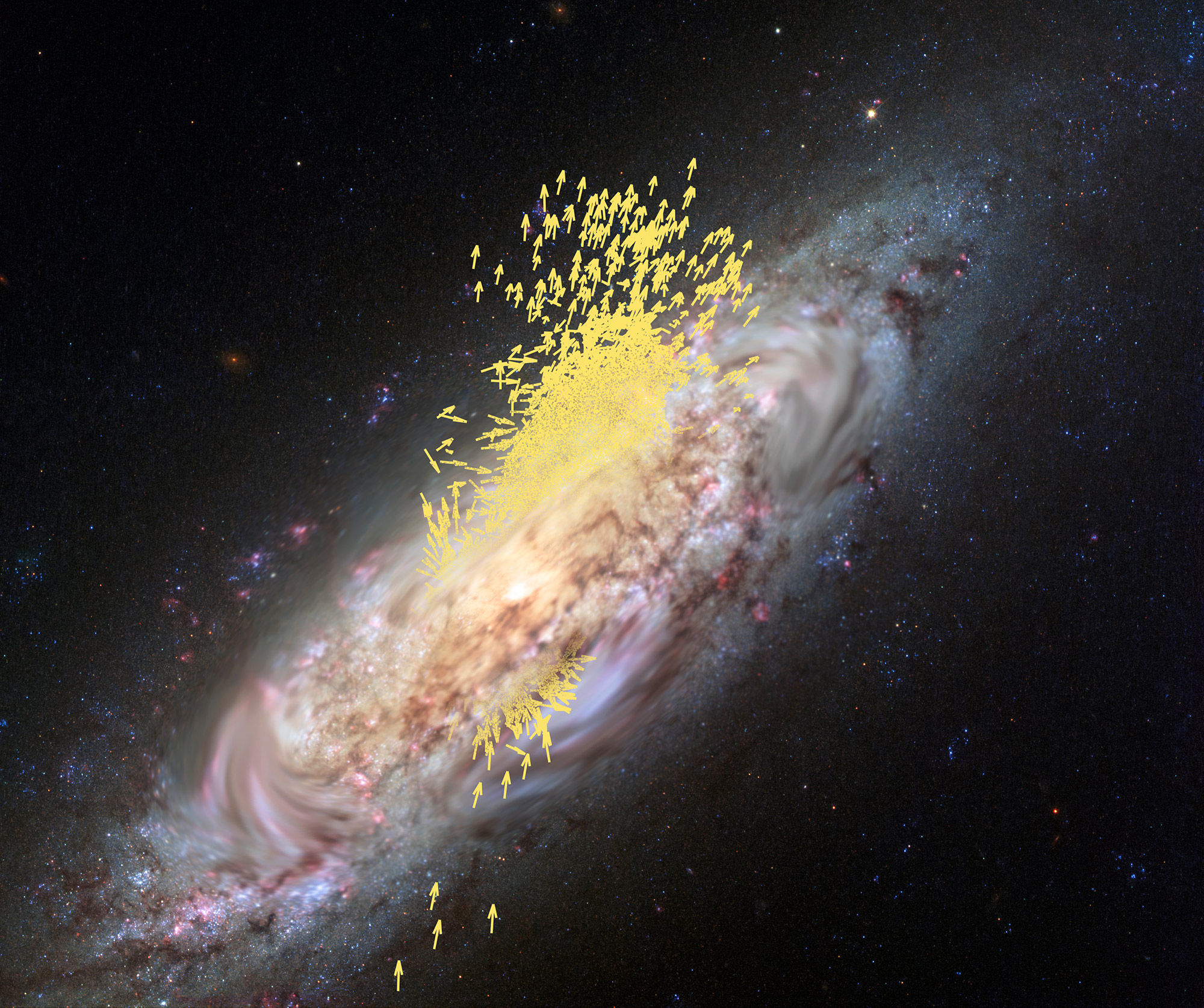
The Milky Way galaxy has consumed a neighboring galaxy, with astronomers identifying remnants of the ancient collision through data from the European Space Agency’s Gaia satellite. The discovery, published in the Monthly Notices of the Royal Astronomical Society, reveals that the absorbed galaxy, dubbed Gaia-Enceladus, merged with the Milky Way around 10 billion years ago. This event left behind a stream of 30,000 stars orbiting the galactic center in a highly elongated pattern, a structure now recognized as the “undigested bits” of the ancient merger.
The Cosmic Digestive System: How We Found the Evidence
Astronomers mapped the motions and compositions of over a billion stars using Gaia, a European Space Agency satellite, to trace the Milky Way’s evolutionary history. The data revealed a vast stream of stars, 30,000 in number, that share similar orbital trajectories but differ from the galaxy’s typical disk structure. These stars, spread across the galactic halo, are believed to be the remnants of Gaia-Enceladus, a galaxy roughly a quarter the size of the Milky Way at the time of collision. The discovery challenges previous assumptions that the Milky Way’s growth was limited to smaller, more recent mergers.
“These building blocks merged together at early epochs, dispersing their stellar, gaseous, and dark matter content into the forming proto-galaxy,” researchers wrote in a study cited by nypost.com. The findings align with the theory that massive galaxies like the Milky Way grow through successive mergers, with the oldest remnants now buried deep within the galactic core.
The Lost Galaxy: Loki and the Metal-Poor Stars
Another study, published in the same journal, identified 20 metal-poor stars in the Milky Way’s galactic disk that may belong to a dwarf galaxy named Loki. Unlike the Gaia-Enceladus remnants, these stars lack evidence of white dwarfs—stellar remnants that take billions of years to form—suggesting they originated from a short-lived galaxy. Researchers speculate Loki, named after the Norse god of trickery, was consumed by the Milky Way during its formative years, leaving behind chemical signatures that distinguish it from native stars.
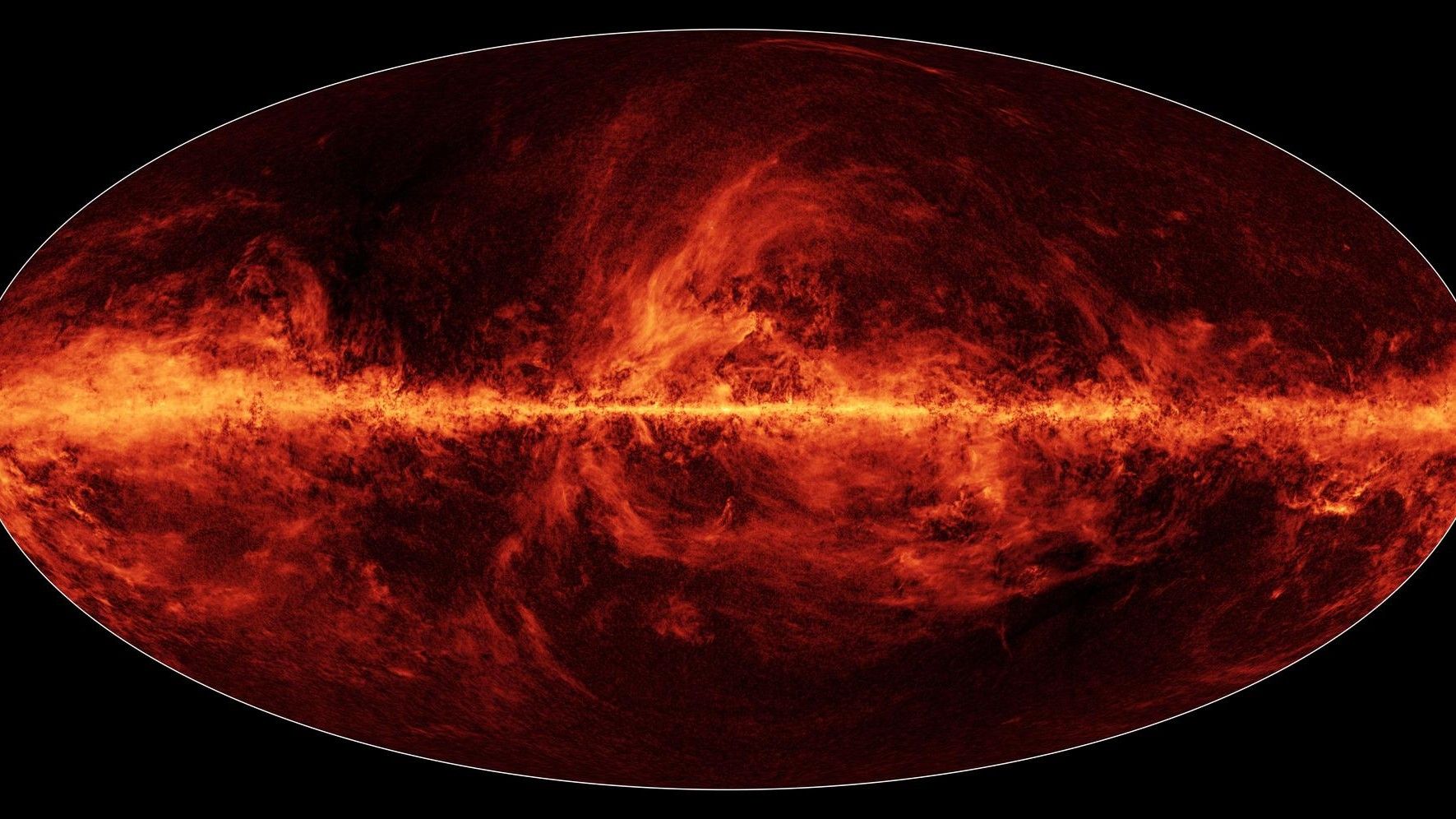
“Studying these stars could be very important in understanding the history of the Milky Way and the universe itself,” said Federico Sestito, lead author of the study and an astrophysicist at the University of Hertfordshire, in an email to livescience.com. The researchers noted that Loki may have been among “the very first small galaxies formed in the young universe,” a hypothesis supported by the stars’ unusual chemical composition.
Implications for Galactic Evolution and the Future of the Milky Way
The discoveries reshape our understanding of how galaxies form and evolve. By analyzing the motions and chemical fingerprints of stars, astronomers can now trace the Milky Way’s “digestive” history, identifying which galaxies it has consumed and when. This approach offers a new window into the universe’s early epochs, when small galaxies collided and merged to form the structures we see today.
“The Milky Way is suspected to have merged with up to a dozen or more dwarf galaxies over its 12-billion-year history,” according to syfy.com. The Gaia-Enceladus and Loki findings add to this narrative, showing that even ancient mergers leave detectable traces. Future observations using Gaia data and next-generation telescopes may uncover more such “cosmic leftovers,” refining our models of galactic growth.
Looking ahead, the Milky Way is set to collide with the Andromeda galaxy in about 4.5 billion years. This future merger, predicted by Facebook and confirmed by Hubble and Gaia data, will create a new elliptical galaxy. While this event is far in the future, the study of ancient mergers like Gaia-Enceladus and Loki provides critical insights into how such collisions shape the cosmos.
The Broader Cosmic Context: A Universe of Mergers
The Milky Way’s history of galactic cannibalism is not unique. Observations of distant galaxies show that mergers are a common mechanism for growth, with massive structures forming through the gradual accumulation of smaller systems. The discovery of Gaia-Enceladus and Loki underscores the dynamic nature of the universe, where galaxies are constantly interacting and reshaping themselves.

“These building blocks merged together at early epochs, dispersing their stellar, gaseous, and dark matter content into the forming proto-galaxy,” the researchers wrote. This process, known as hierarchical galaxy formation, explains how the Milky Way’s current structure—its disk, bulge, and halo—emerged from a series of collisions. By studying these remnants, astronomers can piece together the Milky Way’s evolutionary timeline, much like archaeologists reconstructing ancient civilizations from their ruins.
