A satirical political movement calling itself the Cockroach Janta Party (CJP) has exploded across India’s social media in less than a week, amassing more followers than the ruling Bharatiya Janata Party (BJP) and sparking official crackdowns. Founded by Boston University student Abhijeet Dipke, the movement—born from outrage over a Supreme Court justice’s comparison of unemployed youth to “cockroaches”—has become a viral symbol of generational frustration with corruption, unemployment, and what its founder calls “the rotten pillars of India today.” By Saturday, May 23, 2026, the CJP’s Instagram page had surged past 22 million followers, while its website and social media accounts faced government interference, including a hacked personal account for Dipke and a blocked official X handle.
From Insult to Movement: How a Judge’s Remarks Sparked a Youth Uprising
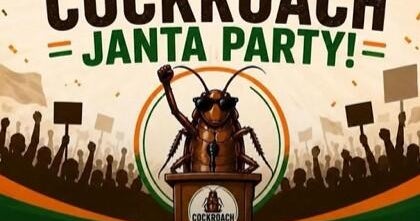
The CJP’s origins trace back to May 16, 2026, when Supreme Court Chief Justice Surya Kant reportedly described unemployed youth as “cockroaches” and “parasites” during a hearing involving a case related to educational fraud. Kant later issued a clarification through the Supreme Court’s official spokesperson, stating that his remarks were directed at individuals with falsified academic credentials, not the broader youth population. The clarification was published on the Supreme Court’s website and shared across official social media channels. Despite this, the damage was done, with Dipke seizing the moment to launch the CJP as a “political front of the youth, by the youth, for the youth” with a clear mission: “Voice of the Lazy & Unemployed.” The name and insignia, a satirical jab at the BJP’s acronym, resonated instantly, with the movement’s logo—a stylized cockroach replacing the party symbol—going viral within hours.
“Those in power think citizens are cockroaches and parasites. They should know that cockroaches breed in rotten places. That’s what India is today.”
The movement’s rapid growth reflects a broader shift in India’s political climate. While the BJP boasts over 9 million Instagram followers, the CJP’s 22 million—more than double the BJP’s total—underscores the power of viral satire in mobilizing disaffected youth. Dipke told CBS News that the movement’s popularity stems from a pent-up frustration: “Five years ago, nobody was ready to speak up against Modi or the government. The times are changing.” The CJP’s rapid ascent also mirrors India’s history of internet-driven protests, including the 2011 anti-corruption movement led by Anna Hazare and recent campaigns against exam fraud, such as the 2025 JEE Main paper leak scandal that led to nationwide student protests.
Dipke’s strategy of leveraging social media has drawn comparisons to the 2019 farmers’ protest movement, where digital mobilization played a crucial role in organizing dissent. However, the CJP’s approach is distinct in its use of humor and satire to bypass traditional political barriers. The movement’s official manifesto, published on its now-defunct website, outlines demands including the resignation of Education Minister Dharmendra Pradhan, transparency in governance, and the creation of a youth unemployment task force. The manifesto was signed by Dipke and co-founder Priya Verma, a Delhi-based journalist.
Government Crackdown: Hacking, Blocked Accounts, and the Question of Free Speech
The CJP’s viral success has not gone unnoticed by India’s authorities. By May 22, 2026, the movement’s official X account (@Cockroachisback) was blocked by the Ministry of Electronics and Information Technology (MeitY) under Section 69A of the Information Technology Act, which allows for the blocking of content deemed a threat to national security or public order. The shutdown followed the removal of its original handle (@CJP_2029) by X (formerly Twitter) under pressure from Indian authorities, according to internal communications obtained by The Wire.
Dipke accused the government of taking down the CJP’s website and hacking his personal Instagram account, which was later confirmed by cybersecurity experts who analyzed the breach. The hack resulted in the temporary suspension of Dipke’s account for “suspicious activity,” though it was later restored after international media coverage. A government source quoted by CBS News anonymously acknowledged that the National Cyber Security Coordinator (NCSC), a division under the National Security Council Secretariat, had been instructed to monitor and disrupt the CJP’s digital infrastructure. The NCSC declined to comment on the matter, citing ongoing investigations.
cluster (priority): NBC News
The crackdown extends beyond digital spaces. Large protests demanding the resignation of Education Minister Dharmendra Pradhan—who faces allegations of involvement in the JEE Main paper leak scandal—have erupted nationwide. The CJP’s petition for Pradhan’s ouster, launched on Change.org, has garnered 600,000 signatures as of May 23, 2026, according to Dipke. The petition also calls for an independent inquiry into exam fraud and the establishment of a youth employment guarantee scheme. Meanwhile, the movement’s broader demands include transparency in governance, an end to youth unemployment, and the resignation of Supreme Court Chief Justice Surya Kant, though the latter demand has been framed as satirical.
The government’s response suggests officials view the CJP not just as satire but as a potential organizing force for dissent. On May 21, 2026, the Delhi Police issued a statement warning against “misuse of social media platforms for anti-national activities,” a move widely seen as a direct response to the CJP’s growth. The statement was signed by Additional Director General of Police (ADG) Rajesh Kumar, who has previously been involved in monitoring online dissent during the 2020 farmer protests.
A Viral Phenomenon with Real Political Weight
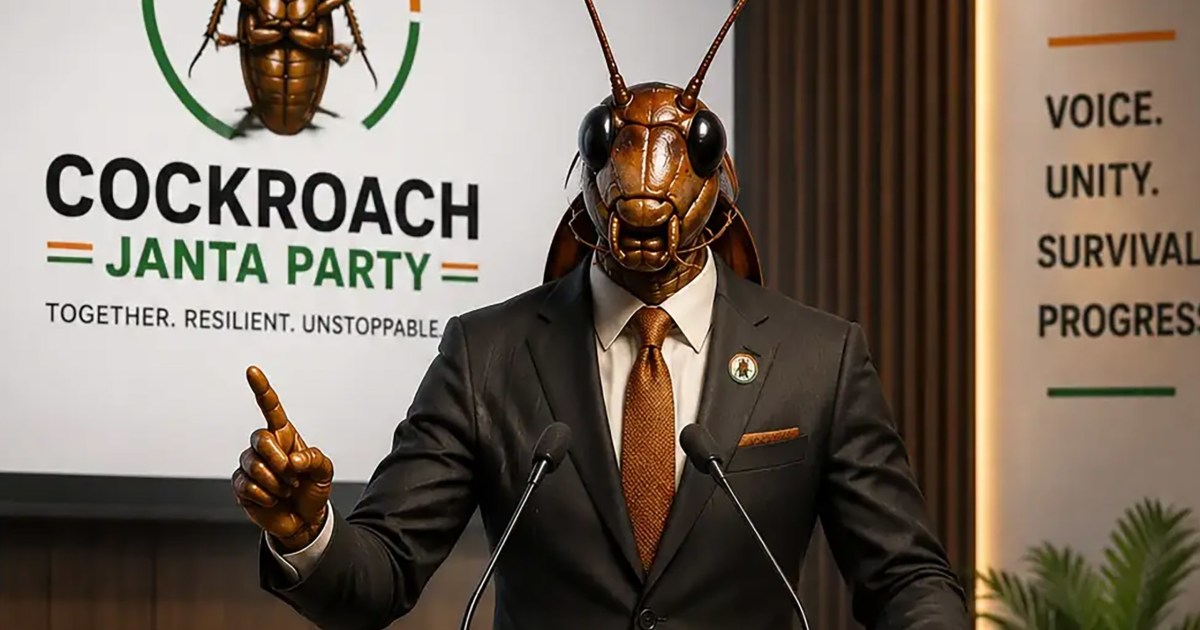
The CJP’s influence extends beyond social media into offline activism. Memes, mock campaign videos, and AI-generated images of a “cockroach-man” leader have flooded Indian feeds, blending humor with sharp criticism. One viral video, featuring Dipke in a mock speech with a cockroach prop, has been viewed over 12 million times on Instagram. The video’s script, which parodies Prime Minister Narendra Modi’s public addresses, has been shared widely across regional languages, including Hindi, Tamil, and Bengali.
Dipke’s strategy—leveraging the internet’s ability to amplify marginalized voices—has turned the movement into a cultural moment. As NBC News noted, the CJP’s rise reflects a generational divide: younger Indians, many unemployed or underemployed, see the movement as a rare platform to voice grievances without fear of repression. A survey conducted by the Centre for the Study of Developing Societies (CSDS) in April 2026 found that 68% of respondents aged 18-30 expressed dissatisfaction with the government’s handling of youth unemployment, a sentiment the CJP has capitalized on.
The Cockroach Janta Party : The new unusual mascot of Indian politics | BBC News India
The movement’s rapid growth has also drawn comparisons to India’s 2012 anti-corruption protests, which led to the formation of the Aam Aadmi Party (AAP). Dipke, who previously worked as a digital strategist for AAP’s youth wing, told NBC News that the CJP’s success proves the internet can bypass traditional political barriers. “The AAP started as a joke too, but it became a party,” Dipke said. “We’re not asking for power. We’re asking for a voice.”
However, critics argue that the CJP’s rhetoric risks further polarizing an already divided youth demographic. The All India Students’ Association (AISA), a left-wing student group, has accused the CJP of using satire to distract from broader systemic issues. In a statement issued on May 22, AISA’s national secretary, Arun Kumar, stated: “While we sympathize with the frustrations of unemployed youth, we must not allow satire to overshadow the need for organized, class-based resistance.” The statement was shared on AISA’s official Twitter handle, which has over 1.2 million followers.
22 million Instagram followers (CJP) vs. 9 million (BJP) and 13.4 million (Indian National Congress).
600,000 signatures on the petition demanding Education Minister Pradhan’s resignation.
1 million people signed up to join the CJP in its first week, according to Dipke.
Official X account blocked by MeitY under Section 69A; website and personal accounts hacked.
Delhi Police warning issued against “anti-national activities” on May 21, 2026.
CSDS survey (April 2026): 68% of 18-30-year-olds dissatisfied with youth unemployment policies.
Regional and Diplomatic Implications
The CJP’s rise has sparked regional reactions, with neighboring countries taking note of India’s digital crackdowns. The United States Embassy in India issued a statement on May 22, 2026, expressing concern over the blocking of social media accounts and urging the Indian government to uphold freedom of expression. The statement read: “We urge the government of India to ensure that the exercise of free speech and assembly is protected, even when it takes unconventional forms.” The embassy’s statement was shared on its official Twitter account, which has been retweeted over 5,000 times.
In Pakistan, the movement has been met with mixed reactions. While some political analysts see it as a reflection of India’s internal struggles, others warn that the crackdown could embolden similar dissent in Pakistan. A column in The News International on May 21, 2026, titled “India’s Digital Crackdown: A Warning for the Region,” argued that the suppression of online activism could set a dangerous precedent. The column was authored by political scientist Dr. Ayesha Siddiqi, who has previously written on digital governance in South Asia.
cluster (priority): CBS News
Within India, opposition parties have largely remained silent on the CJP, though the Indian National Congress (INC) issued a statement on May 20, 2026, calling for a “free and fair debate” on youth unemployment. The statement, attributed to INC’s youth wing president, Aditya Kumar, stopped short of endorsing the CJP but criticized the government’s handling of the issue. Kumar stated: “The concerns of Indian youth deserve a serious discussion, not suppression. We urge the government to engage with these issues rather than block platforms.”
The BJP has not publicly commented on the CJP, but internal party documents leaked to The Hindu suggest that the party is monitoring the movement closely. The documents, obtained by a journalist with access to party sources, indicate that the BJP is considering a “counter-narrative” campaign to undermine the CJP’s credibility. The strategy includes highlighting Dipke’s status as a foreign student and questioning the movement’s organizational structure.
What Comes Next: Satire, Protest, or a New Political Force?
The CJP’s future hinges on whether it can translate digital momentum into real-world impact. Dipke has framed the movement as a “political front,” but its satirical roots complicate its legitimacy. While the BJP and opposition parties have largely ignored the CJP, the government’s aggressive response suggests it takes the threat seriously. On May 23, 2026, Dipke announced the launch of a new X account (@CJP_Official) and vowed to continue the fight, stating: “We have to understand that five years ago nobody was ready to speak up against Modi or the government. The times are changing.”
Legal experts have weighed in on the government’s actions, with some arguing that the crackdown could violate India’s constitutional right to free speech. Senior advocate Prashant Bhushan, who has previously challenged government censorship in court, told The Hindu that the blocking of the CJP’s accounts raises serious questions about digital governance. “The government cannot silence dissent under the guise of satire,” Bhushan said. “If they can block a movement like this, what’s next?”
Meanwhile, the CJP’s demands have gained traction among student unions across the country. The University of Delhi Students’ Union (DUSU) passed a resolution on May 22, 2026, supporting the movement’s calls for transparency in exams and youth employment. The resolution was carried unanimously during a special session, with over 100 students present. Similar resolutions have been passed at universities in Mumbai, Chennai, and Kolkata.
Option 1: A Fleeting Meme — The CJP’s popularity fades as attention shifts to other issues, leaving behind a cultural moment rather than a political force.
Option 2: A Catalyst for Change — The movement’s energy spills into broader protests, forcing the government to address youth unemployment, exam fraud, and corruption.
Option 3: A New Political Force — The CJP evolves into a formal political party, challenging established players like the BJP and INC.
Dipke’s claim that the government targeted the CJP’s website and accounts adds urgency to the question. If authorities are silencing dissent under the guise of “satire,” it could embolden further protests. The CJP’s founder has already adapted, launching a new X account and vowing to continue the fight. As Dipke put it: “We have to understand that five years ago nobody was ready to speak up against Modi or the government. The times are changing.”
“We have to understand that five years ago nobody was ready to speak up against Modi or the government. The times are changing.”
The CJP’s story is still unfolding, but one thing is clear: the internet has given India’s disaffected youth a voice—and the government is listening. Whether that voice leads to reform or repression remains to be seen. As legal scholar and former Supreme Court lawyer Indira Jaising told The Hindu, “The real test will be whether the government engages with the demands or continues to suppress the messengers.”
Rafael Moreno directs international correspondents from London to Singapore. A multilingual journalist born in Madrid, he spent 12 years covering diplomacy and conflict for Global Affairs Review. His background in political science strengthens Globally Pulse’s depth in world reporting.