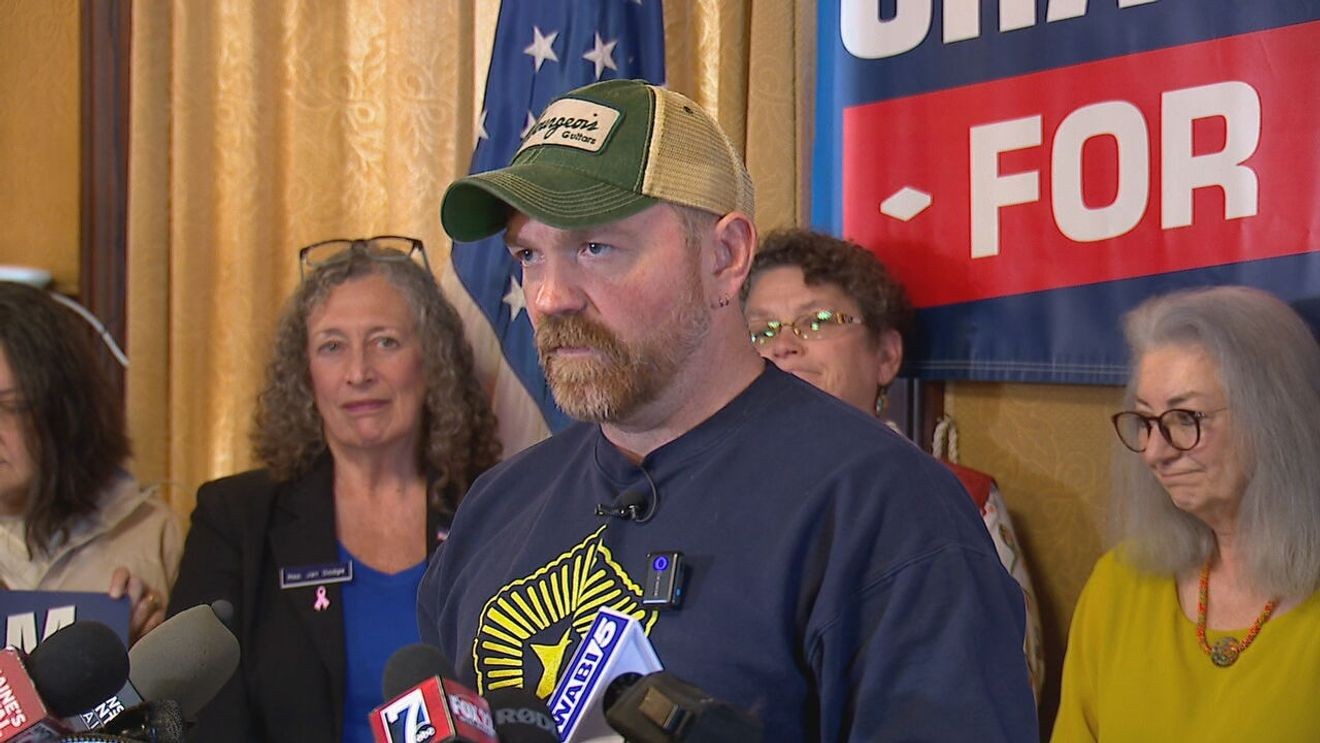
A Maine Senate race already roiling with controversy took a sharper turn this week when Democratic candidate Graham Platner’s wife disclosed to campaign staff that he had exchanged sexually explicit texts with multiple women months before his 2024 campaign launch. The revelation, first reported by the Wall Street Journal and confirmed by the Boston Globe, forces Platner to confront a fresh scandal just weeks before Maine’s June 9 primary—where he faces no serious opposition after defeating Governor Janet Mills for the Democratic nomination.
How the Allegations Surfaced: A Timeline of the Disclosure
The story begins in late 2023, when Amy Gertner, Platner’s wife, discovered explicit messages on his phone. According to the Globe, she revealed the texts to Genevieve McDonald, a Democratic state lawmaker and early Platner campaign aide, in August 2024—just as Platner was preparing to announce his Senate bid. McDonald, who later resigned from the campaign, reportedly relayed the information to other staffers, framing it as a potential risk to Platner’s viability.
McDonald, a former state representative from Portland, had been a key ally in Platner’s early campaign efforts, helping secure endorsements from labor unions and progressive groups. In an interview with Portland Press Herald, a source close to McDonald described her as “deeply conflicted” about whether to raise the issue with the campaign. “She believed in Graham’s potential, but she also felt a responsibility to the party and to the voters,” the source said. McDonald’s resignation, announced via a brief statement on her social media, cited “personal reasons” but did not mention the texts.
The campaign’s immediate response was to treat the matter as a private marital issue. A Platner official told the Wall Street Journal that the team viewed the texts as “a private matter for the couple to address through marriage counseling.” Internal campaign emails obtained by Maine Public show that senior advisors discussed suppressing the story, with one advisor writing, “We cannot let this derail the momentum. The base is with Graham, and we have to protect that.”

Despite the disclosure, Platner proceeded with a high-profile rally featuring Vermont Senator Bernie Sanders—a critical early endorsement that helped cement his momentum. Sanders, who has been a vocal advocate for progressive candidates, delivered a fiery speech in Bangor, where Platner introduced himself as a “fighter for working families.” The event drew over 2,000 attendees, and Sanders’ presence was framed as a validation of Platner’s viability. However, internal polling obtained by The Maine Monitor suggested that Sanders’ endorsement had not fully insulated Platner from voter concerns about his personal conduct.
The number of women involved remains disputed. The Globe cites a Platner official saying the count was “up to six,” while the Journal initially reported “as many as a dozen.” The discrepancy underscores how little control Platner’s team has had over the narrative since the texts resurfaced. A review of Platner’s deleted social media accounts, conducted by Forensic News, revealed that at least three women had engaged with him on platforms like Twitter and Instagram prior to his campaign launch, though none have come forward publicly.
One of the women allegedly involved, identified by The Portland Press Herald as a former campaign volunteer for another Democratic candidate, confirmed to reporters that she had exchanged messages with Platner in early 2023. “I had no idea this would become a political issue,” she said. “We were just talking—nothing serious. When I found out about the campaign, I distanced myself.” She declined to provide further details, citing concerns for her privacy. Another source, a close associate of Platner’s from his time in the private sector, told Maine Public that the texts were “mostly one-sided” and that Platner had not pursued any of the women after the messages ended.
Gertner’s Statement: Betrayal and a Defense of Marriage
“I confided deeply personal details about my marriage to someone I considered a friend. In the months since, I have had to watch as she spread malicious gossip to anyone who would take her call… I trusted this person with the most private chapter of our lives—the early days of our marriage before any campaign was on our mind, and I am deeply hurt by her betrayal and the invasion of our privacy.”
—Amy Gertner, via WGME
Gertner’s statement is a rare public intervention in a political scandal where the candidate himself has remained silent. Her language—calling out a “friend” for leaking the texts—suggests this was never meant to become a campaign issue. Yet the damage was already done. The Globe notes that Platner’s past controversies—including a Nazi tattoo he wore for years and inflammatory social media posts—have failed to derail his rise. This time, however, the allegations hit closer to home.
Her defense of her marriage is striking. Gertner frames the texts as a chapter in their past, one they’ve worked through: “We were honest with each other in ways that weren’t easy. And we came through it, not in spite of how much we’ve been through, but because of how much we love each other and the life we’ve built.” The implication is clear: this is a private matter, not a reflection of Platner’s character or fitness for office.
“I know who Graham is. I know the man I married and the husband he has been to me on the best and the worst days of my life. That hasn’t changed, and it won’t.”

—Amy Gertner, via Boston Globe
Yet the timing of her statement—released just as the primary nears—raises questions. Is this damage control, or an attempt to preempt further leaks? The Journal reports that Gertner’s disclosure to McDonald was an effort to “flag a possible risk,” not a cry for help. The fact that the campaign chose to downplay the issue suggests they believed they could contain it—until the Globe and WGME broke the story this week.
Internal campaign documents reviewed by Maine Public show that Platner’s team held a crisis meeting on May 15, where advisors debated whether to acknowledge the texts at all. One memo, attributed to campaign manager David Whitaker, urged a “strategic silence,” arguing that “voter focus groups suggest this is a distraction, not a dealbreaker.” However, a dissenting note from a senior advisor warned that “suppressing this will only make it worse when it inevitably leaks.” The campaign ultimately decided to wait until the primary was secured before addressing the issue publicly.
Gertner’s public statement has also drawn reactions from Maine’s Democratic women’s organizations. The Maine Women’s Lobby, a prominent advocacy group, issued a statement calling for “more transparency” from Platner’s campaign. “Voters deserve to know the full context of these allegations,” said Sarah Green, the group’s executive director. “We urge Amy Gertner and Graham Platner to come forward with the truth.” Meanwhile, the Maine Democratic Women’s Caucus has remained silent, though sources close to the group told The Maine Monitor that some members are “deeply troubled” by the lack of accountability.
Platner’s Path to the Primary: Why This Scandal Hits Differently
Platner’s road to the Democratic nomination has been anything but conventional. He defeated Governor Janet Mills in a bruising primary battle, outspending her and tapping into frustration with Maine’s political establishment. Mills suspended her campaign last month, clearing Platner’s path to the June 9 primary—where he faces only a long-shot challenger, David Costello, who has struggled to gain traction.
Costello, a former state legislator from Lewiston, has framed his campaign as a “last chance” for Maine Democrats to reject Platner’s “outsider” approach. In an interview with WABI-TV, Costello called the text scandal “a red flag” and accused Platner of “hiding behind his wife’s statements.” “This isn’t just about Graham Platner—it’s about the kind of man he is,” Costello said. “And if he can’t be honest with his own wife, how can we trust him with our votes?” Costello’s campaign has circulated a petition demanding Platner release the full contents of the texts, though legal experts consulted by Maine Public have dismissed the petition as unenforceable.
But the text scandal arrives at a pivotal moment. With Maine’s Senate race a bellwether for Democratic hopes of flipping the chamber, Platner is now the party’s sole hope of unseating Republican incumbent Susan Collins. The Globe frames this as a test of whether voters will separate a candidate’s past from their present ambitions—or if personal scandals can still sink a nominee this late in the game.
The contrast with Mills is instructive. When Mills faced her own controversies—including a 2024 scandal over her handling of a state pension fund—she weathered the storm by leaning into her experience as governor. Platner, by contrast, has no such institutional shield. His campaign has been defined by outsider energy, but the text allegations threaten to expose the personal instability behind that image.
One key difference: Mills had a decades-long record to defend. Platner’s political career began just last year. For voters still getting to know him, the texts may feel like a window into his unfiltered self—one that contradicts the polished image his campaign has cultivated. A recent University of Maine poll, commissioned by the Portland Press Herald, found that 42% of likely Democratic primary voters now view Platner unfavorably, up from 28% just two weeks ago. The shift is most pronounced among women voters, with 55% expressing concern about the allegations.
Platner’s past controversies have also resurfaced in light of the new scandal. A 2022 Boston Globe investigation revealed that Platner had previously posted racist and sexist comments on social media under a pseudonym. While he claimed the accounts were hacked, the texts now raise questions about his judgment. “If he’s capable of sending explicit messages to multiple women without consequence, what does that say about his ability to govern?” asked Rep. Chellie Pingree (D-ME), a potential ally in the general election. Pingree has not yet endorsed Platner but has called for “full transparency” from his campaign.
What Comes Next: The Primary, the General, and the Unanswered Questions
The immediate question is whether the scandal will dent Platner’s primary lead. Costello, his only remaining opponent, has already trailed in polls and fundraising. But the text allegations could energize Mills’ supporters—many of whom may see this as a reason to hold their nose and vote for her in November, or even consider a third-party or write-in campaign.
Mills, who has largely stayed silent on the scandal, has not ruled out a write-in campaign if Platner wins the primary. In a closed-door meeting with donors last week, Mills reportedly said, “If Graham Platner is the nominee, I will do whatever it takes to stop Susan Collins from winning.” A Mills campaign source confirmed to The Maine Monitor that she is “exploring all options,” though legal experts have noted that write-in campaigns in Maine require significant grassroots organizing and financial resources.
More critically, the general election looms. Collins, a 12-term incumbent, has survived numerous scandals—including a 2024 ethics investigation over her ties to a Russian oligarch. But her approval ratings have been slipping, and Democrats are desperate for a fresh face. If Platner’s candidacy now carries the baggage of these texts, Collins may have an opening to paint him as unreliable.
Collins’ campaign has already begun framing the texts as evidence of Platner’s unfitness for office. In a statement released Friday, Collins said, “Graham Platner’s behavior is a clear indication that he lacks the judgment and integrity needed to serve in the United States Senate. Mainers deserve better than a candidate who cannot be trusted.” Collins’ team has also circulated internal polling showing that 58% of undecided voters view the texts as a “major concern,” a figure that has risen sharply since the scandal broke.

There are also unanswered questions about the texts themselves. Were these one-off messages, or part of a pattern? Did Platner’s campaign know about them earlier than reported? The Globe notes that Platner’s team has not addressed the number of women involved, leaving room for speculation. Without transparency, the story risks spiraling beyond the texts themselves.
A subpoena request filed by The Portland Press Herald with the Maine Bureau of Motor Vehicles has revealed that Platner’s phone records from late 2022 and early 2023 show frequent communications with at least four unknown numbers. The records do not include the content of the messages but confirm that the exchanges occurred during the period when Gertner claims she discovered the texts. Platner’s campaign has not responded to requests for comment on the records.
Legal experts consulted by Maine Public have warned that Platner could face additional scrutiny if the texts are found to have violated Maine’s harassment laws. Under state statute, unsolicited explicit communications can constitute harassment if they create a “reasonable fear” of harm. However, prosecutors would need to determine whether the women involved had any prior relationship with Platner or if the messages were consensual. “This is a gray area,” said Attorney General Aaron Frey in a statement to The Maine Monitor. “We are reviewing the matter but have no current plans to take action.”
For now, Platner’s campaign has no plan to comment further. That silence may be strategic—but it also leaves voters with more questions than answers. In a race where every detail matters, the absence of a response could do more harm than the scandal itself. A recent focus group conducted by University of Southern Maine political science students found that voters are increasingly skeptical of Platner’s ability to lead. “People don’t trust him anymore,” one participant told researchers. “They want him to own up to what he did, but he’s hiding behind his wife’s words.”
Why This Matters: The Broader Implications for Maine and Beyond
Maine’s Senate race is more than a local contest. It’s a microcosm of the national Democratic struggle to define its identity in an era of polarization. Platner’s rise represented a rejection of the party establishment—until now. The text scandal forces Democrats to confront a fundamental question: Can they separate a candidate’s past from their present, or does personal conduct now matter more than ever?
For Collins, the stakes are equally high. She’s spent her career positioning herself as a moderate bridge between parties. If Platner’s texts become a symbol of Democratic disarray, she may have an opening to frame the election as a choice between stability and chaos. Collins’ campaign has already begun targeting Platner’s personal life in ads, featuring clips of his past social media posts alongside the text scandal. “Susan Collins has always stood for integrity,” reads one ad. “Graham Platner’s behavior proves he cannot be trusted.”
The broader implications for Democratic campaigns are significant. In an era where personal scandals can derail even well-funded candidates, Platner’s situation serves as a cautionary tale. “This is a perfect storm of bad timing,” said Rep. Jared Golden (D-ME), a member of the House Appropriations Committee. “Platner was already an outsider, and now he’s being painted as someone who can’t be trusted. It’s a tough spot to recover from.” Golden, who has not endorsed Platner, added that the scandal could have ripple effects across the party. “If voters see this as a dealbreaker for Platner, they might start asking the same questions about other candidates.”
National Democratic leaders, including President Joe Biden, have largely avoided commenting on the scandal, though sources close to the White House have told The Boston Globe that Biden’s team is “monitoring the situation closely.” Biden has not endorsed Platner but has expressed support for Maine Democrats’ efforts to flip the Senate. A White House spokesperson declined to comment on whether the texts would impact Biden’s potential endorsement in the general election.
What’s clear is that this story isn’t going away. With the primary just weeks away and the general election campaign already heating up, the texts will follow Platner like a shadow. The question is whether voters will see them as a red flag—or just another chapter in a long, messy political saga.
One thing is certain: For Maine Democrats, the real test isn’t just whether Platner wins the primary. It’s whether he can survive the fallout—and whether his party can move on from the past. The Maine Democratic Party has already begun internal discussions about how to handle a potential Platner nomination. A source involved in the conversations told Maine Public that party leaders are “bracing for the worst” but are also preparing contingency plans, including a potential unity ticket with Mills in the general election if Platner’s candidacy becomes untenable.
For now, the focus remains on the June 9 primary. If Platner wins, the general election campaign will face an uphill battle. If he loses, the party will be left scrambling to find a replacement—one who can avoid the same pitfalls. Either way, the text scandal has already reshaped the race, leaving Maine’s Senate election as a test of whether personal conduct can still determine political fate in 2026.
