
Kyiv’s early-morning sky turned into a war zone Sunday as Russia’s hypersonic Oreshnik missiles and drones struck the Ukrainian capital, wounding at least five people and damaging residential buildings in three districts. Ukrainian officials confirmed the attack—coming just hours after warnings of a major Russian retaliation—marked the third known use of the Oreshnik, a weapon President Vladimir Putin has called "impossible to intercept." President Volodymyr Zelenskyy framed the strike as a global warning: if Russia’s aggression goes unchecked, he said, "no agreement will restrain other similar hatred-based regimes from aggression."
Russia’s Hypersonic Strike on Kyiv and the Limits of Air Defenses
The attack unfolded shortly after 1 a.m. local time, when Ukraine’s air force issued a Telegram alert about an impending Oreshnik launch. Explosions rocked Shevchenkivsky, Dniprovsky, and Podilsky districts, with debris igniting a fire at a city-center school and damaging residential buildings, according to Kyiv Mayor Vitali Klitschko and Tymur Tkachenko, head of the Kyiv City Military Administration. Tkachenko reported at least four locations hit, while Klitschko confirmed five injuries, one requiring hospitalization. Residents fled to metro shelters as a drone barrage compounded the missile threat, with Tkachenko urging citizens to "stay in shelters!"—a stark echo of Kyiv’s wartime routine.
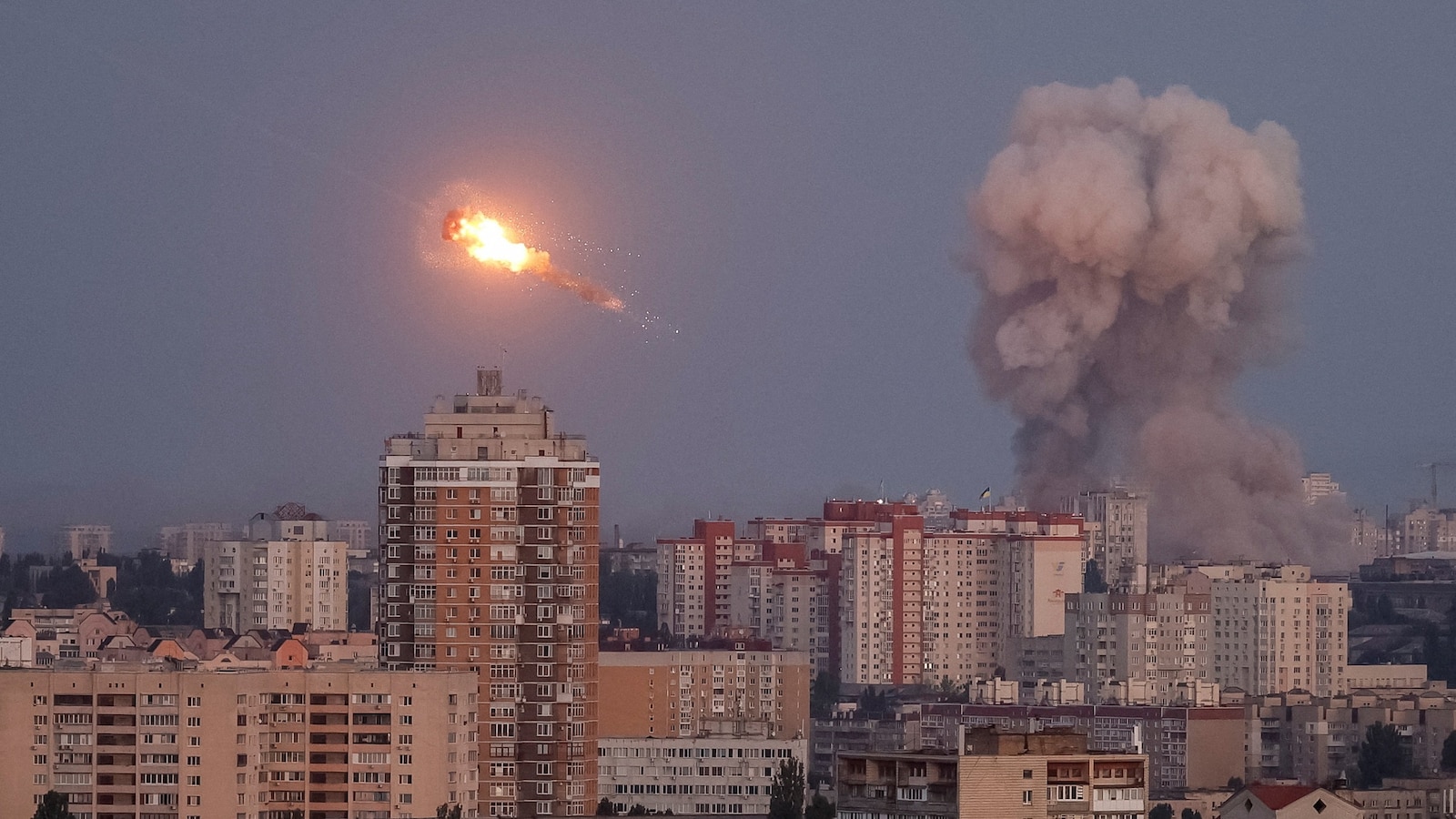
The strike followed Ukraine’s deadliest drone attack in months on a Russian-occupied college dormitory in Starobilsk, which Moscow claimed killed 18 people. Ukraine denied targeting civilians but acknowledged striking a Russian drone unit in the area. Russian officials vowed "inevitable and severe punishment," a threat that materialized within 72 hours.
From Symbolic Targets to NATO-Adjacent Threats: The Oreshnik’s Escalation
Russia’s deployment of the Oreshnik—a hypersonic, nuclear-capable missile traveling over 10 times the speed of sound—marks a dangerous escalation. Unlike slower ballistic missiles, its velocity renders most air defenses obsolete, forcing Ukraine to rely on early warnings and shelters. Zelenskyy’s warning on Saturday, backed by Ukrainian, U.S., and European intelligence, proved prescient: "We are seeing signs of preparation for a combined strike on Ukrainian territory, including Kyiv, involving various types of weaponry," he posted. The U.S. Embassy in Kyiv echoed the alert, stating it had "received information concerning a potentially significant air attack that may occur at any time over the next 24 hours."

For more on this story, see Russia Launches Largest Nuclear Forces Drills Amid Escalating Ukraine Conflict.
This isn’t Russia’s first use of the Oreshnik. In January 2026, the missile struck western Ukraine, damaging the Qatari Embassy in Kyiv—a symbolic blow aimed at international diplomacy. Now, with Russia deploying the weapon from Belarus (a NATO-adjacent ally), the risk of regional spillover grows. Belarus shares borders with Lithuania, Latvia, and Poland, turning the Oreshnik into a potential threat to European security.
Zelenskyy’s Global Warning: The War as a Test for International Norms
Zelenskyy’s response to Sunday’s strike wasn’t just about Ukraine—it was a plea to the world.
"If Russia is allowed to destroy lives on such a scale, then no agreement will restrain other similar hatred-based regimes from aggression and strikes. We count on a response from the world—and on a response that is not post factum, but preventive. Pressure must be put on Moscow so that it does not expand the war."
His framing reflects a shift in Ukraine’s strategy: no longer just defending its territory, but positioning the conflict as a test for global norms. The Oreshnik’s use in Kyiv—targeting civilian infrastructure—undercuts Russia’s claims of "precision strikes," while its hypersonic capabilities force NATO to confront a new reality: even with advanced defenses, some weapons are now untouchable.
Human Cost Amid Military Escalation: The Death of Ayrton Redfearn and the War’s Internationalization
Behind the headlines are individual tragedies. Ayrton Redfearn, a 23-year-old Briton from Devon, died in the Donetsk region on May 9 while serving with a specialist unit supporting Ukraine.

"We are trying to have just 1% of the strength, bravery and courage of Ayrton, and if we can do this, it will help us to eventually come to terms with our life without him."
Redfearn’s death underscores the war’s human toll, even as the focus remains on military escalation. With foreign volunteers like him increasingly targeted, the conflict’s internationalization deepens.
-
Escalation in Belarus: Russia’s Oreshnik deployment from Belarus suggests a deliberate provocation. If NATO responds with military aid or sanctions, Moscow may retaliate by dragging Minsk deeper into the war—or even testing NATO’s Article 5 defenses.
-
Kyiv’s Counterstrikes: Ukraine has already launched drone attacks on Russian-occupied territory. If Zelenskyy’s calls for "preventive" global pressure fail, expect more high-risk strikes inside Russia, risking civilian casualties and further isolating Ukraine.
-
Diplomatic Deadlock: The U.S. and EU have condemned the Oreshnik strikes, but without a unified military response, Russia may see impunity. Zelenskyy’s warning about "hatred-based regimes" hints at a long game: if the West doesn’t act now, future conflicts could embolden other aggressors.
The immediate priority for Kyiv is survival. With air raid sirens blaring and shelters packed, Ukrainians face another night of uncertainty. For the world, the question is whether Sunday’s strike will be remembered as a turning point—or a warning ignored.
