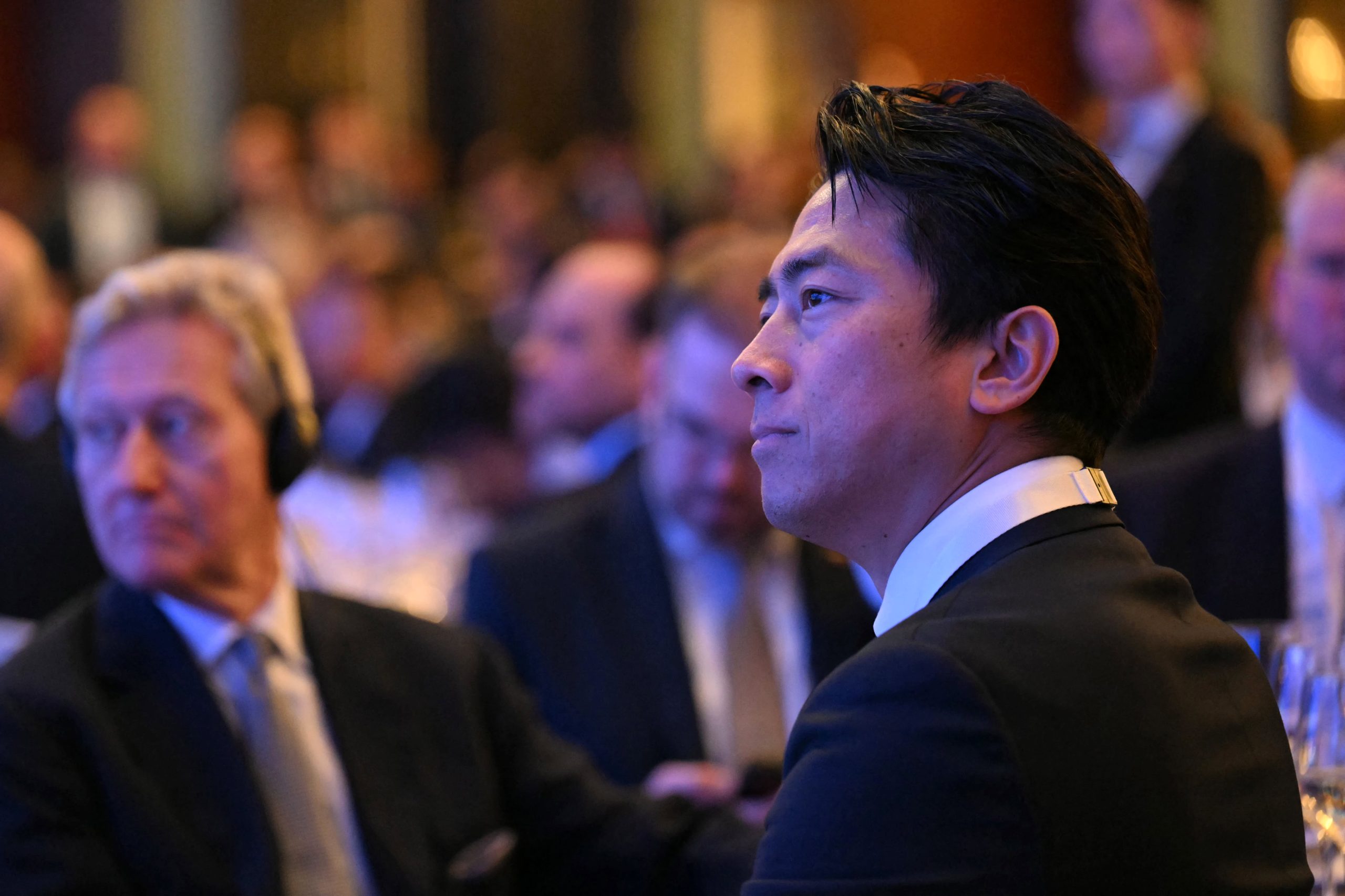
Japanese Defense Minister Shinjiro Koizumi defended his nation’s expanding security posture at the Shangri-La Dialogue in Singapore on May 29, 2026. Rejecting Beijing’s accusations of “neo-militarism,” Koizumi emphasized Japan’s commitment to transparency and regional stability while criticizing China for its rapid military buildup and the absence of ministerial-level communication at the forum.
Rejecting the Neo-Militarism Narrative
The tension between Tokyo and Beijing reached a public zenith at Asia’s premier defense summit as Japan pushed back against claims that its recent shift toward a more proactive security policy signals a return to its pre-1946 history. Under the leadership of Prime Minister Sanae Takaichi, Japan has moved to lift its long-standing ban on lethal arms exports and is actively considering constitutional revisions to Article 9, which has historically renounced war and the maintenance of armed forces.
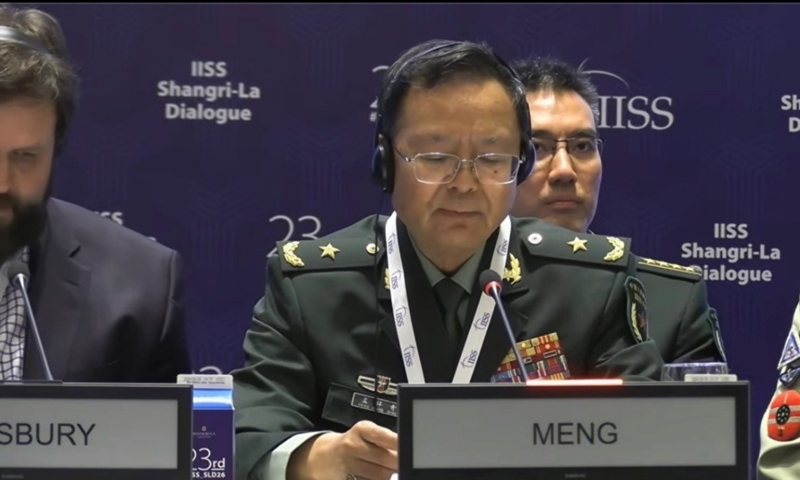
Beijing, however, has characterized these moves as a reckless pivot that threatens regional stability. During the summit, the head of the Chinese delegation, Professor Meng Xiangqing from the People’s Liberation Army National Defence University, warned of a “resurgence of militarist thinking,” according to Global Times. Meng argued that the international community must remain vigilant against attempts to challenge the verdicts of the Tokyo Trial, which concluded in 1946.
The Chinese delegation’s presence at the IISS summit, led by Meng rather than Defense Minister Dong Jun, signaled a deliberate downgrading of engagement. On May 30, a spokesperson for China’s Ministry of National Defense issued a follow-up statement via the PLA Daily, asserting that Japan’s recent procurement of long-range Tomahawk cruise missiles and the development of the Global Combat Air Programme (GCAP) with the United Kingdom and Italy constitute an “offensive posture” incompatible with Tokyo’s self-defense-only policy. Beijing’s diplomatic corps at the forum further contended that Tokyo is facilitating a “Cold War mentality” by deepening integration with NATO-aligned security architectures in the Indo-Pacific.
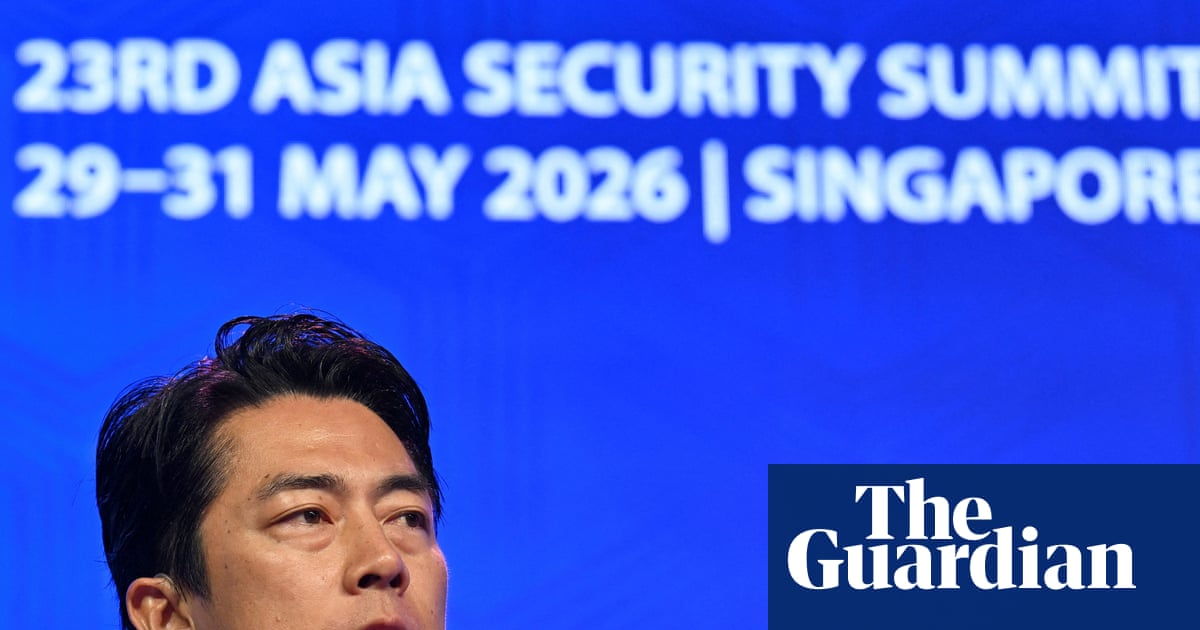
Defense Minister Koizumi dismissed these criticisms as entirely disconnected from reality. During his address at the IISS Shangri-La Dialogue, he challenged the logic behind the labels being applied to Tokyo’s defense strategy.
“Think about it. There is a country that has a huge arsenal of nuclear weapons and strategic bombers. Japan has neither of such weapons, and yet Japan is labeled neo-militarist. Isn’t it strange?” Shinjiro Koizumi, Japanese Defense Minister, via CNBC
In a side session on May 30, Koizumi’s delegation distributed a white paper summary highlighting that Japan’s defense budget, while reaching a historic high of 2% of GDP, remains focused on “denial capabilities” rather than power projection. This document was presented as a direct counter-narrative to the “militarist” claims, emphasizing that Tokyo’s procurement of counter-strike assets is designed strictly to deter regional coercion, specifically naming the increasing frequency of incursions by Chinese People’s Liberation Army Navy (PLAN) vessels into the contiguous zone near the Senkaku Islands.
The Transparency Gap and Diplomatic Friction
The diplomatic divide was underscored by the absence of high-level engagement between the two Asian powers. For the second consecutive year, China’s defense minister, Dong Jun, skipped the forum, opting instead to send a lower-level delegation. Koizumi expressed his disappointment regarding the lack of direct dialogue, noting that while frictions between nations are inevitable, the practice of making “unfounded claims in the other side’s absence” undermines the goal of regional security.
According to The Guardian, Japan’s concerns are rooted in what Tokyo perceives as a lack of transparency regarding China’s rapid military expansion. Koizumi argued that the baseline for preventing crises is a commitment to “trust, transparency and talks.” He pledged that Japan would continue to build its defense capabilities—specifically in emerging domains like cyber warfare, space defense, artificial intelligence, and uncrewed systems—with a high level of transparency.
On May 31, the Japanese Ministry of Defense released a statement noting that despite repeated requests through the maritime and aerial communication mechanism established in 2018, there has been a significant decline in operational-level hot-line responses from the Eastern Theater Command of the PLA. Koizumi emphasized during a press briefing that “communication is not a concession; it is a prerequisite for avoiding unintended escalation.” Conversely, the Chinese delegation argued that military-to-military dialogue is contingent upon Japan ceasing “provocative reconnaissance activities” in the South and East China Seas, a claim the Japanese Ministry of Foreign Affairs (MOFA) rejected as a distortion of international law regarding freedom of navigation.
Regional Security and Strategic Stability
The debate at the forum extended beyond the bilateral spat, touching on the broader fragility of the Asia-Pacific security environment. Meng Xiangqing, representing the Chinese delegation, identified four major threats to global strategic stability, including the breakdown of nuclear arms-control mechanisms and the AUKUS framework’s development of nuclear-powered submarines. He warned that these developments heighten the risk of nuclear proliferation and regional disorder.

The U.S. Secretary of Defense, present at the summit, held a trilateral meeting with Koizumi and the Australian Minister for Defence on May 30. Following the meeting, the three nations issued a joint statement reaffirming their commitment to a “free and open Indo-Pacific,” a move that China’s Foreign Ministry spokesperson later described as the formation of an “exclusive bloc” designed to contain China. The friction was further exacerbated by the Philippines’ participation in peripheral discussions, where Manila accused China of violating the 2016 Permanent Court of Arbitration ruling regarding the South China Sea—a stance that Japan formally endorsed during the plenary sessions.
Japan’s defense strategy is increasingly shaped by these same regional concerns. The potential for military intervention in the event of a conflict involving Taiwan—a scenario previously suggested by Prime Minister Takaichi—has fueled much of the ongoing diplomatic friction. Despite this, Koizumi maintained a conciliatory tone regarding the possibility of future cooperation.
“Japan’s door to dialog is always open” Shinjiro Koizumi, Japanese Defense Minister, via CNBC
As the forum concluded on May 31, the path forward remains uncertain. While Japan aims to solidify its defense posture with U.S. encouragement, it faces constant pressure from Beijing’s diplomatic and state media apparatus. The coming months will likely see continued friction as both nations navigate a security landscape defined by emerging technologies and shifting regional alliances. Japan has signaled it will proceed with its military upgrades, asserting that its path as a peace-loving nation is a historical fact that will not be shaken by external accusations. In a final summary report published by the IISS, analysts noted that the “Singapore impasse” reflects a growing divergence in regional security perceptions, with Tokyo prioritizing integrated deterrence and Beijing prioritizing the preservation of its sovereign maritime claims against what it views as U.S.-led encroachment.
