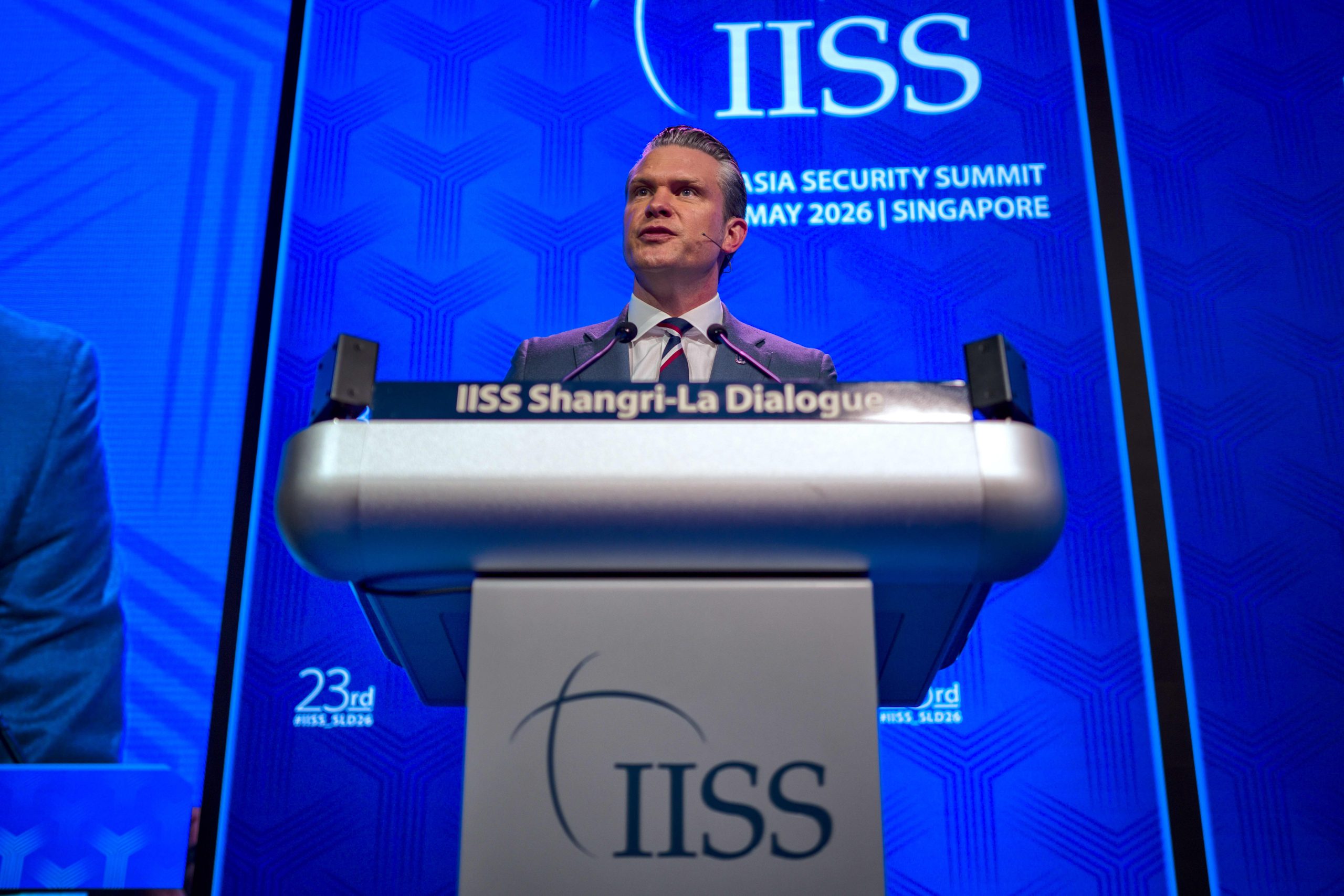
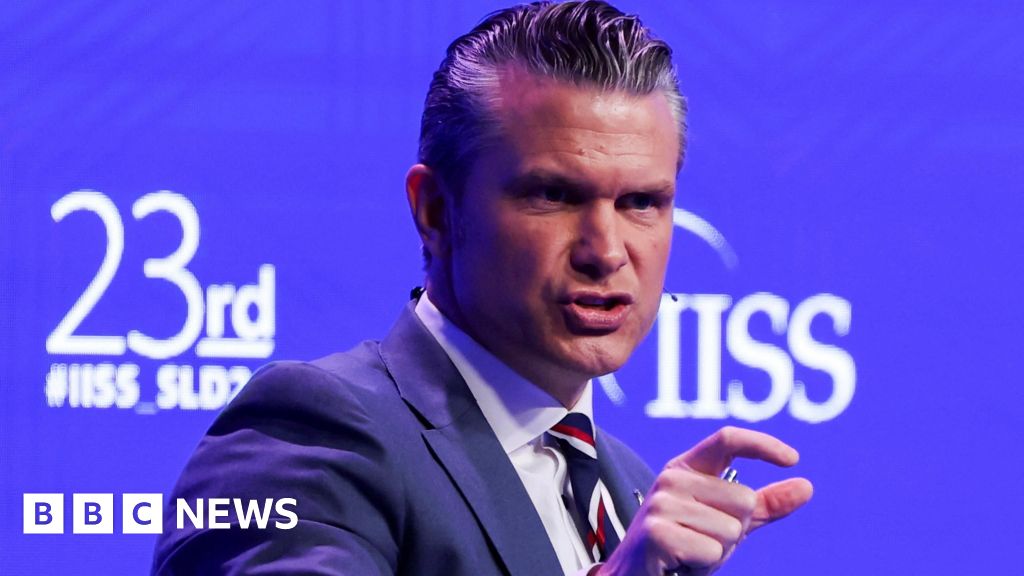
U.S. Secretary of War Pete Hegseth addressed the 23rd IISS Shangri-La Dialogue in Singapore on May 30, 2026, where he called for Asian allies to increase defense spending to 3.5% of GDP. Hegseth emphasized a “strong, quiet, clear” approach to alliances while warning China against disrupting the regional status quo.
A New Benchmark for Regional Defense
cluster (priority): BBC
Speaking before an audience of defense leaders and diplomats, the Secretary of War outlined a clear expectation for partners in the Indo-Pacific. The United States is pushing for a standardized commitment to military readiness, specifically requesting that allies and partners increase their defense spending to 3.5% of GDP. This fiscal pivot comes alongside a significant $1.5 trillion investment by the United States into its own military capabilities.
Hegseth framed this as a necessary transition from an era of American subsidization to one of shared responsibility. “For too long, the security of this region has rested disproportionately on American military power, while many of our allies and partners allowed their own defense capabilities to atrophy,” he said, according to CNBC. The Secretary explicitly noted that Washington intends to prioritize collaboration with “model allies” who meet these benchmarks, offering them expedited arms sales and deeper industrial-based partnerships.
Balancing Engagement and Deterrence
cluster (priority): Honolulu Star-Advertiser
Despite the aggressive call for spending, Hegseth maintained that the current relationship between Washington and Beijing is arguably at its most stable point in years. He pointed to frequent military-to-military communication as a vital mechanism for managing tensions. Nevertheless, he used his platform to issue a stern warning regarding China’s rapid military expansion.
“There is rightful alarm regarding China’s historic military buildup and the expansion of its military activities in the region and beyond. A Pacific dominated by any hegemon would unravel the regional balance of power. No state, including China, can impose its hegemony and hold the security or prosperity of our nation and our allies in question.”Pete Hegseth, U.S. Secretary of War, via Honolulu Star-Advertiser
Hegseth’s rhetoric suggests a strategy of “quiet” strength. He argued that the U.S. seeks a durable balance of power where no single state can dominate the region. When questioned about the availability of weapons for partners like Taiwan, Hegseth expressed confidence in current U.S. stockpiles, dismissing concerns that Middle East obligations would deplete the resources required for Pacific security.
Internal Skepticism and the European Pivot
Hegseth Urges Asian Allies to Step Up Defense Spending
Not all observers are convinced that this shift in tone reflects a robust strategy. U.S. Senator Tammy Duckworth, a Democrat from Illinois, offered a sharp critique of the administration’s focus during a media roundtable at the Shangri-La Dialogue. She suggested that the current national defense strategy, drafted by President Donald Trump and Secretary Hegseth, effectively downgrades the importance of the Indo-Pacific.
“He talks about ‘we’re going to be quiet,’ I think it’s actually a euphemism for no top-level interests other than cozying up to [China],” Duckworth said, as reported by CNBC.
Hegseth also extended his critique of defense spending beyond Asia, specifically calling out European nations. He suggested that European allies have failed to “pull their weight” and warned them to take note of the new, transactional nature of American alliances. In the Secretary’s view, the era of the United States acting as a guarantor for wealthy, non-contributing nations has reached its conclusion. “We need partners, not protectorates,” he stated. “We don’t have a strong alliance unless everyone has skin in the game. No freeloading.”
Navigating Global Obligations
cluster (priority): CNBC
Addressing concerns that the U.S. might be overextended, Hegseth insisted that the government is capable of maintaining its Pacific commitments while simultaneously managing global threats, such as preventing Iran from acquiring nuclear weapons. As noted by the BBC, Hegseth emphasized that the U.S. is operating with a “substantive, serious approach” that avoids unnecessary “drama and moralizing.”
The path forward hinges on whether regional allies, such as the Philippines, Australia, and Japan, can meet the 3.5% spending threshold and whether that investment will be sufficient to alter China’s military calculus. With the U.S. positioning itself to prioritize “front of the line” access for those who comply, the coming months will likely see a significant realignment of regional defense industrial bases and intelligence-sharing protocols.
Rafael Moreno directs international correspondents from London to Singapore. A multilingual journalist born in Madrid, he spent 12 years covering diplomacy and conflict for Global Affairs Review. His background in political science strengthens Globally Pulse’s depth in world reporting.