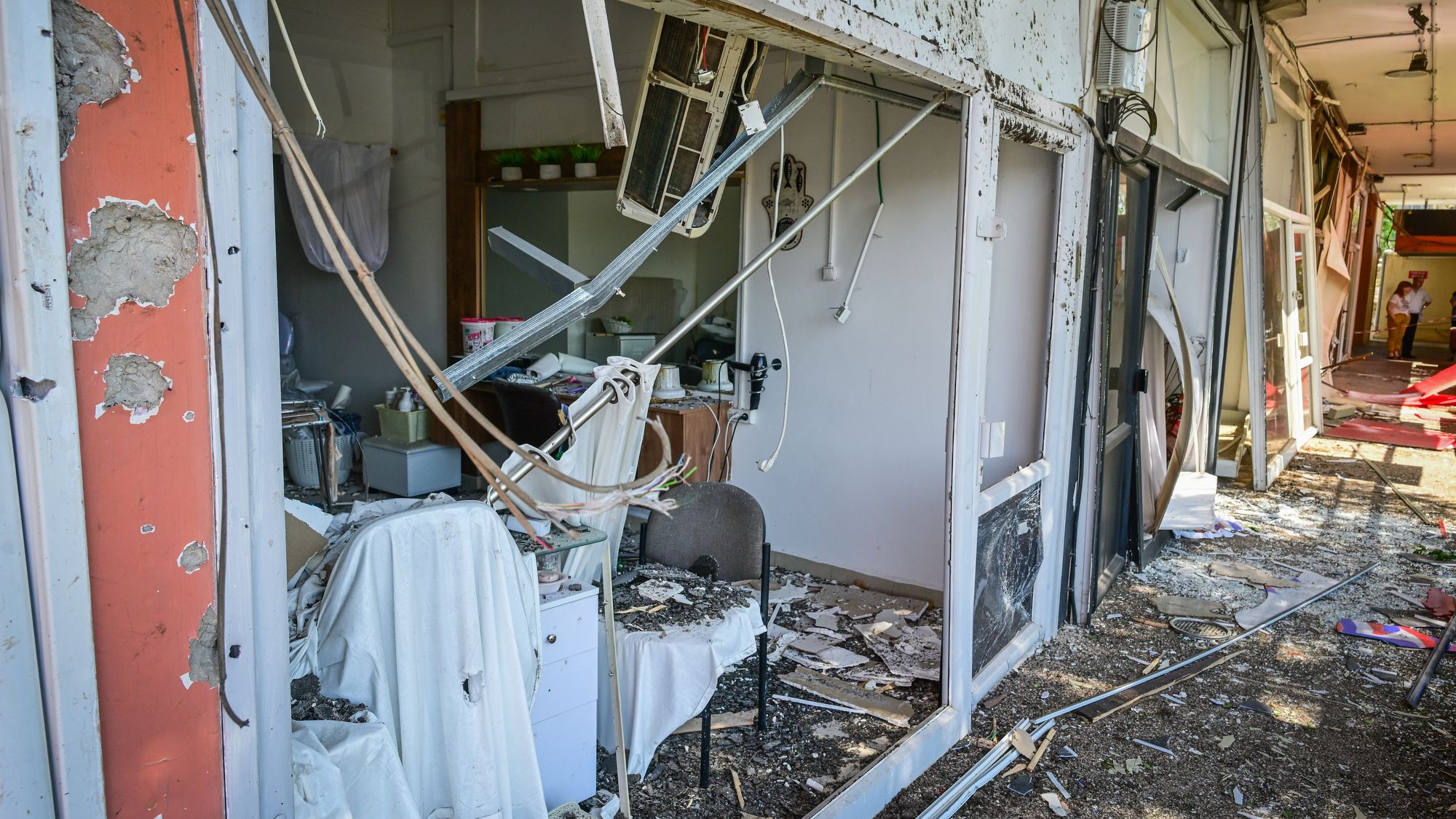
A U.S. military base in Kuwait came under attack late Thursday, May 21, 2026, when Iranian missile debris struck American personnel and damaged drones, while President Donald Trump’s administration sent contradictory signals about a fragile ceasefire deal with Tehran. As stock markets surged on reports of a potential 60-day truce, Treasury Secretary Scott Bessent warned Oman against imposing tolls on ships transiting the Strait of Hormuz—while Trump himself threatened military action if the country resisted. The dual crises—diplomatic progress and escalating regional tensions—have left analysts scrambling to assess whether Washington’s red lines are holding or if the U.S. is walking into another quagmire.
The Attack in Kuwait: What Happened
The most immediate crisis unfolded at a U.S. base in Kuwait, where Iranian missile debris injured American personnel and damaged drones, according to a live-blog update from i24NEWS. The attack came hours after Iran’s state media, Fars, reported that Iranian forces had fired missiles at “unidentified targets” in southern Iran. The Pentagon had previously confirmed that Iran had launched a ballistic missile toward Kuwait and deployed attack drones near the Strait of Hormuz—a critical chokepoint for global oil shipments.

The timing was explosive: just as markets rallied on reports that the U.S. and Iran had “mostly agreed” to a 60-day ceasefire memorandum, per CNBC. But the ceasefire’s fate now hangs by a thread. While a White House official confirmed that American negotiators believed Iran had signed off on the deal, Tehran has not publicly acknowledged it—leaving room for skepticism. Meanwhile, the attack in Kuwait suggests Iran may be testing U.S. resolve, or that hardliners in the Iranian regime are sabotaging any attempt at de-escalation.
The question now is whether this strike is an isolated provocation or a sign that Iran’s military factions are refusing to honor any agreement. If the latter, the ceasefire could collapse before it even begins.
Trump’s Red Lines: What the U.S. Demands
President Trump has drawn three non-negotiable demands in any deal with Iran, according to Treasury Secretary Scott Bessent, who outlined them at a White House press briefing on Thursday. First, Iran must surrender its stockpile of highly enriched uranium—a demand that directly challenges Tehran’s nuclear program. Second, Iran must abandon its pursuit of a nuclear weapon outright. And third, the Strait of Hormuz must remain free of obstruction, just as it was before the war began.
Bessent’s warnings to Oman were blunt. In an X post Thursday morning, he wrote: “Oman, in particular, should know that the U.S. Treasury will aggressively target any actors involved—directly or indirectly—in facilitating tolls for the Strait and any willing partners will be penalized.” The message was clear: any attempt to monetize the world’s most vital oil artery would trigger economic sanctions.
Yet Trump’s own rhetoric on the matter was even more aggressive. During a Cabinet meeting, he declared that “Oman will behave just like everybody else, or we’ll have to blow ’em up.” The comment—reported by CNBC—underscores the administration’s willingness to use force to protect the Strait, even as diplomats scramble for a ceasefire.
For more on this story, see 15 US Personnel Injured in Iranian Drone Strike on Kuwaiti Air Base.
The tension between diplomacy and deterrence is stark. On one hand, the U.S. is pushing for a temporary truce to restart nuclear talks. On the other, it is sanctioning Iranian entities and threatening military action against any country that challenges its control over the Strait. The risk? Iran could interpret these moves as a declaration of war by other means.
Oman’s Dilemma: Between Iran and the U.S.
Oman finds itself in the crosshairs. The country has been quietly negotiating with Iran over a potential tolling system for the Strait of Hormuz—a move that would give Tehran indirect leverage over global oil prices. But the U.S. has made it clear that any such system is a red line.
Bessent claimed that Oman’s ambassador had assured him “there were no plans for tolling the strait” in a phone call that morning. Yet the very fact that Oman was in talks with Iran about the issue suggests deeper engagement than a simple denial. Oman’s position is delicate: it maintains diplomatic ties with both the U.S. and Iran, and its strategic location makes it a critical player in any regional settlement.

The U.S. sanctions against Iran’s Persian Gulf Strait Authority—announced just days earlier—signal that Washington is treating any Iranian effort to control the Strait as an act of war. The authority, created earlier this month, appears designed to formalize Iran’s influence over maritime transit. By sanctioning it, the U.S. is effectively declaring that no third party can facilitate Iran’s ambitions.
Oman’s challenge is whether it can navigate between these two superpowers without becoming a casualty. If it caves to Iranian pressure, it risks U.S. sanctions. If it sides with Washington, it may lose Iran’s goodwill—and its own economic interests in the region.
The Ceasefire Gambit: Can It Hold?
The reported ceasefire agreement is fragile. Axios, cited by CNBC, claimed that U.S. and Iranian officials had “mostly agreed” to a 60-day memorandum of understanding. But the devil is in the details—and in the lack of Iranian confirmation.
- Is Iran’s military actually on board? The missile strike in Kuwait suggests that hardliners may be resisting any deal. If the Islamic Revolutionary Guard Corps (IRGC) or other factions refuse to stand down, the ceasefire could collapse within days.
- What are Trump’s real red lines? Bessent mentioned uranium surrender and nuclear abandonment, but the administration has not clarified whether it will accept a limited freeze or demand full dismantlement. Iran’s Supreme Leader, Ayatollah Ali Khamenei, has repeatedly ruled out negotiations on the nuclear program itself.
- Will Congress approve any deal? Even if Trump signs off, a ceasefire memorandum would likely require congressional review. With midterm elections looming in 2026, lawmakers may see any concession to Iran as politically toxic.
- What happens to the Strait of Hormuz? If Iran cannot guarantee free passage, the U.S. may see the ceasefire as a ruse—and respond with force. The threat to “blow up” Oman if it doesn’t comply is not an idle one.
The markets, at least, are betting on a deal. Major U.S. stock indexes rose Thursday on the news, reflecting investor optimism that a temporary pause in hostilities could stabilize oil prices and reduce geopolitical risk. But the reality is far more uncertain.
What Comes Next: Three Possible Scenarios
The next 72 hours will be decisive.
- The Ceasefire Holds (Low Probability). If Iran confirms the deal and halts further strikes, the U.S. may proceed with nuclear negotiations. But this would require Iran’s hardliners to back down—something they have shown no inclination to do in the past.
- Escalation Spiral (High Probability). If Iran continues attacks like the one in Kuwait, the U.S. could respond with strikes of its own, either directly against Iranian military sites or by escalating sanctions. Oman’s role as a potential mediator could collapse entirely.
- Diplomatic Standoff (Most Likely). The ceasefire memorandum is signed but not implemented. Both sides posture, markets remain volatile, and the Strait of Hormuz becomes a de facto battleground where any misstep could trigger war.
The wild card is Trump himself. His administration has sent mixed signals: threatening military action against Oman while pursuing a diplomatic deal with Iran. If the president cannot reconcile these approaches, the risk of miscalculation rises sharply.
One thing is clear: the Strait of Hormuz is now a powder keg. Any attempt by Iran—or its proxies—to disrupt shipping will be met with force. And if Oman tries to play both sides, it may find itself in the crossfire.
The bigger question is whether this crisis will be resolved through diplomacy or deterrence. The markets are betting on the former. The missiles in Kuwait suggest the latter may be inevitable.
