
On June 8, 2026, NATO fighter jets shot down a drone that entered Latvian airspace, marking a new escalation in the spillover effects of the Russia-Ukraine war. The incident, attributed by Latvia’s military to “Russian electronic warfare,” has intensified fears of the conflict spreading into NATO territory, with neighboring countries reporting repeated drone incursions.
NATO Jets and the Drone Incident: A New Spillover Risk
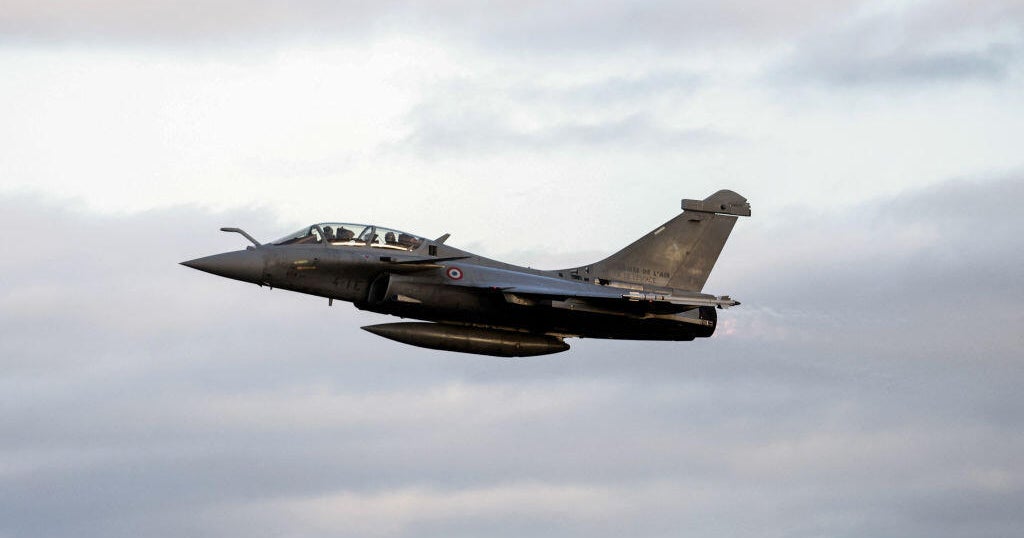
The drone, which entered Latvian airspace near the Russian border, was destroyed by French aircraft as part of NATO’s Baltic Air Policing mission. Latvian Defense Minister Raivis Melnis confirmed the incident occurred just after 9am local time, with no casualties or property damage reported. The French military emphasized the operation highlighted their “commitment to contributing to the security of Europe’s eastern flank.”
Al Jazeera reported that the Latvian military explicitly linked the drone’s incursion to “Russian electronic warfare,” suggesting the unmanned aerial vehicle may have been diverted from Ukrainian attacks. This aligns with previous incidents where Ukrainian drones, targeted by Russian jamming, inadvertently crossed into NATO airspace. However, the exact origin of Monday’s drone remains unclear, with CBS News noting that Latvia’s military did not specify whether it came from Russia or Ukraine.
“Thank you to our French allies for shooting down the drone that penetrated Latvian airspace!” wrote Foreign Minister Baiba Braze, praising the swift response. Prime Minister Andris Kulbergs called the action “professional,” underscoring the growing pressure on Latvia to manage the security risks of its proximity to Russia.
Al Jazeera also highlighted a separate incident in Moldova, where a drone crashed in a field after entering from Ukraine. Moldova’s foreign ministry stated that “regardless of the drone’s origin, responsibility for any drone that lands on the territory of the Republic of Moldova lies with Russia,” echoing broader accusations against Moscow for weaponizing the conflict.
Escalating Tensions: Drone Incursions Across Eastern Europe
The Latvian incident is part of a pattern of drone-related tensions across eastern Europe. In recent months, NATO countries have reported repeated incursions, with Romania and Estonia among the latest victims. Last week, a maritime drone exploded in Romania’s Constanta port, while a Ukrainian drone, knocked off course by Russian jamming, caused damage in the country. Earlier in May, a Russian drone hit an apartment building in eastern Romania, injuring two people and prompting calls for faster NATO anti-drone capabilities.
CBS News noted that these incidents have raised political pressure in Latvia, contributing to the resignation of Prime Minister Evika Silina last month. The Nordic-Baltic countries, including Latvia, Estonia, and Lithuania, have accused Russia of using the drone threats to “divert attention from its illegal war and to intimidate NATO Allies.” Their joint statement emphasized that “never allowed their territory or airspace to be used for these attacks against targets in Russia.”
“Incidents involving drones entering NATO airspace are a direct consequence of Russia’s illegal war of aggression against Ukraine,” the Nordic-Baltic ministers said, framing the issue as a strategic maneuver by Moscow to destabilize the alliance. This perspective is echoed in statements from the European Commission, which warned that the war is “increasingly becoming a direct threat to countries on our Eastern border.”
CBS News also cited a May 2026 statement by Estonian Foreign Minister Margus Tsahkna, who accused Russia of “desperately now using any kind of opportunity to divide the Western part of the world and… to put more pressure on Ukraine not to launch these attacks.”
Ukraine’s Military Advances and the Broader War Context
While the drone incidents dominate headlines, Ukraine’s military continues to push back against Russian forces. According to The Independent, Ukraine’s top military commander, Oleksandr Syrskyi, reported that Kyiv forces have recaptured over 600 square kilometers of territory this year—equivalent to twice the size of Birmingham. However, the frontlines remain “difficult and dynamic,” with daily clashes increasing and Russia continuing to advance in eastern and southern Ukraine.
President Zelensky’s diplomatic efforts have also drawn attention. He recently met with King Charles III in the UK and expressed concern over Reform UK councils lowering Ukrainian flags from civic buildings, calling it a “small mistake” that could “break big friendship.” Meanwhile, at the UN Security Council, Ukraine’s representative Andriy Melnyk accused Russia of escalating attacks on civilian areas, including a recent assault that killed at least 30 people and injured 200 in Kherson. The UN’s Indrika Ratwatte described these as “unacceptable attacks” on humanitarian efforts.
Zelensky’s call for a meeting with Putin, rejected by the Russian leader, underscores the stalled peace process. “Regardless of the drone’s origin, responsibility for any drone that lands on the territory of the Republic of Moldova lies with Russia,” Moldova’s foreign ministry reiterated, reflecting a broader narrative that Moscow is using the conflict to destabilize its neighbors.
