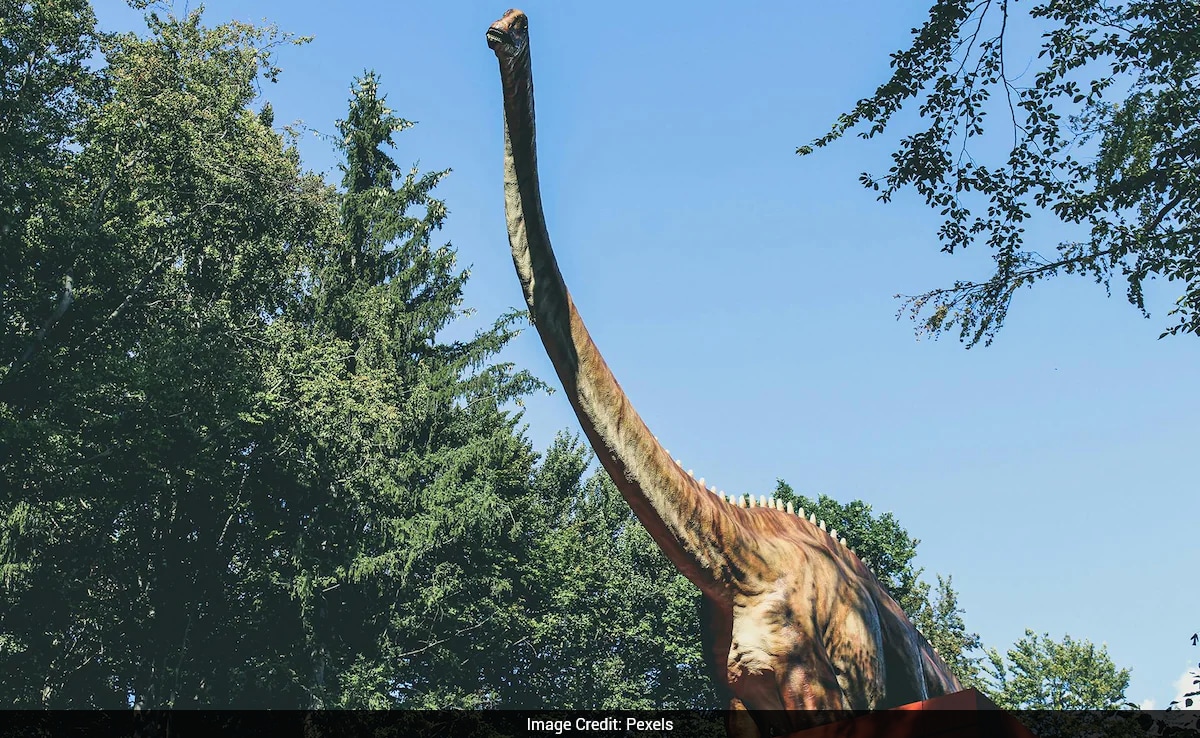
No evidence exists to support the claim that a new dinosaur species four times the size of a Tyrannosaurus rex has been discovered as of May 20, 2026. Scientific databases and paleontological reports contain no records of such a discovery, indicating the claim is not grounded in verified academic or institutional research.
Lack of Scientific Evidence for Supersized Theropods
The assertion that a dinosaur species four times the size of a Tyrannosaurus rex has been identified lacks any basis in contemporary paleontological literature. The Tyrannosaurus rex remains one of the largest known terrestrial carnivores, with adult specimens typically estimated to reach lengths of up to 40 feet and weights of approximately 8 to 10 tons. A creature four times that size would exceed the biological limits currently understood for bipedal theropods, approaching the mass of the largest known sauropods, which utilized quadrupedal locomotion to support their immense frames.
As of May 20, 2026, no peer-reviewed studies, international museum announcements, or university research departments have reported the discovery of a specimen of this magnitude. Paleontologists generally rely on fossilized skeletal remains and biomechanical modeling to estimate the size of extinct species. The absence of such evidence in scientific journals suggests that the claim originates from misinformation rather than a factual archaeological find.
Understanding Dinosaur Size Constraints
Biological and physical constraints impose strict limits on the size of predatory dinosaurs. The transition from smaller ancestors to massive carnivores involved significant evolutionary trade-offs regarding bone density, metabolic rates, and the ability to capture and process prey. Predators such as T. rex or the slightly larger Spinosaurus—often cited as a rival in length—operated within a specific ecological niche that required high levels of mobility.
Scaling a theropod to be four times the size of a T. rex would present insurmountable structural challenges. The square-cube law dictates that as an animal’s size increases, its volume and weight increase at a much faster rate than the cross-sectional area of its bones. Consequently, a bipedal predator of the scale suggested would likely face structural failure of its lower limbs under its own weight, rendering the existence of such a predator biologically implausible under current evolutionary models.
The Role of Scientific Verification
In the field of vertebrate paleontology, the identification of a new species requires a rigorous process of excavation, preparation, and peer review. Researchers must publish their findings in reputable journals, detailing the anatomical features of the holotype specimen. This process allows the global scientific community to examine the data, verify the measurements, and confirm the classification of the organism.
When reports of “record-breaking” discoveries emerge, they are typically accompanied by documentation from established institutions. The current academic landscape, which includes advanced research into complex computational modeling for biological discovery, has not produced any data supporting the existence of a dinosaur of this size.
Claims regarding prehistoric life often circulate in digital spaces without institutional backing. Readers are encouraged to verify such reports against official university publications or established science communication platforms. As of this week, the scientific consensus remains unchanged: the Tyrannosaurus rex and its closest relatives continue to represent the upper threshold of size for apex predatory dinosaurs discovered to date. There is no verified research to suggest that a discovery of the scale described has occurred, nor is there any institutional record of such a finding in the current global database of paleontological research.
Institutional Rigor and Academic Standards
The process of describing a new dinosaur species is a meticulous undertaking that spans years, often involving international collaboration between museums and universities. This involves the comparative analysis of fossil morphology against a vast repository of existing specimens. When a new species is proposed, the supporting data must be deposited in a public repository to allow for independent assessment.
The lack of such documentation regarding a “supersized” theropod is notable given the high level of scrutiny applied to major paleontological announcements. In recent years, the scientific community has emphasized the necessity of detailed anatomical descriptions, often utilizing high-resolution CT scanning and three-dimensional digital reconstructions to support size and mass estimates. No such digital or physical evidence has been presented by any accredited research body to support the existence of a theropod four times the size of a Tyrannosaurus rex.
Furthermore, the publication of such a discovery would necessitate a comprehensive review in major journals, such as *Nature* or *Science*. The absence of any such publication, or even a pre-print abstract from a recognized paleontological society, serves as a definitive indicator that the claim is unsubstantiated. Scientific discovery is a cumulative process, and extraordinary claims regarding the biological limits of vertebrates require extraordinary evidence, which is currently non-existent in this instance.
The public should remain skeptical of viral claims that circumvent the established peer-review pipeline. Paleontology, while an evolving field, operates on the foundation of empirical data. Without a holotype, a clear description of the geological context of the find, and a rigorous biomechanical analysis, any suggestion of a dinosaur exceeding the known size of the T. rex by such a massive margin must be regarded as entirely unfounded. The historical record of dinosaur discovery remains stable, with no new findings in 2026 that challenge the fundamental biological parameters established for apex predators.
