The New York Times Connections puzzle for Wednesday, June 24, 2026, features categories including “Prog bands,” “Classic wedding gifts,” “Red characters,” and “Rhyming compound words,” according to coverage from CNET. Players can access the daily game via the official Times website or the Games app to solve the 16-word grid.
Solving the June 24 Connections Grid
Today’s puzzle, identified as #1109, challenges players to organize 16 words into four distinct groups. As reported by Forbes, the game typically follows a color-coded difficulty structure where yellow represents the most straightforward connections, while purple often requires more abstract wordplay. The New York Times also offers a “Connections Bot” for registered users to analyze their performance, providing metrics such as win streaks and the number of puzzles completed, as noted by CNET.
The game mechanics rely on a grid of 16 words that players must sort into four categories of four. Each category is color-coded by the game’s internal logic: yellow (straightforward), green (slightly more nuanced), blue (challenging), and purple (the most abstract or wordplay-heavy). Players are permitted only four mistakes before the game ends, a constraint that encourages careful deliberation over rapid guessing. The inclusion of “red herrings”—words that appear to belong in multiple categories—is a hallmark of the puzzle’s design, forcing players to evaluate the grid as a whole rather than focusing on isolated pairs.
Category Breakdown and Word Groups
The categories for the June 24, 2026, puzzle highlight a mix of musical history, cultural icons, and linguistic patterns. According to CNET, the groupings are as follows:

- Prog bands: Genesis, King Crimson, Pink Floyd, Rush
- Classic wedding gifts: china, luggage, money, toaster
- Red characters: Clifford, Deadpool, Kool-Aid Man, Mr. Krabs
- Rhyming compound words: chick flick, helter skelter, Humpty Dumpty, mumbo jumbo
These categories demonstrate the breadth of the NYT’s trivia scope. For instance, the “Prog bands” category tests knowledge of 1970s progressive rock history, while the “Red characters” group pulls from diverse media sources, ranging from children’s literature (Clifford the Big Red Dog) to comic books (Deadpool) and animation (Mr. Krabs from SpongeBob SquarePants). This cross-disciplinary approach is central to the game’s appeal, as it requires a broad cultural literacy rather than expertise in a singular field.
Distinguishing Connections: Sports Edition
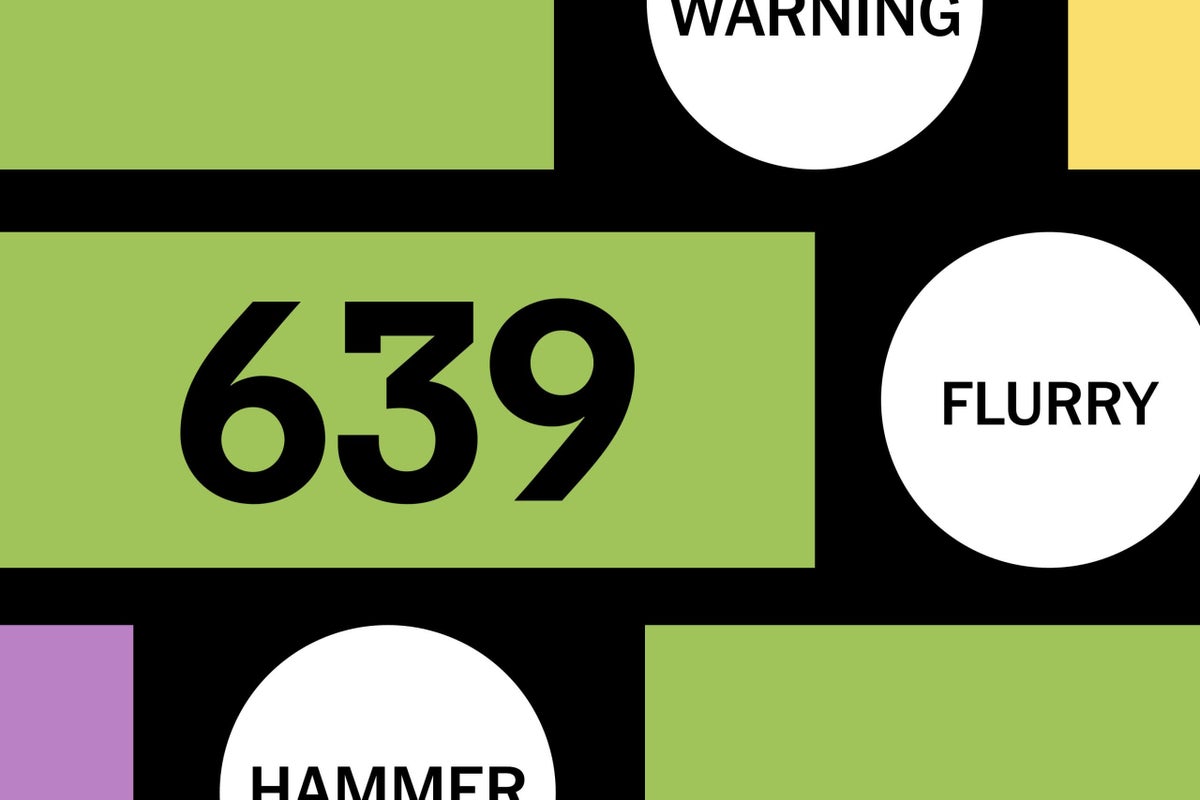
Readers should note that The Athletic offers a separate, sports-focused variant of the game, which is distinct from the main NYT Connections puzzle. For June 24, 2026, the “Connections: Sports Edition” (Game No. 639) features a different set of categories. The Athletic’s managing editor for college sports, Mark Cooper, who creates these puzzles, notes that the categories for today include:
- Throwing events: DISCUS, HAMMER, JAVELIN, SHOT PUT
- Quick run of activity: BURST, FLURRY, SPURT, SURGE
- NBA Draft No. 1 picks: BRAND, TOWNS, WALL, WORTHY
- _____ track: DIRT, RACE, SHORT, WARNING
As The New York Times reported, the Sports Edition is designed to test knowledge of athletic terminology and history, with a difficulty rating of 2.5 out of 5 for this specific installment. The Sports Edition has become a staple for subscribers to The Athletic, reflecting a broader trend in digital media where platforms integrate gamification to increase user retention and daily engagement. By utilizing the same interface logic as the standard Connections puzzle, The Athletic maintains a cohesive user experience while catering to a specialized audience interested in statistical and historical sports data.
Patterns and Strategies for Future Games
The New York Times frequently rotates themes to keep players engaged, often utilizing “red herrings” that seem to fit multiple categories. To help players identify these patterns, CNET highlighted several of the most challenging past puzzles. Some of the recurring structures include:

- “Things you can set,” such as mood, record, table, and volleyball.
- “Things that can run,” including candidate, faucet, mascara, and nose.
- “Power ___” categories, such as nap, plant, Ranger, and trip.
These examples illustrate the game’s reliance on polysemy—words with multiple meanings—which remains the primary hurdle for consistent players. Whether tackling the standard NYT puzzle or the specialized sports version, the objective remains the same: group the 16 words into four sets of four before exhausting the four-mistake limit. The strategy often involves identifying the most obvious category first to reduce the pool of remaining words, thereby narrowing the possibilities for the more difficult, abstract categories that define the purple level. As the game has grown in popularity, the NYT has integrated it into their broader suite of games, including Wordle and Spelling Bee, creating a bundled daily ritual for millions of subscribers worldwide.
Find more reporting in our Entertainment section.
