
The Department of Defense has appointed Elias Irizarry, a man convicted for his role in the January 6, 2021, attack on the U.S. Capitol, to a position within the Special Operations and Low Intensity Conflict unit. The appointment has sparked internal alarm regarding the security implications of placing a convicted rioter in a sensitive national security role.
A Controversial Appointment to Special Operations
Elias Irizarry, who was 19 years old at the time of the January 6 breach, has been hired by the Department of Defense to serve in a portfolio focused on irregular warfare and counterterrorism. According to reporting from The Washington Post, the position is attached to a team of approximately 40 people responsible for sensitive military operations, including personnel recovery, hostage rescue, and embassy security. Public records from the Department of Defense confirm that Irizarry began his tenure in late May 2026, operating out of the Pentagon’s Arlington, Virginia headquarters.
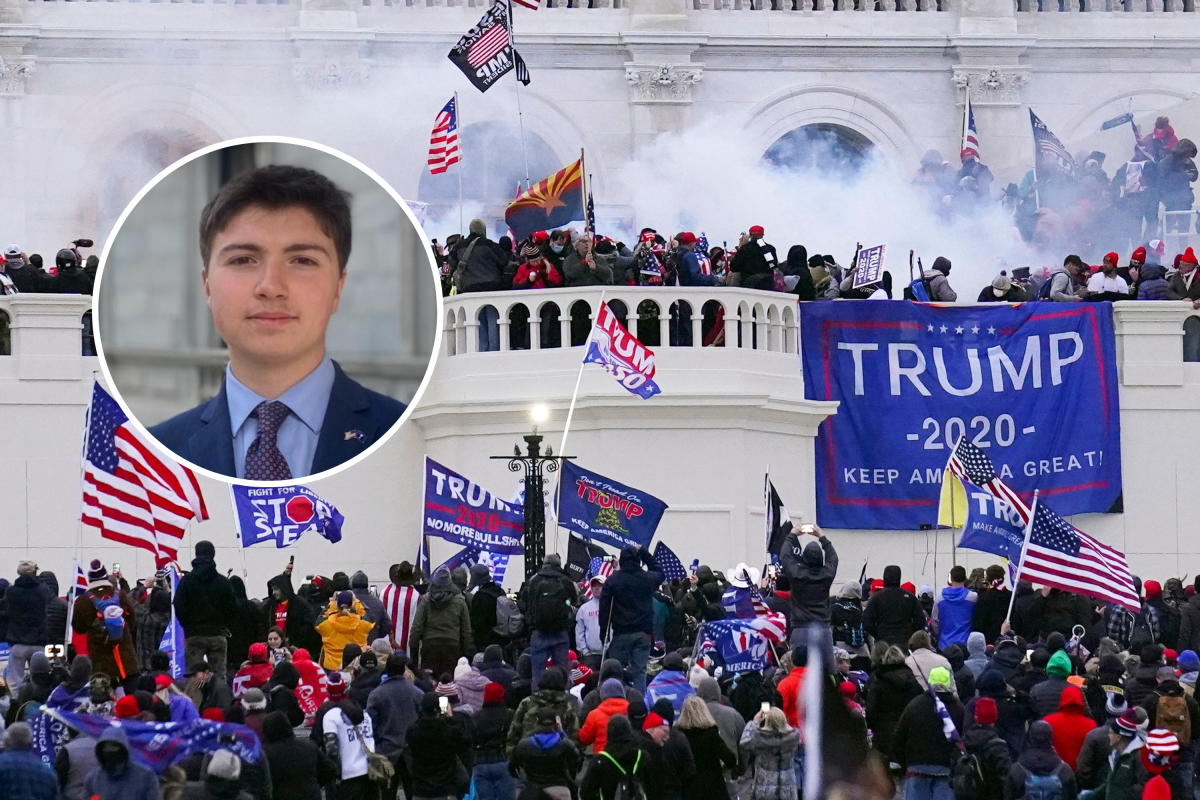
The hiring has drawn sharp criticism from within the Pentagon. Anonymous officials cited by The Guardian expressed profound dismay that an individual involved in the storming of the Capitol—an event that saw five deaths and led to the subsequent suicides of four responding police officers—would be granted access to classified military information. Sources familiar with the internal vetting process told reporters that the appointment bypassed several traditional layers of security review typically mandated for civilian staff handling “Secret” or “Top Secret” sensitive compartmented information (SCI).
Irizarry’s Legal History and Background
Irizarry’s involvement in the January 6, 2021, incident resulted in a guilty plea to a misdemeanor charge of entering and remaining in a restricted building or grounds. He was sentenced to 14 days in jail. During his sentencing, Irizarry described his actions as a “disgrace” and expressed shame for his participation. Court filings from the U.S. District Court for the District of Columbia document that Irizarry was captured on surveillance video inside the Capitol building for approximately 10 minutes, entering through a door that had been breached by the mob.
At the time of the riot, Irizarry was a freshman cadet at The Citadel, a military college in Charleston, South Carolina. Despite the criminal conviction, he was eventually readmitted to the academy and graduated in 2024. Following his graduation, he pursued a political career, running in an unsuccessful Republican primary for a South Carolina state House seat. In that race, Irizarry did not receive an endorsement from Donald Trump, who instead backed his opponent, Randy Ligon. Records from the South Carolina State Election Commission confirm that Irizarry garnered 31% of the vote in the June 2024 primary, failing to secure the nomination.
Following his primary loss, Irizarry maintained a presence in conservative political circles in the Southeast. Investigators looking into the Pentagon hiring process noted that Irizarry’s transition from a legislative candidate to a Department of Defense political appointee occurred via a direct recommendation from a senior transition aide, whose identity has not yet been disclosed by the Pentagon’s Office of the Inspector General.
The Pentagon’s Defense of the Hire
The Pentagon has publicly defended the decision to bring Irizarry into the department. In a statement provided to Newsweek, acting Pentagon press secretary Joel Valdez characterized the appointee as a patriotic individual.
“Mr Elias Irizarry is a qualified, patriotic young professional, and we are proud to have him as a political appointee at the Department of War,” Joel Valdez, acting Pentagon press secretary, via The Guardian and Newsweek.
Valdez also used the opportunity to criticize the media outlets that first reported on the hiring. He alleged that the reporting process itself posed a greater security risk than the appointment of Irizarry.
“Unlike Mr. Irizarry, the Washington Post does not care about national security given its track record of low-tier reporters publishing and soliciting classified information that could hurt our nation on a daily basis.”Joel Valdez, acting Pentagon press secretary, via The Guardian and Newsweek.
The Pentagon has declined to release the specific clearance level Irizarry currently holds, citing “privacy and operational security.” However, several high-ranking career civil servants within the Office of the Secretary of Defense have filed formal inquiries with the DoD’s Inspector General, questioning how the background check process accounted for his criminal record regarding “adjudicative guidelines for national security positions,” which typically flag individuals who have demonstrated “unreliable conduct” or “criminal activity” for potential denial of access to classified data.
Security Risks in Irregular Warfare
The specific nature of the unit to which Irizarry was assigned has heightened the concerns of his critics. Because the team manages hostage rescue and extraction missions, personnel are frequently required to operate in high-stakes, volatile regions. These missions often rely on deep-cover intelligence and the coordination of international assets, making the integrity of the staff paramount to the lives of operators in the field.
“In the case of rescue/extraction missions, it can place our special operators in some of the most complex and dangerous environments we ask of them,” an anonymous source told The Guardian. “To put someone so junior and new to DoD, and with such a checkered background, into such a sensitive portfolio raises serious questions for leadership.”
Military analysts, including retired officers who previously served in the Special Operations and Low Intensity Conflict (SOLIC) office, have noted that the portfolio Irizarry now assists in managing is responsible for providing policy oversight to the U.S. Special Operations Command (USSOCOM). This includes the authorization of “sensitive support” missions that are rarely disclosed to Congress. The concern among current staff is that a lack of experience, coupled with a public record of challenging governmental institutions, creates a “vulnerability point” for foreign intelligence services looking to exploit internal Pentagon friction.
While the Department of Defense confirmed the hiring and defended Irizarry’s qualifications, officials have not provided further details regarding the specific vetting process or who within the administration was responsible for selecting him for this counterterrorism portfolio. As of June 2, 2026, the department has maintained its position, despite the ongoing internal and public scrutiny regarding the compatibility of Irizarry’s record with the nature of his assigned duties. House Armed Services Committee members have signaled they may request a formal briefing from the Pentagon regarding the hiring protocols used in this instance, though no subpoena has been issued to date.
