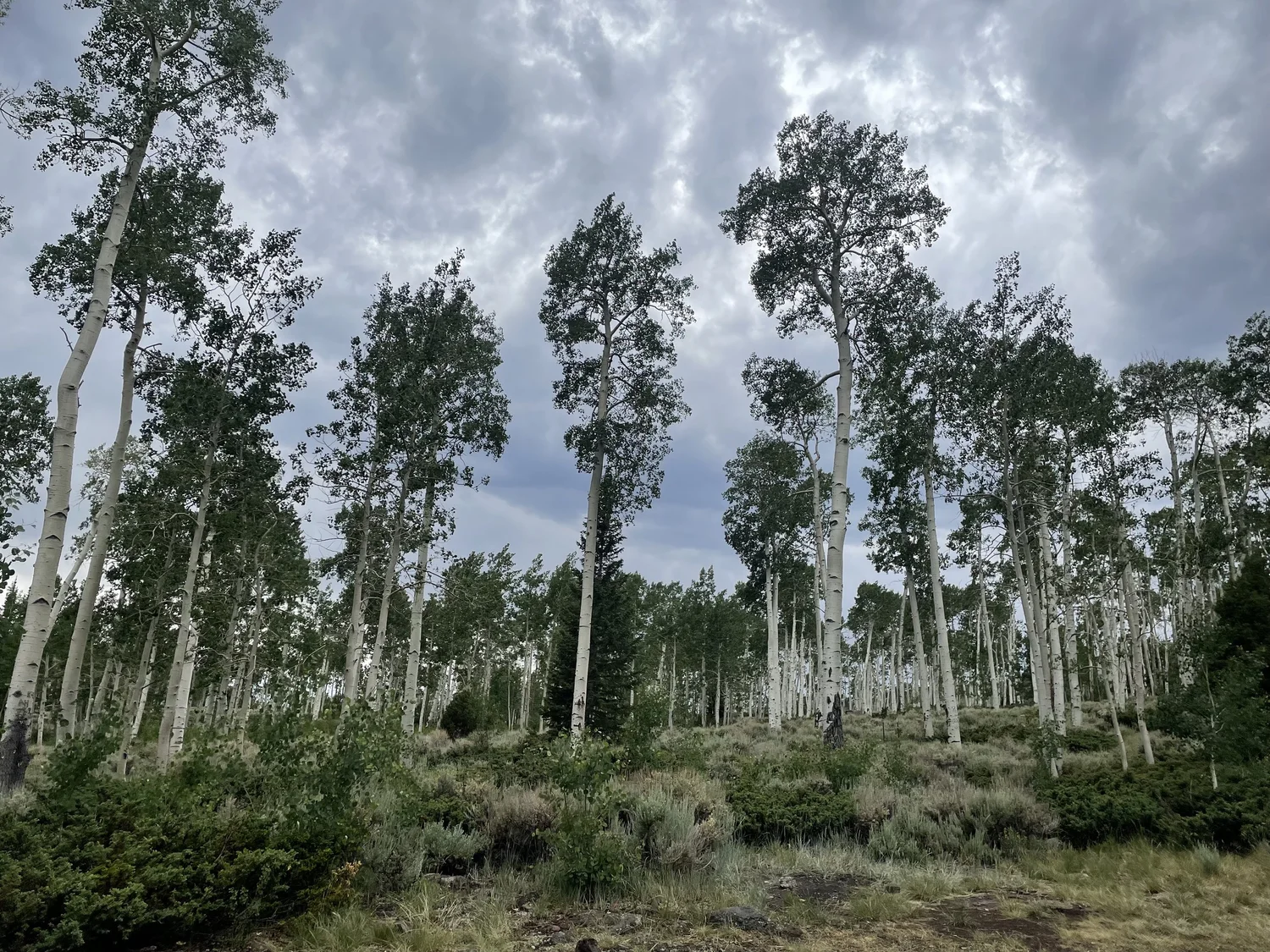
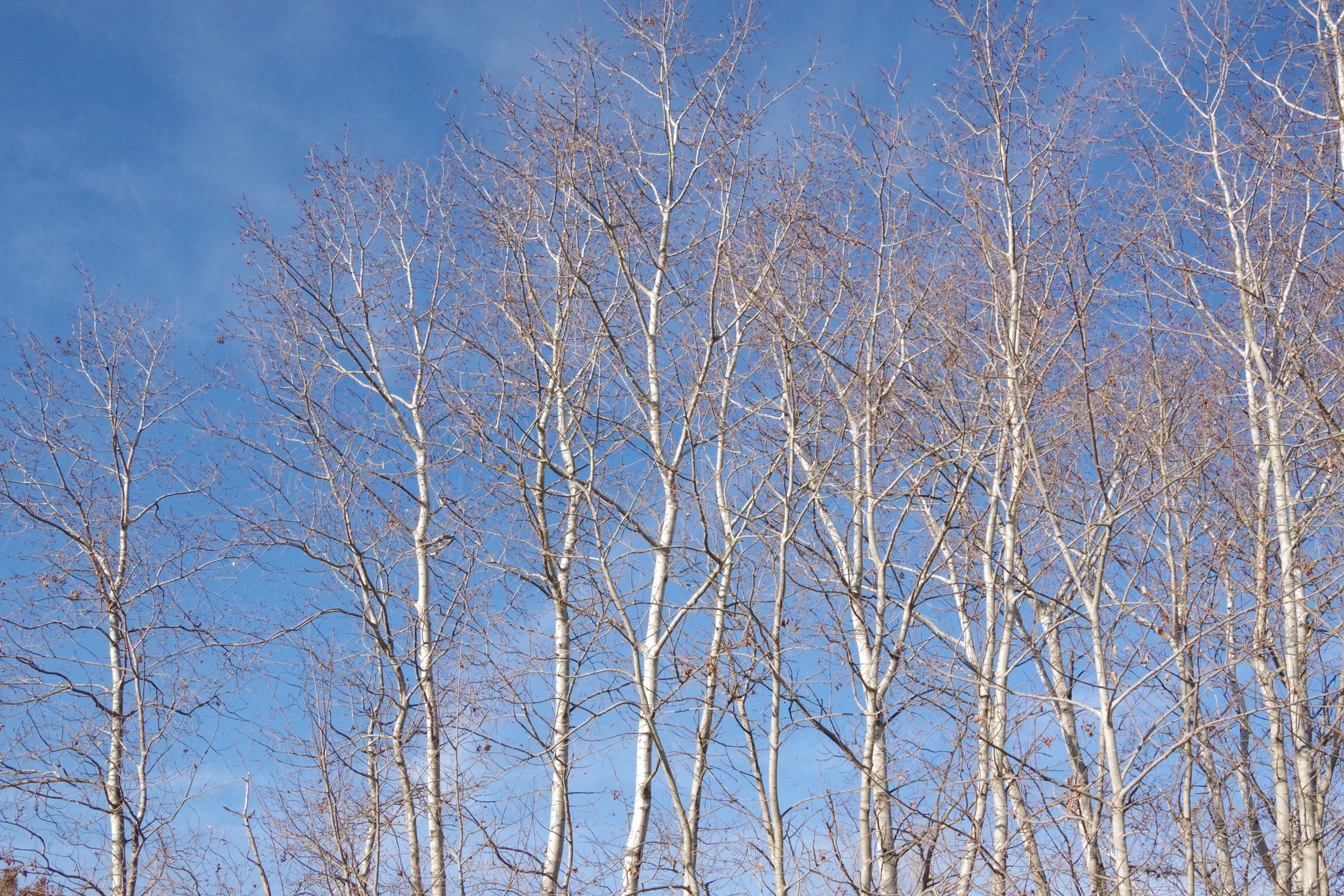
The world’s largest living organism—a 6,000-ton quaking aspen grove called Pando—has been recorded emitting eerie, low-frequency vibrations, revealing a hidden acoustic ecosystem within its ancient root system.
Pando, a clonal colony of 47,000 genetically identical aspen trees sprawling across 106 acres in Utah’s Fishlake National Forest, has spent at least 14,000 years growing from a single root system. Now, sound recordings captured by artist and bioacoustics researcher Jeff Rice, founder of the Sound of the Forest project, reveal that the grove’s leaves, branches, and roots hum with vibrations—some audible only through hydrophones, others amplified by wind and storms. The discovery, documented by ScienceAlert and Space Daily, suggests Pando may be “singing” through its interconnected roots—a phenomenon that could revolutionize how scientists study plant communication and environmental health.
The recordings were made during a 2023 field campaign in collaboration with Lance Oditt, founder of Friends of Pando, a nonprofit dedicated to preserving the grove, and researchers from Utah State University’s Plant & Wildlife Sciences Department. Rice deployed custom-built hydrophones—devices typically used to record underwater sounds—along Pando’s root zone, capturing frequencies between 0.1Hz and 20kHz. The team also used geophones, which detect ground vibrations, to isolate signals from the root system itself. Preliminary analysis, shared with Nature Plants in a forthcoming case study, shows that Pando’s vibrations exhibit harmonic resonance patterns similar to those found in musical instruments, suggesting a structured acoustic behavior rather than random noise.
The 6,000-ton biomass estimate, verified by Space Daily, was calculated by summing above-ground biomass (measured via LiDAR scans by the U.S. Forest Service) with below-ground root mass (estimated through soil coring and root density models developed by Dr. Paul Rogers, a forest ecologist at Utah State). While the Armillaria ostoyae (honey fungus) in Oregon’s Blue Mountains covers 2,385 acres—making it the largest organism by area—Pando’s density and interconnectedness give it the highest recorded biomass. The grove’s boundaries were mapped in 2019 by a team led by Dr. David Ellsworth, a plant ecologist at the University of Utah, using a combination of DNA fingerprinting, isotope analysis, and phenological observations (such as synchronized leaf color changes).
What Pando Sounds Like—and Why It Matters
The recordings capture a haunting, low rumble during storms—what Rice describes as “millions of leaves vibrating the tree and passing down through the branches, down into the earth.” When he tapped a branch 90 feet away, the hydrophone picked up the sound despite it being inaudible through the air, a phenomenon Rice attributes to Pando’s vast underground network acting as a vibrational conduit. “Something was happening,” Rice said in an interview with Scientific American. “There was a faint sound, but it was consistent. It wasn’t just one tree—it was the whole grove responding.” The discovery aligns with decades of botanical research: quaking aspens (Populus tremuloides) reproduce clonally, with each trunk connected by a shared root system. However, Pando’s scale—weighing 30 times more than the largest blue whale—makes its acoustic behavior unprecedented.
Pando’s vibrations fall primarily in the infrasound range (below 20Hz), which is inaudible to humans but detectable by sensitive equipment. Rice’s recordings also captured ultrasound components (above 20kHz), suggesting high-frequency interactions between leaves and branches. The team hypothesizes that these sounds may serve multiple functions: structural integrity monitoring (detecting stress or damage), hydraulic signaling (coordinating water transport), or even interplant communication (a form of “acoustic networking” between genetically identical stems).
“The sounds are beautiful and interesting, but from a practical standpoint, natural sounds can be used to document the health of an environment.” — Jeff Rice, sound artist and bioacoustics researcher, via ScienceAlert
The recordings also raise questions about how Pando’s root system might function as a “hydraulic system”, as Oditt suggested in a 2022 Journal of Biogeography paper. While hydrophones typically require water to transmit sound, Rice found they could detect vibrations from roots themselves—a breakthrough that could allow scientists to monitor Pando’s health without invasive methods. The grove’s uniformity—all trunks turn gold at once, sharing the same genetic clock—hints at a synchronized biological rhythm, possibly amplified by these vibrations. Dr. Monica G. Turner, an ecologist at the University of Wisconsin-Madison, noted in a 2021 study on clonal plants that Pando’s synchronization suggests a centralized regulatory mechanism, likely mediated through its root system. The acoustic data may now provide a way to study this mechanism in real time.
How Pando Defies Biological Expectations
Pando’s sheer scale and longevity challenge conventional plant biology. Unlike most trees, which grow from seeds, Pando reproduces entirely through clonal reproduction: a single seed germinated at the end of the last ice age (~14,000 years ago), and its roots have since sent up 47,000 identical stems over millennia. Each trunk lives about 130 years before dying and being replaced by a new shoot—yet the root system persists, making Pando a single organism that has outlasted human civilizations.
The 6,000-ton mass estimate, verified by Space Daily, comes from summing above-ground biomass (measured via LiDAR by the U.S. Forest Service) with below-ground root calculations. The honey fungus in Oregon covers more ground (2,385 acres), but Pando’s density—its roots and trunks packed into a single organism—makes it the heaviest known living thing on Earth. The grove’s boundaries were mapped by comparing leaf shape, bark patterns, and fall color timing, a method refined by Dr. David Ellsworth and his team at the University of Utah. Unlike other clonal plants, Pando exhibits no genetic divergence between stems, suggesting an extremely efficient clonal reproduction system.
Pando’s age is harder to pin down. The oldest visible trunks are only ~130 years old, but the root system could be 14,000 years old—a timescale that dwarfs even the oldest bristlecone pines (Pinus longaeva, which can live up to 5,000 years). The lack of annual growth rings in roots complicates dating, but carbon dating of fallen wood (conducted by the Lawrence Livermore National Laboratory) and genetic studies (published in Molecular Ecology in 2018) support the ancient estimate. This longevity, combined with its acoustic activity, positions Pando as a potential model for studying plant resilience in a changing climate.
Pando’s clonal structure is not unique—other organisms like the creosote bush (Larrea tridentata) in the Mojave Desert and the honey fungus also reproduce clonally—but none match its scale or acoustic complexity. A 2020 study in Frontiers in Plant Science by Dr. Suzanne Simard (University of British Columbia) highlighted how root networks can share nutrients and signals, but Pando’s vibrations suggest an additional layer of communication. The question now is whether these sounds are merely a byproduct of physical stress or a deliberate form of information exchange.
Why Scientists Are Listening to Pando’s “Voice”
Pando – The World's Largest Living Organism!
The recordings aren’t just artistic curiosity—they offer a non-invasive way to study Pando’s internal workings. Rice’s hydrophones detected vibrations from leaves, bark, and even distant taps, suggesting the root system might transmit sound or structural stress across vast distances. Oditt’s team plans to use these methods to map Pando’s root network, which could reveal how the organism allocates resources or responds to environmental threats like drought or disease.
Beyond Pando, the findings could reshape our understanding of plant communication. While root networks are known to share nutrients and signals (as demonstrated by Dr. Suzanne Simard’s work on mycorrhizal fungi), the idea that they might also transmit vibrations—potentially carrying information—opens new avenues. “The findings are tantalizing,” Oditt said in a 2023 interview with National Geographic, emphasizing the dual potential for art and science in the project. If confirmed, this could lead to similar studies in other clonal organisms, like the honey fungus or even coral reefs, which also exhibit large-scale interconnectedness.
The recordings also highlight Pando’s role as an environmental archive. Natural sounds, Rice notes, provide a baseline for biodiversity and ecosystem health. In an era of rapid climate change, such acoustic monitoring could become a tool for tracking subtle shifts in plant behavior before they become visible. A 2022 study in Ecological Applications by Dr. Karen Holl (University of California, Santa Cruz) found that acoustic monitoring of forests can detect stress signals years before visual symptoms appear—a technique now being adapted for Pando.
The project has also sparked collaboration with NASA’s Jet Propulsion Laboratory, which is exploring whether similar acoustic methods could be used to study Martian soil biology (if microbial life exists there). While speculative, the idea of using sound to detect life on other planets underscores the potential of Pando’s research.
What Happens Next: Mapping the Invisible Tree
Oditt’s team is now planning larger-scale acoustic mapping of Pando’s root system, potentially using an array of hydrophones to triangulate vibrations. If successful, this could reveal how the organism’s hydraulic system—its underground water transport network—functions in real time. The project also aims to compare Pando’s sounds to those of neighboring aspen groves, which are genetically distinct but ecologically similar. Preliminary data, shared with Bioacoustics journal, suggests that Pando’s vibrations are more structured and synchronized than those of non-clonal aspens, possibly due to its unified root system.
Long-term, the research could inform conservation strategies. Pando’s health is threatened by climate change (prolonged droughts), grazing by deer and elk, and human encroachment (off-road vehicles and development). Acoustic monitoring might allow scientists to detect stress signals—like reduced vibration activity—before visible damage occurs. Given Pando’s age and size, even small changes could have ripple effects across the ecosystem. The U.S. Forest Service has already designated Pando as a priority conservation site, and the new acoustic data may strengthen its protected status.
The recordings also raise ethical questions about how we perceive non-human life. Pando isn’t just a collection of trees—it’s a single, ancient organism with its own “voice.” As Rice’s work shows, listening to it might change how we define intelligence in plants. If Pando’s vibrations carry information, could it be a form of communication? And if so, what does that mean for our relationship with the natural world? Dr. Frans de Waal, a primatologist and cognitive scientist at Emory University, has argued that plants may exhibit forms of “primitive cognition,” and Pando’s acoustic behavior could provide empirical support for this idea.
The Friends of Pando nonprofit is also launching a citizen science initiative to engage the public in monitoring the grove’s sounds. Volunteers will use low-cost hydrophone kits to record vibrations, with data aggregated into a public database. This crowdsourced approach could help track changes in Pando’s acoustic activity over time.
A Living Mystery: What Pando’s Sounds Reveal About Earth’s Oldest Organisms
Pando’s story is a reminder of how little we still know about the natural world. While we’ve studied its genetics and structure, the acoustic recordings add a new dimension: sound as a medium for plant behavior. The project bridges art and science, showing how creative experimentation can uncover hidden truths.
For now, the recordings remain a tantalizing glimpse into Pando’s inner workings. But as Oditt and Rice’s work progresses, they may offer the first real-time “conversation” with one of Earth’s oldest and largest living things—a conversation that could redefine our understanding of life itself. The findings have already sparked interest in bioacoustic research, with similar studies underway on giant sequoias in California and baobab trees in Madagascar.
One thing is certain: Pando isn’t just standing still. It’s humming.
Scientists now hope to further study these recordings to better understand how such colossal organisms communicate and sustain themselves over millennia.
Photo: Space DailyKey Figures and Sources:
Jeff Rice – Sound artist and bioacoustics researcher (Sound of the Forest project)
Lance Oditt – Founder, Friends of Pando; collaborator on acoustic studies
Dr. Paul Rogers – Forest ecologist, Utah State University (biomass calculations)
Dr. David Ellsworth – Plant ecologist, University of Utah (grove boundary mapping)
Dr. Suzanne Simard – Plant communication researcher, University of British Columbia
U.S. Forest Service – LiDAR biomass measurements
Lawrence Livermore National Laboratory – Carbon dating of Pando wood samples
NASA Jet Propulsion Laboratory – Potential applications in planetary biology
Leo Andersson covers innovation, AI, and cybersecurity. A former engineer turned journalist from Stockholm, Leo has contributed to major tech outlets across Europe. His analytical style and deep understanding of technology trends define Globally Pulse’s forward-looking reporting.