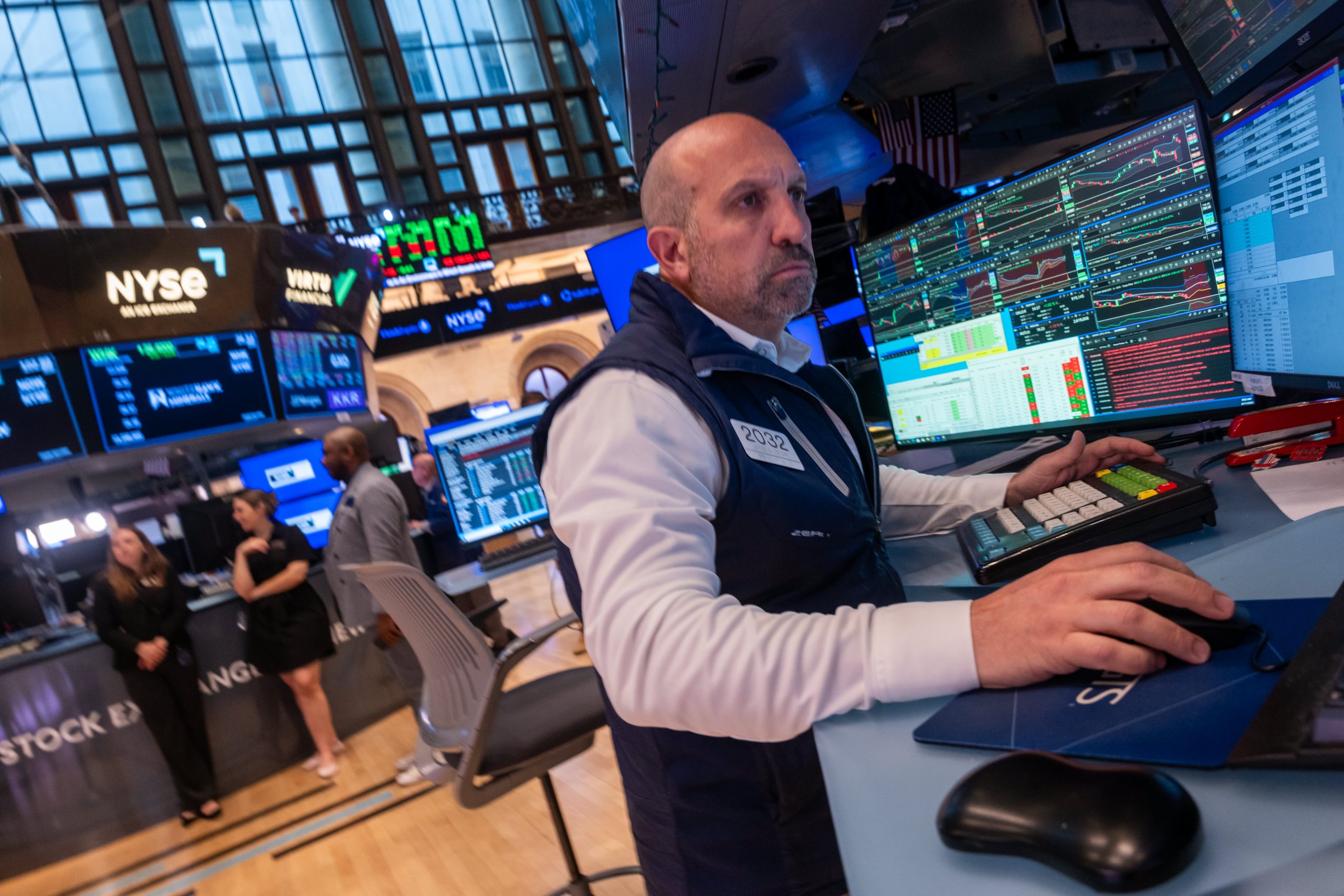
The S&P 500 fell 0.2% on Friday as traders braced for SpaceX’s record-breaking IPO and a potential Iran-U.S. peace deal, with West Texas Intermediate crude futures dropping to $87 a barrel after President Donald Trump warned Iran “better get their act together” on a Truth Social post. The Nasdaq Composite declined 0.6%, while the Dow Jones Industrial Average rose 63 points. SpaceX, valued at $1.77 trillion with a $135 share price, plans to raise $75 billion—the largest IPO in history—amid concerns about market volatility and geopolitical tensions ahead of the midterm elections.
SpaceX’s $1.77 Trillion IPO: The Biggest Wall Street Debut Ever
SpaceX’s Nasdaq debut under the ticker SPCX marks the largest initial public offering in history, surpassing Alibaba’s $22 billion IPO in 2014 by more than triple. The company’s fixed $135 share price values it at $1.77 trillion, with plans to sell 555.6 million shares—raising $75 billion in capital. Analysts warn the sheer size of the offering could pressure markets, with Wells Fargo Investment Institute’s Douglas Beath noting that “history indicates large IPO issuance occurs during periods of strong equity market sentiment, but the added equity supply can cause some indigestion.” The Nasdaq’s pre-IPO volatility saw Rocket Lab shares drop 9% and EchoStar fall 8%, while SpaceX perpetual futures suggest a 30% pop after its debut.
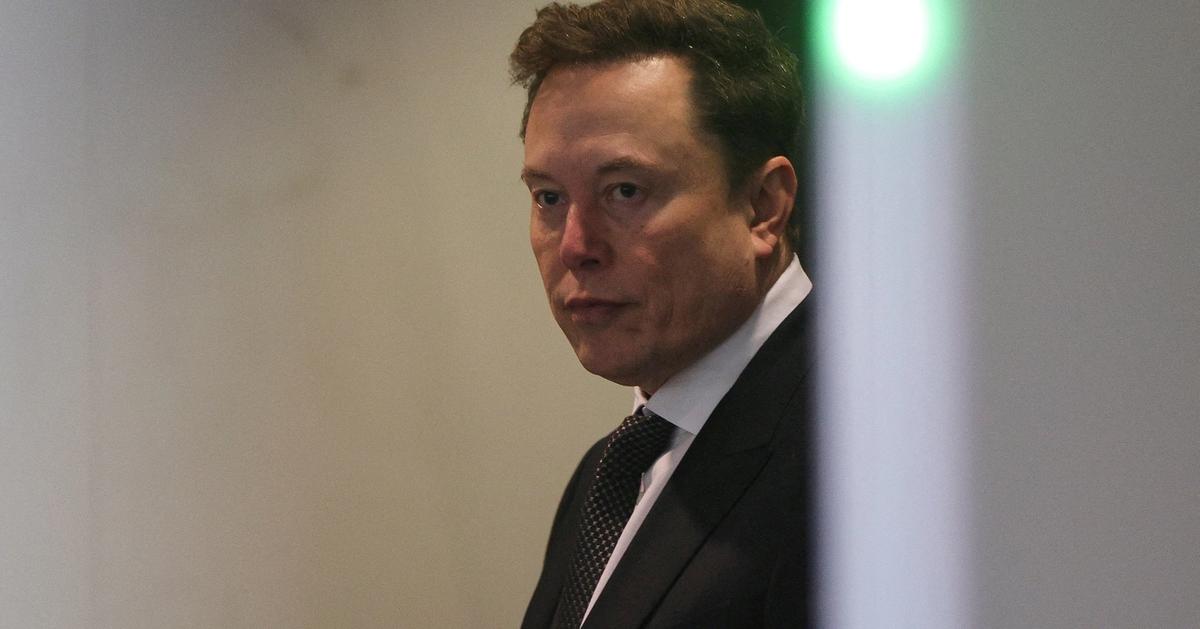
Elon Musk’s move to consolidate his empire under SpaceX—merging X and xAI and planning to add Tesla once the stock is public—reflects a broader trend in Big Tech, where conglomerates are increasingly tied together by AI. As Semafor reports, Musk and Jeff Bezos are building holding companies glued by AI, with Prometheus—Bezos’ $41 billion AI lab—focused on “physical AI” models that could revolutionize industries from logistics to healthcare. The question remains: Can AI truly be the “secret sauce” that turns conglomerates into value-creating machines, or will it expose the fragility of empire-building?
Iran Peace Talks: Trump’s Warning and Market Jitters
Trump’s warning to Iran—posted on Truth Social—sent oil prices tumbling and stocks lower, even as Iranian state media reported a draft peace deal could be signed in Switzerland as soon as Sunday. The memorandum of understanding reportedly includes U.S. commitments to lift oil sanctions and Iran’s pledge to reopen the Strait of Hormuz. Yet Trump’s blunt message—”better get their act together”—undercut optimism, with West Texas Intermediate crude futures dropping 1% to $87 a barrel. The geopolitical uncertainty comes as markets already grapple with SpaceX’s IPO and the $11.6 billion projected for midterm election ad spending, up nearly $800 million from last year’s forecast.

Douglas Beath of Wells Fargo Investment Institute tied the market’s choppy performance to multiple factors: the SpaceX IPO’s sheer scale, ongoing geopolitical tensions, and the upcoming midterms. “Combined with the ongoing geopolitical tensions and the upcoming midterm elections, it could be one more reason for markets to display greater choppiness in the second half,” he wrote. Meanwhile, CNBC highlighted the $11.6 billion ad spend for the 2026 midterms—exceeding the $11.2 billion spent on the 2024 presidential cycle—as a sign of political polarization’s financial impact.
What Happens Next: Market Volatility and AI’s Role in Corporate Strategy
The next 30 days will test whether markets can absorb SpaceX’s historic IPO without triggering broader volatility. Analysts like Beath remain bullish on AI and tech but warn against chasing the run-up, given the sector’s already strong performance. Meanwhile, the Iran deal’s fate hinges on Sunday’s potential signing in Switzerland, with Trump’s intervention adding a wildcard. Beyond the markets, the bigger story may be AI’s role in reshaping corporate strategy—from Musk’s consolidation play to Bezos’ Prometheus lab. As Semafor’s Reed Albergotti put it: “Driverless cars, high-speed internet beamed from space, video games controlled by our brains alone, and life-saving drugs designed on laptops. AI is what ties these things together.” The question is whether the tech can justify the conglomerate model—or if it will expose the cracks.

For now, traders are watching three key developments:
- SpaceX’s IPO performance: Will the stock pop 30% after debut, or will the market reject the sheer size of the offering?
- The Iran deal’s signing: Can Trump’s warning derail negotiations, or will the memorandum hold?
- AI’s corporate impact: Will Prometheus and SpaceX prove that AI can truly glue together disparate businesses—or will it accelerate the breakup of conglomerates?
Why It Matters: The End of the Conglomerate Era?
The SpaceX IPO isn’t just about rockets—it’s a test of whether AI can revive the conglomerate model. Historically, conglomerates like ITT and GE failed when their “secret sauce” (synergy, management, or cheap capital) proved insufficient. But AI offers a new potential glue: superior data, operations, and models. As Semafor notes, if every company becomes an AI wrapper, owning multiple ventures under one roof could create real value. Yet the risk remains: AI’s transparency could also expose conglomerates’ weaknesses, forcing a return to specialization. The outcome will determine whether Musk and Bezos succeed in building the next Berkshire Hathaway—or whether their empires crumble under the weight of complexity.
One thing is clear: The next 12 months will be volatile. With SpaceX’s IPO, Iran’s peace talks, and midterm ad spending all converging, markets are in for a bumpy ride. The question isn’t just whether the S&P 500 can hold steady—but whether AI can rewrite the rules of corporate power.
Find more reporting in our News section.
