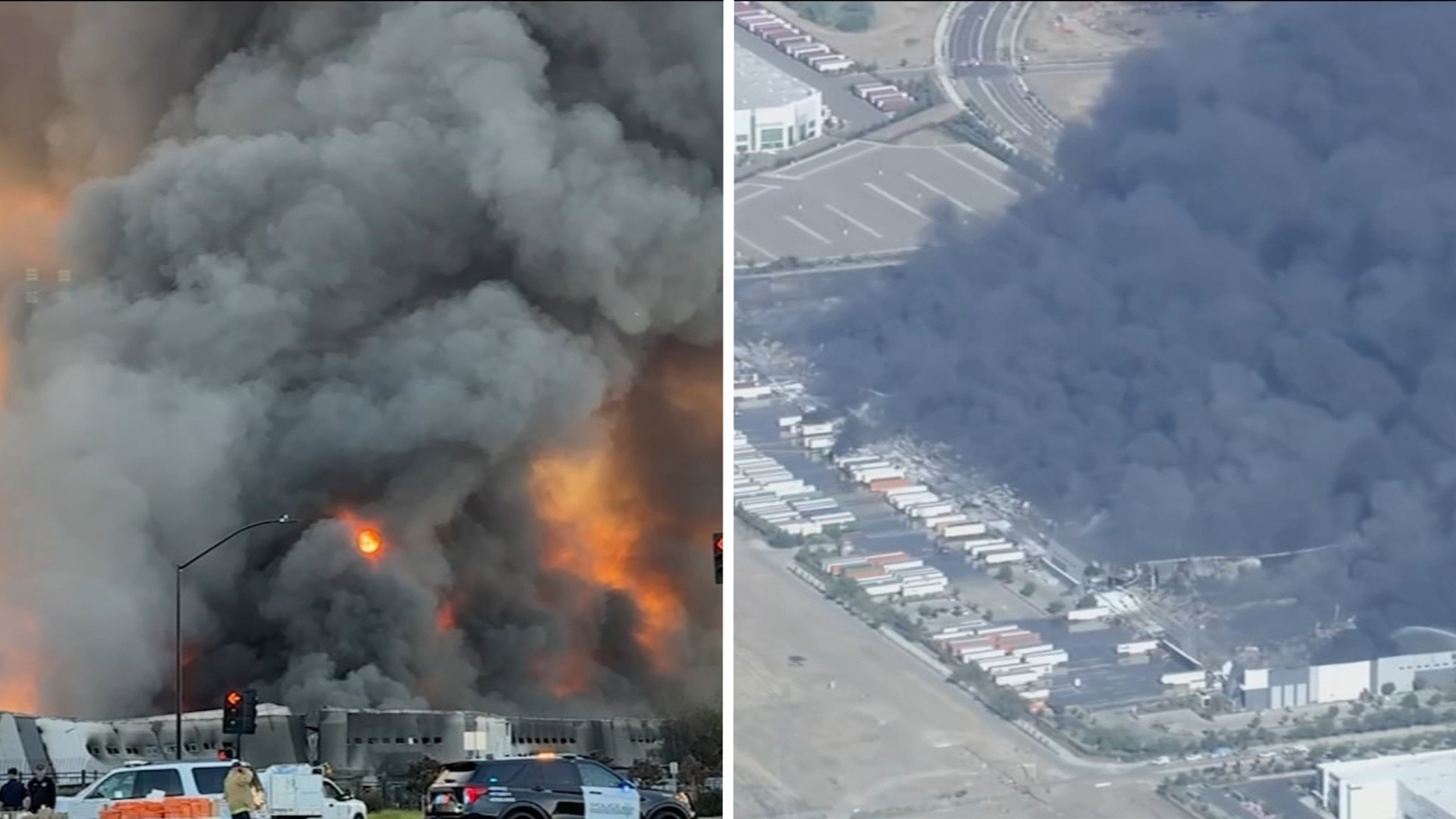
A massive warehouse fire at Medline’s 1-million-square-foot distribution center in Tracy, California, destroyed the facility and sent toxic debris across neighborhoods Friday morning, with officials calling it one of the largest industrial fires of its kind in the U.S. The blaze, which began Thursday afternoon, has forced evacuations, damaged nearby FedEx operations, and left residents shielding children from hazardous fallout as investigators probe a failed sprinkler system and lithium-ion battery risks.
The Fire’s Scale: Why This Blaze Stands Out
The Tracy fire ranks among the most destructive warehouse fires in U.S. history, with Tracy Fire Department Deputy Chief Brian Bagley describing it as comparable to a “skyscraper laying on its side.” The 1-million-square-foot Medline warehouse—one of the largest distribution centers in Northern California—was fully engulfed within 40 minutes of ignition, according to Bagley, who told reporters the fire’s intensity forced crews into a defensive strategy. “There’s been distribution centers that have burned throughout our nation,” Bagley said, “but to have one over a million square feet, there’s only been two or three that we are aware of.” The facility had recently undergone a $500 million upgrade, including automation with lithium-ion battery-powered robots, which officials now suspect contributed to the fire’s spread and toxicity.
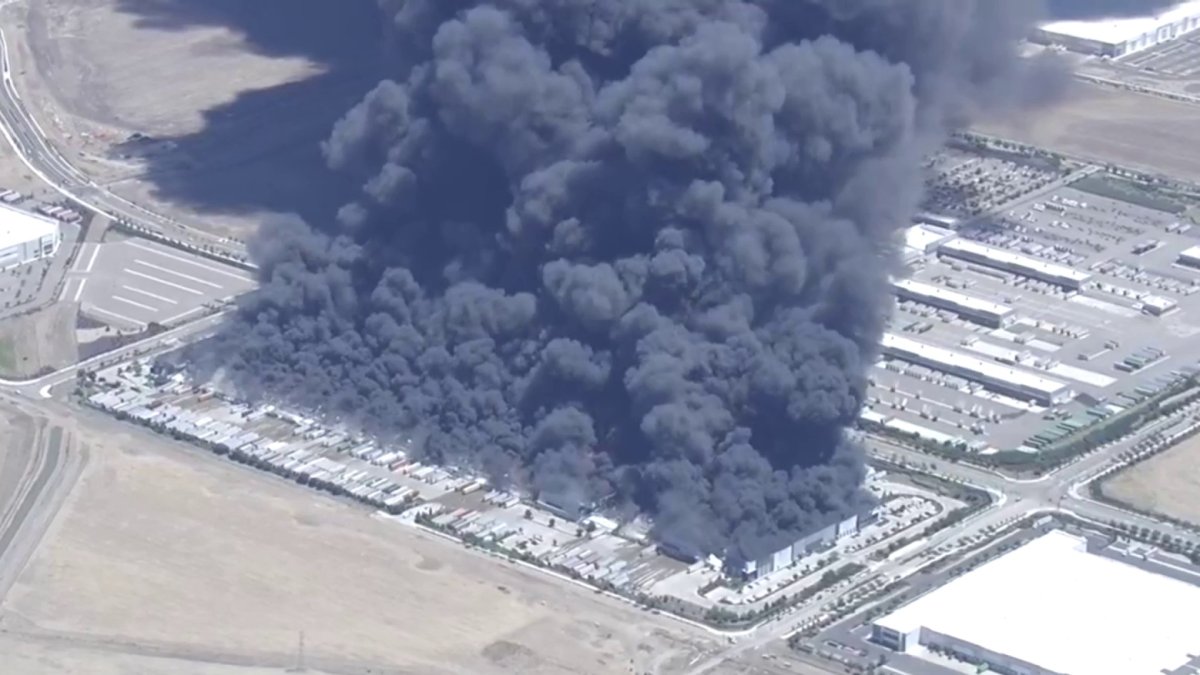
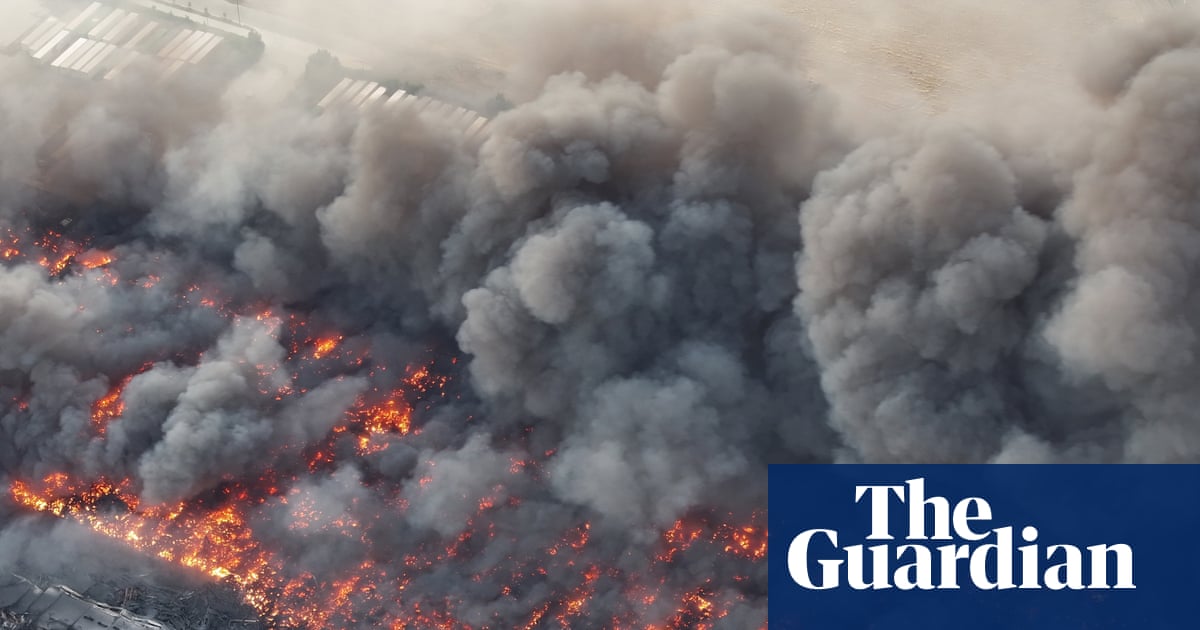
The fire’s rapid growth was compounded by systemic failures: the warehouse’s sprinkler system, last inspected in January, failed to activate, and yard hydrants on site were inoperable. Firefighters had to connect to a municipal water source 1,600 feet away, a logistical nightmare that delayed critical suppression efforts. The Guardian reported that low humidity, high temperatures, and strong winds—common in Tracy this time of year—fanned the flames, while embers traveled over two miles, sparking secondary grass fires and nearly igniting a FedEx facility across the street. Firefighters managed to contain the FedEx blaze, but the Medline warehouse remained fully engulfed as of Friday afternoon, with authorities warning the structure could burn for days.
Toxic Fallout: Why Residents Are Urged to Stay Indoors
The fire’s destruction extended far beyond the warehouse’s walls. Black, foam-like debris—potentially containing hazardous materials, unstable containers, and toxic residues from burned lithium-ion batteries—was scattered across Tracy Hills and other neighborhoods, prompting officials to issue strict warnings. “If they see any debris from the Medline fire, they are not to touch it,” Kia Xiong of the San Joaquin County Office of Emergency Services told KCRA. “Don’t move it. Don’t collect it.” The debris may contain hydrogen fluoride gas from the batteries, trace metals from industrial materials, and byproducts of burning plastics, according to Michael Kleeman, a UC Davis civil and environmental engineering professor. “It’s producing things that contain trace metals and the byproducts of burning plastics and lots of other things that are potentially toxic,” Kleeman said.
For more on this story, see Medline Warehouse Fire: Tracy California Blaze May Remain Burning For Days.
The fallout has left residents on edge. Gilbert Coronado, a Tracy resident, described his neighborhood as “covered from the street up to here” with the debris. Anu Bolli, a mother in Tracy, said she had kept her children indoors since Thursday. “From yesterday till now, I didn’t send my kids outside,” Bolli told reporters. County officials are coordinating with the California Department of Toxic Substances Control to test debris samples and develop a cleanup plan, but until results are in, residents are advised to avoid contact and report any findings through a new reporting system.
Supply Chain Risks: How Medline Is Responding
Medline, a major supplier of medical-surgical products—including latex gloves, masks, and surgical instruments critical during the Covid-19 pandemic—has activated contingency plans to mitigate disruptions. The company confirmed all employees were accounted for but did not disclose the fire’s origin. A spokesperson stated that “product distribution previously supported by the Tracy facility has been reassigned and is in the process of being deployed to other facilities within our regional network.” However, the long-term impact on supply chains remains unclear, particularly for hospitals and clinics in Northern California that rely on Medline’s Tracy distribution hub.
The fire’s proximity to other major logistics hubs—including Amazon, Home Depot, and FedEx facilities in the same industrial park—raises questions about regional resilience. Fire officials described the Tracy warehouse as a “critical node” for medical supply distribution, and its loss could strain already tight inventory levels in the healthcare sector. Medline’s reliance on a single large facility, despite recent automation investments, has now become a vulnerability. While the company has begun rerouting shipments, the process may take weeks, leaving some medical providers scrambling for alternatives.
Investigation Underway: What We Know (and Don’t Know) About the Cause
Authorities are still determining what sparked the fire, but early clues point to a combination of mechanical failure and environmental factors. The Tracy Fire Department’s investigation revealed that the sprinkler system’s fire pump registered zero pressure upon arrival, despite a January inspection confirming it was functional. NBC Bay Area reported that the pump room—responsible for supplying both sprinklers and yard hydrants—was found dry, suggesting a catastrophic failure in the water supply system. The Bureau of Alcohol, Tobacco, Firearms and Explosives (ATF) has been called in to assist, but investigators warn it could take days before the structure cools enough for a full examination.

The role of lithium-ion batteries—used to power the warehouse’s automated robots—has also become a focal point. Bagley noted that the batteries, when destroyed by fire, release hydrogen fluoride gas, a toxic byproduct that complicates cleanup efforts. While the fire marshal’s office is reviewing maintenance records, the rapid spread of the blaze suggests a failure in both active suppression systems and passive fire safety measures. The Guardian cited Antonio Talavera, a Medline employee, who described the fire’s speed: “Within 30 minutes, half the building was covered already.” The lack of sprinkler activation and the fire’s intensity within minutes of ignition have led officials to question whether the system was tampered with or if a critical component failed.
This follows our earlier report, Medline’s 1M-sq-ft Tracy warehouse destroyed by fire; failed sprinklers worsen blaze.
What Comes Next: Cleanup, Investigations, and Long-Term Risks
In the immediate term, Tracy residents face an uncertain cleanup process. County officials are working with the California Department of Toxic Substances Control to assess debris safety, but the timeline for testing and removal remains unclear. Meanwhile, Medline’s supply chain adjustments will be closely watched by healthcare providers, particularly as summer peaks in medical demand. The company’s reliance on a single large facility—despite its $500 million upgrade—highlights a broader industry trend: the risks of concentrating operations in fewer, larger warehouses, especially in fire-prone regions.
Longer-term, the fire may prompt regulatory scrutiny of warehouse safety standards, particularly regarding sprinkler system reliability and the storage of hazardous materials like lithium-ion batteries. The ATF’s involvement suggests potential criminal investigation if arson or negligence is suspected. For Tracy, the fire’s aftermath will test the community’s resilience, with residents already grappling with the physical and psychological toll of living near an industrial disaster zone. As smoke clears, the focus will shift to rebuilding—and ensuring such a catastrophe does not happen again.
For updates on debris reporting, residents can contact the San Joaquin County Office of Emergency Services. Medline has not yet provided a timeline for reopening its Tracy facility or restoring full operations.
Find more reporting in our News section.
