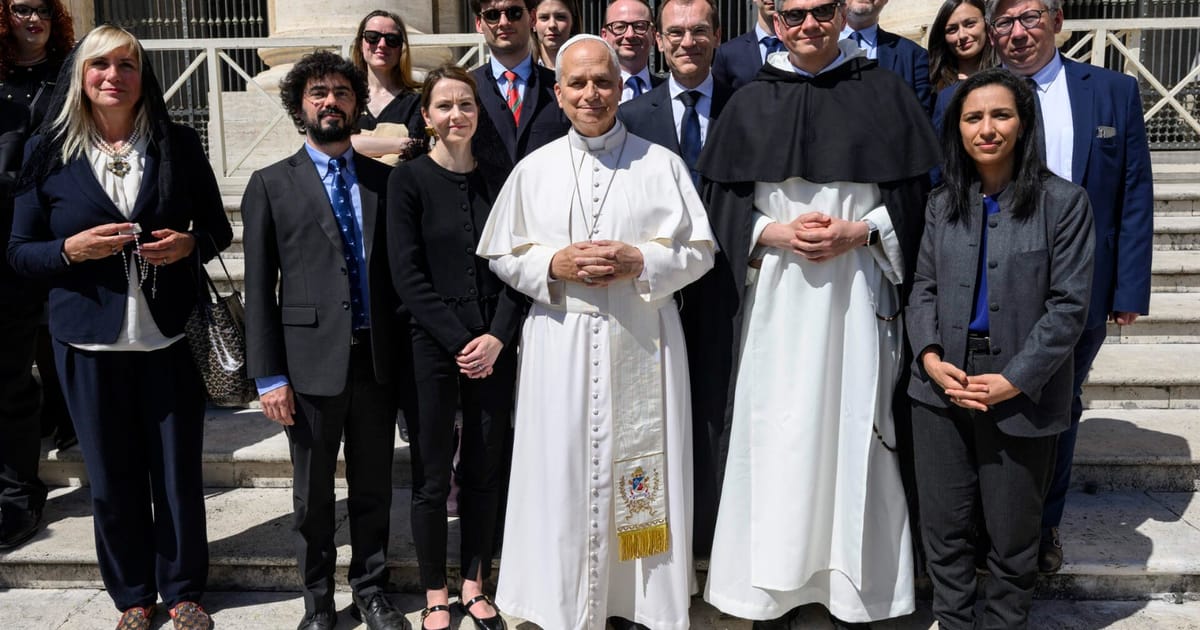
Pope Leo XIV’s encyclical “Magnifica Humanitas,” released Monday, marks a pivotal moment in the Vatican’s engagement with artificial intelligence, blending ethical scrutiny with calls for technological stewardship. The document, released amid growing global concerns over AI’s societal impact, positions the Church as a critical voice in shaping its development. The Pope’s efforts to collaborate with Silicon Valley and address AI’s challenges reflect a broader effort to reconcile technological progress with human dignity, education, and environmental responsibility.
The Encyclical’s Ethical Framework
The encyclical, titled “Magnifica Humanitas,” underscores the Church’s commitment to ensuring AI serves humanity rather than undermining it. Pope Leo XIV warned against the “unbridled promotion and implementation of technology at the expense of human dignity,” citing risks such as AI exploiting human relationships and eroding the “sense of what it means to be human.” The document draws parallels to the Industrial Revolution, recalling Pope Leo XIII’s 1891 encyclical “Rerum Novarum,” which addressed labor rights during a transformative era. “The same is true today: we need to train and educate,” noted Marijana Grbesa, a political science professor at the University of Zagreb, speaking at a Vatican AI conference via Yahoo.
The encyclical also addresses AI’s environmental toll, criticizing the “environmental devastation” caused by the extraction of rare earth elements essential for modern electronics. This aligns with broader global concerns, as the UN estimated AI’s potential economic value could reach $4.8 trillion by 2033, raising questions about equity and sustainability. “The window is closing to shape AI—for peace, for justice, for humanity,” UN Secretary-General Antonio Guterres warned last year, a sentiment echoed by the Pope’s emphasis on ethical governance via Yahoo.
Tech Industry’s Engagement with the Vatican
The Vatican’s dialogue with Silicon Valley has intensified, with closed-door meetings between tech executives and Vatican officials exploring AI’s role in child protection and broader societal impacts. In April 2026, a gathering led by the French AI Observatory in Rome included executives from Google, Amazon, and Meta, alongside French government officials. “We had lengthy discussions on the foundations of human development, and on the risks that emerge with a tool that is always available for seamless communication, like artificial intelligence,” one participant said, emphasizing the meeting’s humanist tone via POLITICO.

Chris Olah, co-founder of AI company Anthropic, will join the Pope in presenting the encyclical, highlighting the Vatican’s growing partnership with the tech sector. However, tensions persist. Anthropic faces legal battles over its refusal to allow the use of its Claude model for lethal autonomous warfare, a stance the Pope has condemned as a “destructive spiral” of delegating life-and-death decisions to machines via Yahoo. This friction underscores the Church’s push for ethical boundaries in AI development.
Educational and Anthropological Challenges
Pope Leo XIV framed AI’s challenges as fundamentally anthropological, arguing that the technology’s risks stem from a “gradual replacement of reality by its simulation.” He urged the Church to foster “media and AI literacy” in young people, emphasizing the need for critical thinking to counteract algorithmic manipulation of perception. “Young people in particular are open to this truth and desirous of discovering life’s meaning,” he said, calling for a “holistic Christian lifestyle” that integrates technology responsibly via Vatican News.
The encyclical also critiques the “frenzied race” for rare earth elements, linking AI’s growth to environmental degradation. This aligns with the Vatican’s broader social teachings, which the Church positions as a continuation of its 19th-century labor rights advocacy. “Education is not enough today,” said Grbesa, stressing the need for a “wake-up call for the whole of civilisation” to use AI rationally via Yahoo.
Implications for Global AI Governance
The encyclical’s influence could rival that of Pope Francis’s 2015 climate encyclical, “Laudato Si,” which sparked global debate. Analysts suggest “Magnifica Humanitas” may shape international discourse on AI ethics, particularly as the Vatican leverages its moral authority to advocate for equitable and sustainable practices. “The Church’s involvement is not about rejecting technology but guiding its development,” said Charles Camosy, a moral theology professor at the Catholic University of America, noting the encyclical’s potential to “push back firmly” against dehumanizing trends via NBC News.

As AI’s role in society expands, the Vatican’s stance highlights a critical tension: balancing innovation with ethical accountability. With tech giants increasingly seeking dialogue with religious institutions, the encyclical signals a shift toward collaborative governance, where faith-based perspectives play a central role in defining AI’s future. Whether this vision gains traction remains to be seen, but its emergence as a global narrative is undeniable.
