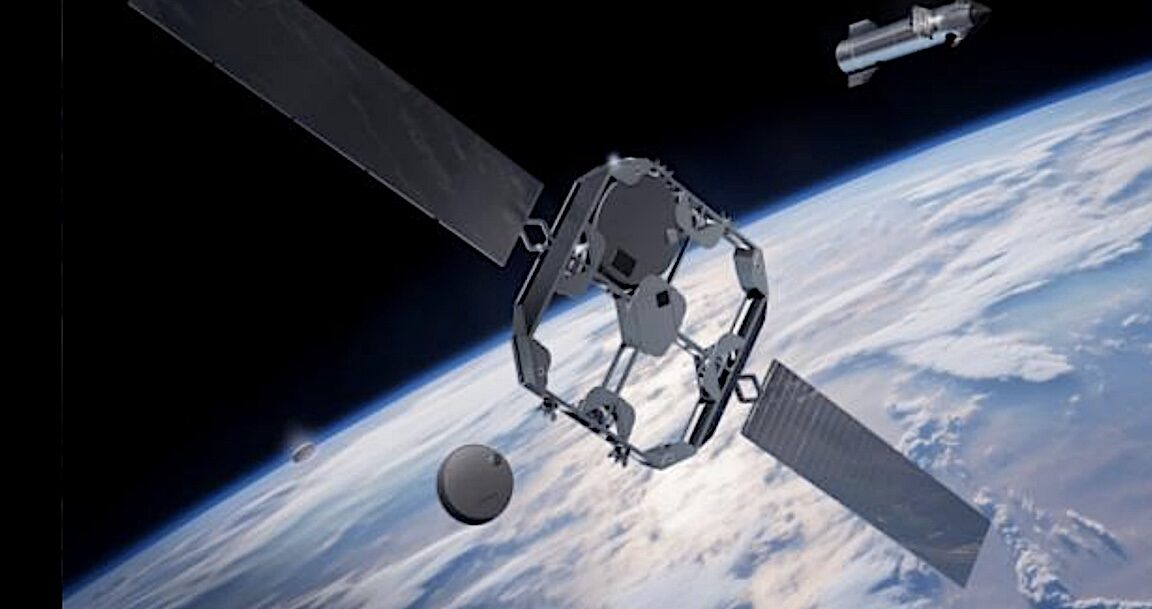
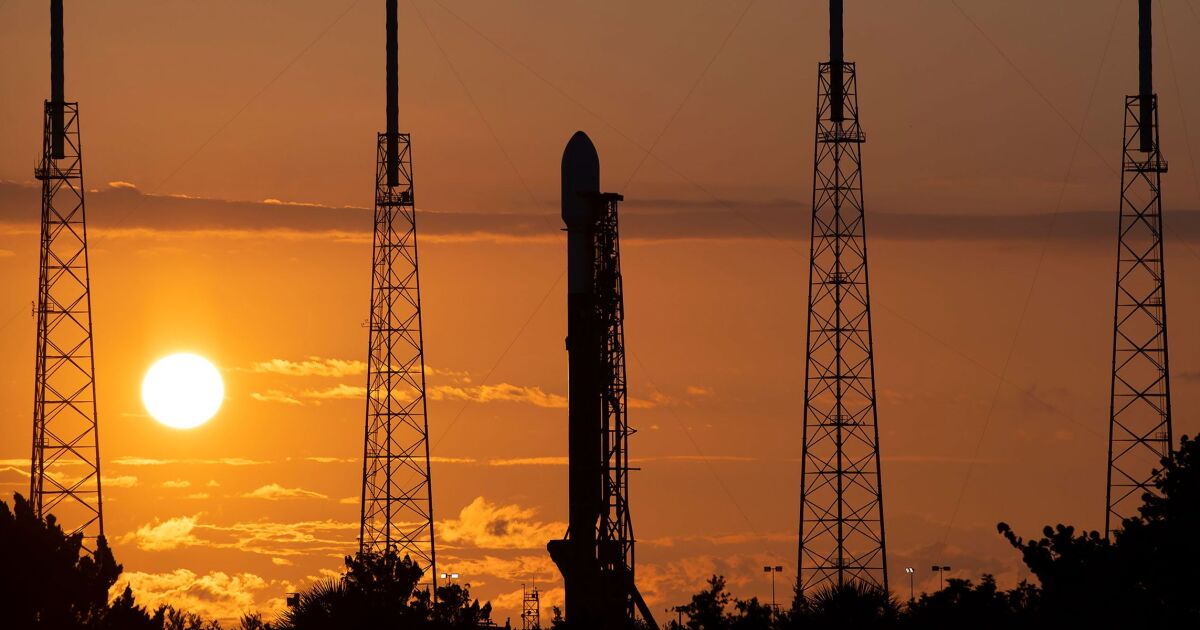
The Federal Aviation Administration (FAA) approved SpaceX’s proposal for two Starfall reentry demonstrations, paving the way for the company’s first uncrewed cargo capsule launch on Tuesday, June 23, 2026, from Cape Canaveral Space Force Station. The mission, scheduled for 6:43 a.m. EDT (1043 UTC), aims to test the capsule’s ability to return cargo from low Earth orbit, with a 95 percent chance of favorable weather conditions, according to the 45th Weather Squadron. SpaceX has not disclosed the number of Starfall capsules aboard the Falcon 9 rocket, but the FAA’s environmental review noted the company’s intent to “perform two Starfall reentries to demonstrate capabilities for future transport and delivery of goods through space.”
Starfall’s Design and Military Ambitions
Starfall, described as a cylindrical capsule approximately 0.75 meters (2.5 feet) tall with a diameter of 3.1 meters (10.2 feet), weighs 2,100 kilograms (4,600 pounds) and can carry 1,000 kilograms (2,200 pounds) of payload, according to the FAA. The vehicle lacks onboard propulsion but uses compressed nitrogen gas for attitude control, with a carbon fiber heat shield and parachute system for reentry. The capsule’s design aligns with SpaceX’s broader goals of enabling “point-to-point delivery of critical cargo through space on rapid timelines,” as outlined in the FAA’s environmental assessment. Reuters reported that the U.S. military is a key potential user, with the Pentagon already collaborating with SpaceX on the Rocket Cargo initiative to deliver supplies globally in under an hour using Starship. Starfall could offer a more versatile option for lighter loads, complementing Starship’s massive capacity.
Technical Details and Recovery Plans
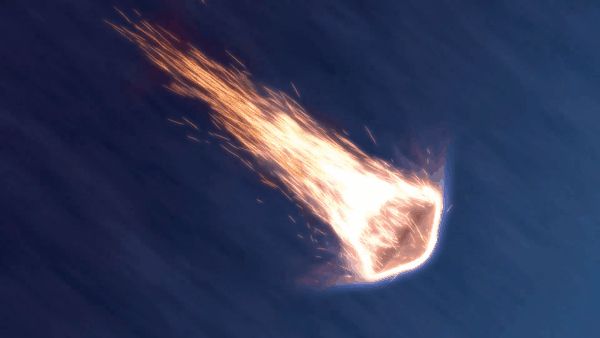
SpaceX’s Starfall capsule is designed to be recovered in the Pacific Ocean, similar to the Dragon spacecraft, with splashdown targeting an area 700 nautical miles (1,300 km) off the U.S. West Coast. The FAA document emphasized that the capsules “contain no liquid propellants or hazardous substances,” with pressurized systems vented before splashdown to prevent ocean contamination. The first Starfall Demo mission will likely spend hours in low-Earth orbit, though the vehicle could also fly on shorter suborbital trajectories. The Falcon 9 booster, B1078, will attempt a landing on the drone ship “A Shortfall of Gravitas,” marking its 29th flight and the 157th landing on the vessel. Spaceflight Now noted that the capsule’s lack of propulsion means it relies on its launch vehicle to guide it back to Earth, a process the FAA has not fully clarified.
Orbital Manufacturing and Future Implications
The FAA’s environmental assessment highlighted Starfall’s potential to “create a self-sustaining commercial in-space manufacturing market by offering access to microgravity and vacuum, loiter on orbit, and safe return from orbit as a service at scale.” This aligns with SpaceX’s vision of using Starfall as a “proliferated successor to the International Space Station (ISS),” as stated in the agency’s document. The capsule could serve as a platform for “in-orbit manufacturing,” enabling the production of precision products like pharmaceuticals or advanced materials. Space.com reported that Starfall’s modular design allows it to host up to four capsules on a single satellite bus, a concept detailed in SpaceX’s IPO roadshow materials. The company also envisions using Starfall as an “orbital supply depot” for military or disaster relief operations, a strategy that could reduce the need for ground-based logistics infrastructure.
Challenges and Unanswered Questions
Despite the FAA’s approval, several questions remain. SpaceX has not specified how long the test Starfall vehicle will stay in orbit or if it will carry customer payloads. The agency’s EA also left unclear how Starfall’s deorbiting will be executed, though it is likely tied to the Falcon 9’s second stage. New Atlas noted that the capsule’s reliance on external propulsion systems raises concerns about reliability, particularly for missions requiring precise reentry trajectories. Additionally, while the military’s interest is evident, the FAA’s review did not address potential regulatory hurdles for commercializing Starfall’s capabilities. The success of this demo mission could set the stage for broader adoption, but challenges in scaling the technology and securing partnerships will determine its long-term impact.

As the Falcon 9 prepares for liftoff, the Starfall launch represents a pivotal step in SpaceX’s vision for space-based logistics. With its focus on rapid cargo delivery and in-orbit manufacturing, the capsule could redefine how goods and materials move across the globe—and beyond. The next 30 days will reveal whether Starfall’s promise translates into a practical, scalable solution for both military and commercial applications.
Find more reporting in our News section.
