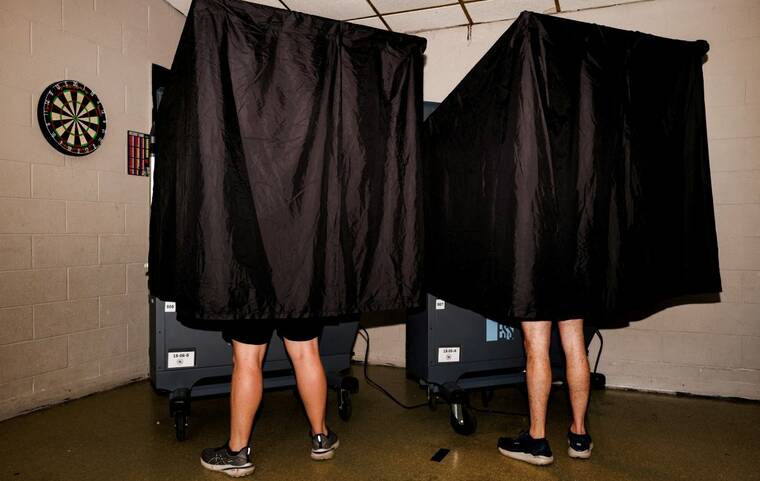
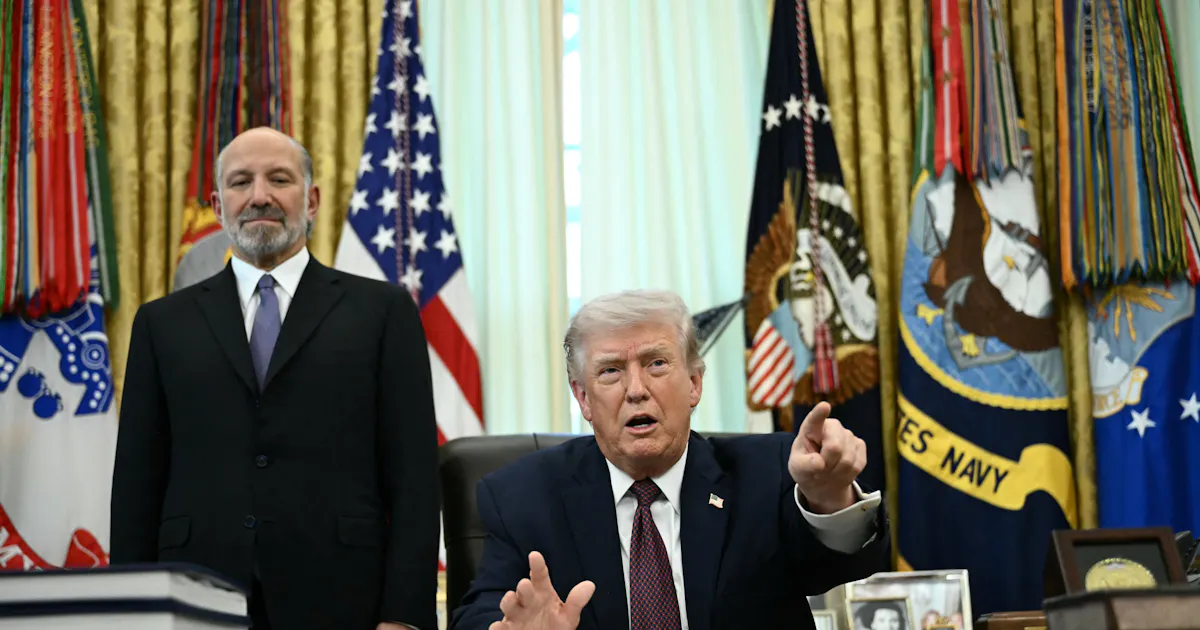
President Donald Trump’s election-security adviser, Kurt Olsen, spearheaded a failed initiative last year to ban voting machines used in over half of U.S. states. Olsen sought to convince the Commerce Department to classify the technology as a national security risk, aiming to replace electronic voting with a national system of hand-counted paper ballots.
Targeting Dominion Voting Systems and State Election Control
cluster (priority): The New Republic
The effort to overhaul the American election process was driven by a core group of administration officials, including White House adviser Kurt Olsen, a lawyer previously tasked with pursuing election-rigging theories. According to reporting from the Honolulu Star-Advertiser, Olsen and his collaborators viewed the initiative as a potential pathway for the federal government to seize control of election administration from states.
The plan specifically targeted Dominion Voting Systems, a manufacturer that has been the focus of widespread, debunked conspiracy theories since the 2020 presidential election. The initiative reached a stage of bureaucratic momentum in September, when officials at the Commerce Department began exploring whether legal grounds existed to designate the hardware and software components of these machines as national security threats. The effort involved coordination with senior staff, including Paul McNamara, an aide to Director of National Intelligence Tulsi Gabbard, and Brian Sikma, a special assistant to the president serving on the Domestic Policy Council.
The Push for Hand-Counted Ballots
cluster (priority): The Independent
At the heart of the proposal was a desire to mandate hand-counted paper ballots nationwide, a concept President Trump has publicly championed. As noted by The Daily Beast, the administration’s focus on this method stems from a belief that electronic systems are inherently susceptible to foreign interference.
“We have to get to honest elections, we have to go back to paper ballots,” Donald Trump, President of the United States, during the first Cabinet meeting of his second term in February 2025.
However, the proposal faced significant opposition from security experts who argued that the shift would degrade rather than enhance election integrity. Alex Halderman, a computer science professor at the University of Michigan, warned that abandoning established electronic systems with auditable paper trails would introduce unnecessary instability.
“Changing to hand counting would be chaotic,” and “it might facilitate cheating.” Alex Halderman, University of Michigan, via The Daily Beast.
The Collapse of the Initiative
Trump's push to ban mail-in voting & voting machines sparks legal debate
Despite the high-level involvement of figures like Olsen, the push to purge voting machines ultimately collapsed. Sources with direct knowledge of the matter told The Independent that the administration failed to provide the necessary evidentiary support to justify such a sweeping federal intervention. Without a factual basis to support the claim that the machines posed a genuine national security risk, the Commerce Department could not move forward with the designation.
This episode represents one facet of a broader administrative campaign to reshape election oversight. Investigative reporting has highlighted that officials in at least eight states have sought access to sensitive voting records and equipment, often revisiting fraud claims that have already been rejected by courts and bipartisan reviews. The attempt to remove Dominion machines specifically was timed with the goal of being finalized before the November midterm elections, as the administration sought to secure political advantages for Republican candidates.
Contextualizing the Legal and Political Stakes
cluster (priority): The Daily Beast
The failed attempt to ban voting machines occurs against a backdrop of significant litigation and financial pressure for companies like Dominion. In April 2023, Fox News reached a settlement agreement to pay Dominion Voting Systems $787.5 million after the network broadcast false claims regarding the company’s role in the 2020 election.
Meanwhile, internal friction within the Republican Party continues to mount. As The New Republic reports, the administration’s aggressive tactics—including the use of funds to support candidates and the pursuit of political foes—have caused unease among some GOP senators. One unnamed Republican senator described the current state of the party’s internal cohesion in stark terms:
“Our majority is melting down before our eyes,” Unnamed GOP senator, via The New Republic.
As the administration continues to navigate these internal pressures and legal challenges, the effort to centralize control over voting infrastructure remains a primary concern for critics of the current executive branch’s strategy. While the attempt to ban the machines failed, the underlying push to alter the mechanics of American elections remains an active front in the ongoing political battle.
Rafael Moreno directs international correspondents from London to Singapore. A multilingual journalist born in Madrid, he spent 12 years covering diplomacy and conflict for Global Affairs Review. His background in political science strengthens Globally Pulse’s depth in world reporting.