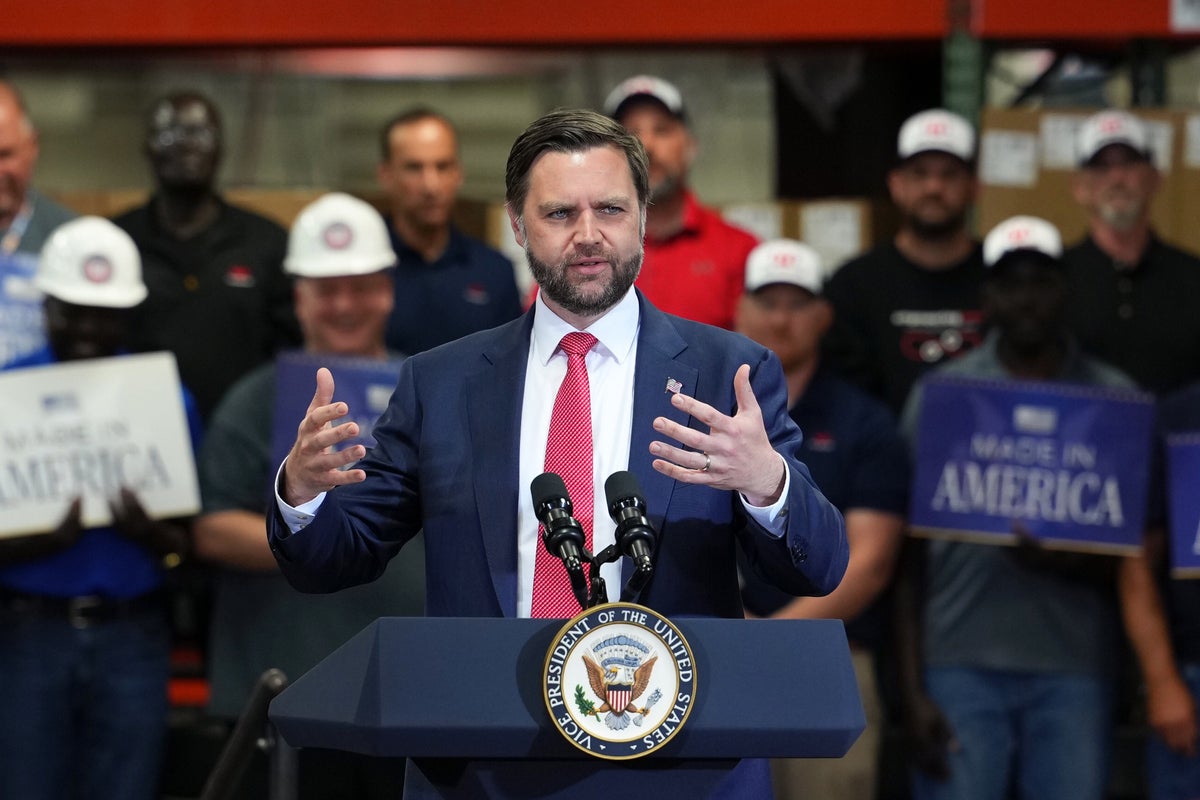
Vice President JD Vance is hosting a divisive White House meeting Tuesday with state attorneys general—excluding Democrats—to advance his anti-fraud task force, while critics accuse the administration of weaponizing the initiative to reward political allies with taxpayer funds. The meeting, scheduled for May 26, comes as Vance’s task force has deferred $1.4 billion in federal payments and announced a $1.7 billion “anti-weaponization fund” critics call a slush fund for Trump allies. Meanwhile, the Justice Department has charged 15 defendants in Minnesota for fraud schemes targeting over $90 million, marking the largest Medicaid fraud crackdown in state history.
Exclusion of Democratic AGs Sparks Backlash
Vice President JD Vance’s decision to exclude Democratic state attorneys general from a White House meeting tied to his anti-fraud task force has drawn sharp criticism, with insiders describing the omission as a deliberate political move rather than an oversight. According to a Foreign Policy Journal report, the meeting—scheduled for Tuesday—was framed as a bipartisan effort to combat government fraud, yet the invite list excluded Democratic AGs, a decision insiders called a “strategic calculation.”
The task force, launched via executive order in March, has already made headlines for deferring $1.4 billion in federal funds after targeting fraud in California, Minnesota, and other states. Vance has framed the initiative as protecting both taxpayers and legitimate beneficiaries of programs like Medicaid and Medicare. However, the exclusion of Democratic AGs—who oversee many of the states Vance has criticized for weak fraud enforcement—raises questions about whether the task force is more about politics than accountability.
Critics, including Democratic Senator Chris Murphy, have accused the administration of hypocrisy. “Trump is stealing $1.7 BILLION of your money to set up a totally unprecedented, first-in-American-history political slush fund,” Murphy wrote on X, referencing the Justice Department’s announcement of a $1.7 billion fund for Trump allies investigated under Democratic administrations. The fund, dubbed an “anti-weaponization” measure, has been condemned as a reward system for political loyalty.
“This is outright theft.”
— Senator Chris Murphy, via Independent
Democratic state officials, including California Attorney General Rob Bonta, have condemned the exclusion, calling it a “partisan power grab.” Bonta, who has led efforts to combat fraud in California, stated in a press release that the administration’s actions “undermine trust in our justice system” and “prioritize politics over accountability.”
In response, the White House press office released a statement emphasizing that the meeting’s focus is on “states with documented histories of weak enforcement,” without naming specific states or parties. The statement did not address the exclusion of Democratic AGs directly.
Fraud Crackdown or Political Weapon?
The task force’s actions have yielded tangible results, including a $90 million fraud scheme takedown in Minnesota, where 15 defendants were charged for targeting Medicaid funds. Vice President Vance highlighted the case as a victory for taxpayers and vulnerable populations, stating, “We are holding scammers accountable who ripped off the American taxpayer and harmed those deserving legitimate assistance from these programs.” The Justice Department’s involvement, led by Acting Attorney General Todd Blanche, underscores the administration’s focus on high-profile cases.

“We are bringing justice to some of America’s most vulnerable citizens and justice to the American taxpayer.”
— Vice President JD Vance, via Presidential Prayer Team
However, the task force’s selective enforcement has drawn scrutiny. Hawaii, for instance, has faced criticism for having zero indictments or convictions for Medicaid fraud in recent years, despite being named by Vance as a state with documented fraud problems. The administration has deferred $1.3 billion in Medicaid reimbursements to California, citing the state’s failure to prosecute fraud cases aggressively. The move has been framed as a corrective action, but opponents argue it targets Democratic-led states while ignoring fraud in Republican strongholds.
For more on this story, see Trump Meets with Top Advisers on Iran War Options.
Adding to the controversy, the task force has identified approximately $6.3 billion in potentially fraudulent government contracts, demanding proof of legitimacy from nearly 400 businesses. The initiative grew out of a fraud scandal involving Somali-operated daycare centers in Minnesota, which became a Republican messaging tool. Vance has framed the task force’s mission as defending both taxpayers and legitimate beneficiaries, but the exclusion of Democratic AGs from the White House meeting suggests a narrower agenda.
Minnesota Attorney General Keith Ellison, a Democrat, criticized the administration’s approach, stating in a statement that “selective enforcement based on political affiliation undermines public trust in our legal system.” Ellison’s office has been actively investigating fraud cases in the state, including the recent $90 million Medicaid scheme.
Meanwhile, the task force has faced legal challenges in California, where Governor Gavin Newsom has accused the administration of “weaponizing federal funds for partisan purposes.” Newsom’s office has filed a motion to block the deferral of $1.3 billion in Medicaid payments, arguing that the decision lacks legal justification.
The $1.7 Billion Slush Fund Controversy
The timing of Vance’s fraud crackdown could not be more politically charged. On the same day Vance announced the Minnesota takedown, the Justice Department revealed plans to allocate $1.7 billion to an “anti-weaponization fund”—a move critics say is a thinly veiled slush fund for Trump allies. The fund targets individuals investigated under Democratic administrations, including those tied to the January 6 Capitol riot.
“Trump didn’t just pardon his followers who stormed the U.S. Capitol. He’s now set them up for payments through a slush fund he created to reward his allies—out of your tax dollars.”
— Former Secretary of State Hillary Clinton, via Independent
The fund’s creation follows Vance’s own rhetoric on fraud, where he has condemned the misuse of taxpayer dollars. Yet the juxtaposition of his task force’s actions with the $1.7 billion allocation has led to accusations of double standards. While Vance’s team defers billions in fraudulent payments, the administration simultaneously funnels funds to allies—raising questions about whether the anti-fraud initiative is genuinely about accountability or political gain.
Vance’s task force has also targeted hospice systems, Medicaid, and immigration-related programs, deferring payments totaling $1.4 billion. The administration has pointed to California, New York, and Hawaii as states with significant fraud issues, though the focus on Democratic-led states has fueled suspicions of partisan targeting. The task force’s work has been praised by some as a necessary check on wasteful spending, but others see it as a tool to undermine Democratic-led governments.
This follows our earlier report, Trump Demands Senate Fire Parliamentarian Over Ballroom Funding Ruling.
In New York, Attorney General Letitia James has filed a lawsuit challenging the deferral of $200 million in Medicaid payments, arguing that the decision is “politically motivated.” James, a Democrat, stated in a press conference that “this administration is using fraud enforcement as a weapon against states that don’t align with their agenda.”
Meanwhile, the White House has defended the $1.7 billion fund as a necessary measure to prevent “weaponization of the justice system against political opponents.” A senior administration official, speaking on condition of anonymity, stated that the fund is designed to “protect individuals from politically motivated prosecutions,” though critics argue it lacks transparency and accountability.
What Comes Next?
The White House meeting on Tuesday will be a critical test of Vance’s ability to unify state officials behind his anti-fraud mission—or further polarize the effort. With Democratic AGs excluded, the meeting risks reinforcing perceptions of the task force as a partisan tool rather than a bipartisan effort. Meanwhile, the $1.7 billion fund’s rollout has already sparked legal challenges, with Democrats vowing to block what they call a misuse of taxpayer dollars.
For Vance, the challenge is balancing his anti-fraud crusade with the political realities of a Trump administration that has repeatedly blurred the lines between governance and partisan reward systems. If the task force’s actions are seen as purely about cracking down on fraud, it could bolster Vance’s credibility. But if the perception persists that the initiative is being weaponized for political purposes, it risks undermining public trust in the administration’s financial oversight efforts.
One thing is clear: the story is far from over. With the 2028 election looming, the task force’s actions—and the administration’s handling of the $1.7 billion fund—will be closely watched as a bellwether for how far Trump and Vance are willing to go in reshaping federal programs to serve their political base.
For now, the meeting on Tuesday will be a defining moment. Will it mark a step toward genuine reform, or another chapter in the administration’s contentious relationship with accountability?
Democratic leaders, including Senate Majority Leader Chuck Schumer, have warned that the administration’s actions could lead to a constitutional crisis if federal funds are used for partisan purposes. Schumer stated in a Senate floor speech that “this is not about fraud—it’s about politics, and it’s about stealing from taxpayers to reward Trump’s allies.”
Republican supporters of the task force, however, have praised Vance’s efforts, arguing that the crackdown on fraud is long overdue. Senator Lindsey Graham, a Republican, stated that “Vice President Vance is finally holding accountable those who have been gaming the system for years.”
As the meeting approaches, the administration has yet to release a full list of attendees or the agenda, fueling speculation about the true intentions behind the gathering.
