
XREAL and Google unveiled Project Aura at Google I/O 2026, the first tethered Android XR glasses designed for immersive spatial computing, combining a 70-degree field of view with Gemini AI integration for a maximalist take on wearable computing.
Project Aura: A Bold Bet on Android XR as a Consumer Platform
At Google I/O 2026, XREAL and Google demonstrated Project Aura—a wired XR headset that redefines the boundaries of what tethered augmented reality can achieve. Unlike optical-see-through glasses like Apple Vision Pro or standalone AR devices, Project Aura leans into a maximalist approach: a massive 70-degree field of view (FOV), a 500-inch virtual display, and deep integration with Android XR and Google’s Gemini AI. The device, set to launch globally in 2026, signals a shift toward making spatial computing practical for everyday use, not just niche enterprise or developer applications.

What sets Project Aura apart is its embrace of tethered computing—not as a limitation, but as a feature. By connecting via DisplayPort to a laptop, the glasses extend the device’s capabilities into three-dimensional AR space, enabling features like auto-spatialization of apps and Gemini-powered multimodal interactions. This approach contrasts with standalone AR glasses, which prioritize mobility over performance. The trade-off is deliberate: Project Aura is designed for users who demand high-resolution visuals, seamless AI assistance, and the flexibility to integrate with existing workflows.
Hardware and Software: A Maximalist Stack
Project Aura’s hardware specifications reflect its maximalist philosophy. The 70-degree FOV is among the widest in the XR space, rivaling high-end VR headsets and offering a near-eye display that rivals desktop monitors in terms of pixel density. The glasses feature a massive OLED panel, capable of rendering 2D and 3D content with high fidelity, including immersive YouTube videos in 180-degree and 360-degree formats. This is not just a display upgrade—it’s a reimagining of how digital content can be consumed spatially.
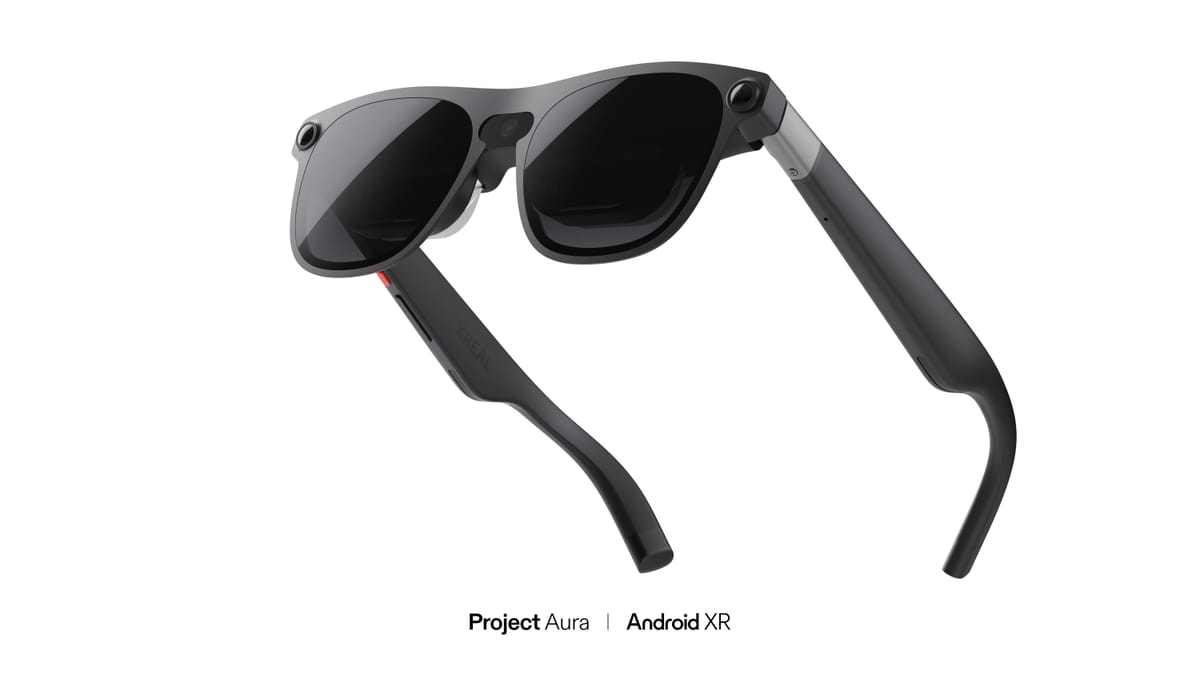
Software-wise, Project Aura runs on Android XR, a platform Google has been pushing to unify AR and VR development under a single OS. The integration with Gemini AI is a standout feature, enabling dynamic interactions such as real-time 3D painting apps, spatial video multitasking, and AI-assisted navigation through immersive Google Maps. Unlike previous AR glasses that treated apps as flat overlays, Project Aura treats the entire environment as an interactive canvas, where digital and physical spaces merge seamlessly.
XREAL’s decision to launch Project Aura alongside Google’s Android XR ecosystem is strategic. By aligning with Google’s vision for spatial computing, XREAL positions itself as a key player in the next wave of wearable tech. The partnership also underscores Google’s commitment to making Android XR a viable alternative to Apple’s visionOS or Meta’s Quest ecosystem, particularly for developers and enterprises.
Market Positioning: Tethered vs. Standalone
The tethered design of Project Aura raises questions about its market positioning. While standalone AR glasses like the XREAL 1S or Meta’s Ray-Ban Meta have prioritized portability, Project Aura leans into a different use case: high-performance, desk-based spatial computing. This aligns with XREAL’s broader product lineup, which includes devices like the XREAL Eye (for floating visuals) and the ROG XREAL R1 (a gaming-focused AR headset).
The ROG XREAL R1, announced in partnership with ASUS Republic of Gamers, is priced at $849 and targets gamers with a 240Hz refresh rate and a 171-inch virtual display. While Project Aura is not explicitly a gaming device, its DisplayPort connectivity and Gemini integration suggest it could appeal to power users—developers, designers, and professionals who need high-resolution spatial displays for productivity tasks.
However, the tethered nature of Project Aura may limit its mass-market appeal. Consumers accustomed to untethered AR glasses might find the need for a laptop connection restrictive. XREAL’s challenge will be convincing users that the trade-offs—higher performance, larger FOV, and deeper AI integration—are worth the lack of mobility.
The Road Ahead: Developers and Early Adopters
Project Aura’s launch comes at a time when Android XR is still finding its footing. While Apple’s visionOS and Meta’s Quest have established ecosystems, Android XR remains fragmented, with developers still exploring its potential. XREAL’s move to offer early access to developers suggests it is betting on a long-term play: building an ecosystem around Project Aura that attracts apps, games, and enterprise solutions.
The device’s support for WebXR and Android XR apps means developers can leverage existing tools to create immersive experiences. This could accelerate adoption, particularly in industries like gaming, design, and remote collaboration, where high-fidelity spatial displays are increasingly valuable.
Yet, the success of Project Aura will depend on more than just hardware and software. It will require Google and XREAL to cultivate a community of developers and content creators who can push the boundaries of what’s possible with tethered XR. Early hands-on reviews, such as those from Tom’s Guide, suggest the glasses deliver on their promise of immersive spatial computing, but long-term adoption will hinge on whether they can justify their tethered design in an era of untethered convenience.
What Comes Next for XREAL and Android XR?
Project Aura is not XREAL’s only play in the AR space. The company continues to expand its product line with devices like the XREAL 1S (a pocket-sized AR glass) and the XREAL Beam Pro (a desktop AR display). These devices cater to different use cases, from mobile AR to high-end productivity, demonstrating XREAL’s strategy of offering a range of solutions for various segments of the market.

For Google, Project Aura is a critical test of Android XR’s viability as a consumer platform. If the glasses gain traction, it could encourage other hardware manufacturers to adopt the platform, creating a more competitive AR ecosystem. However, Google must also address the fragmentation that has plagued Android in the past, ensuring that Android XR apps are optimized and accessible across devices.
The coming months will be telling. Will Project Aura prove that tethered XR can be a compelling experience for everyday users, or will it remain a niche product for power users? The answer may lie in how effectively XREAL and Google can bridge the gap between high-performance spatial computing and consumer-friendly design.
One thing is clear: Project Aura is more than just another AR glass. It is a maximalist vision of what spatial computing can be—one that prioritizes immersion, performance, and integration over portability. Whether it succeeds in the long run will depend on whether that vision resonates beyond the early adopters and developers who are its primary audience.
