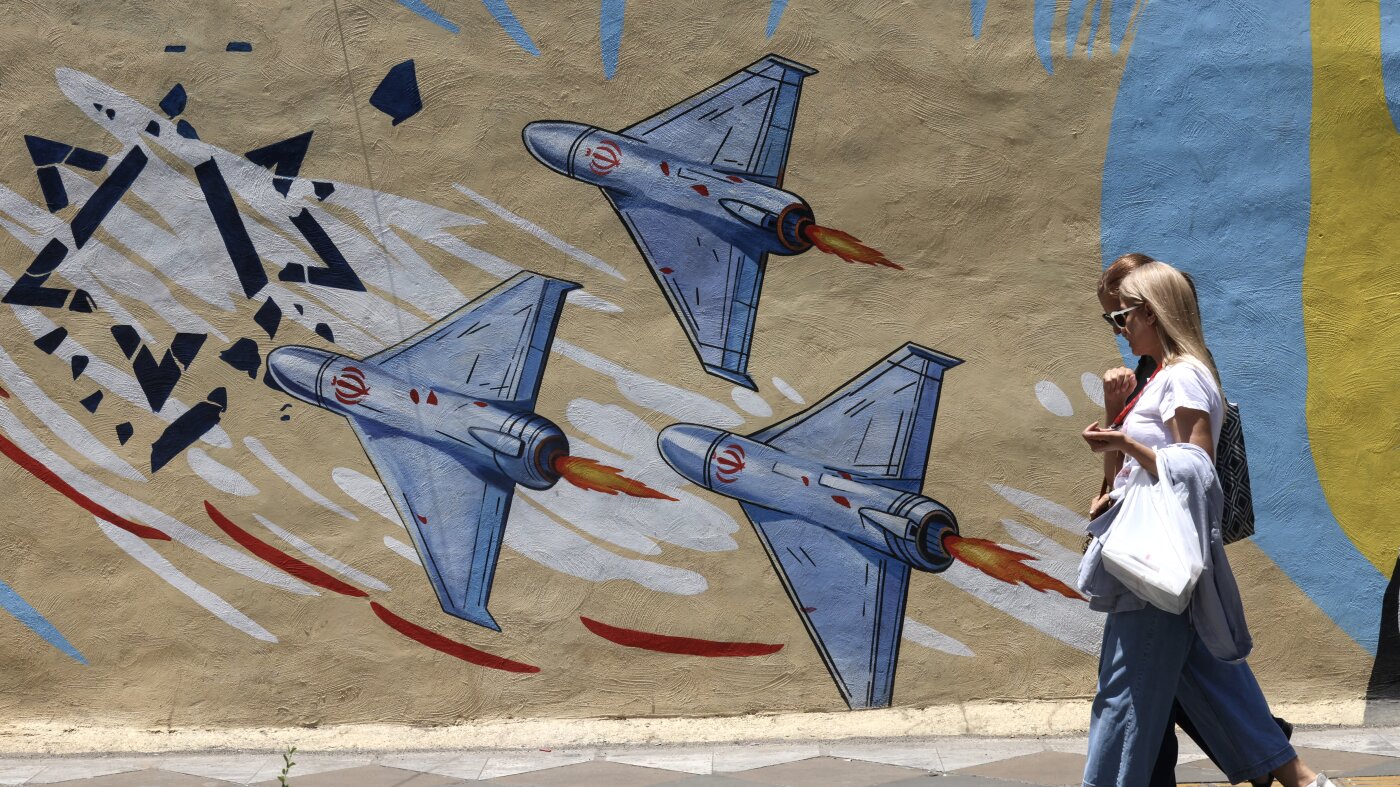
Israel launched airstrikes on central and western Iran early Monday, June 8, 2026, triggering retaliatory missile fire from Tehran and its regional allies. The escalation marks the most significant breach of an April 8 ceasefire, prompting fears of a full-scale regional war as global oil prices surge and diplomatic efforts scramble to contain the violence.
Military Escalation: The Strike and Counter-Strike Timeline
Photo: Just Security
The latest round of hostilities began with Israeli airstrikes targeting military sites and a petrochemical complex in Mahshahr, southwestern Iran, according to reports from AP News. The Israeli military stated these actions were a direct response to ballistic missile barrages launched by Iran and its affiliates, including Yemen’s Houthi rebels, which targeted northern Israel.
The situation on the ground remains fluid. Iran’s state broadcaster confirmed the missile launches, explicitly warning that if Israel continues its attacks on Lebanon or Iran, the bombardment will persist. Meanwhile, the Anadolu Ajansı reports that the Iranian Foreign Ministry has framed these strikes as an exercise of their “legitimate right to self-defense” under Article 51 of the UN Charter, citing prior Israeli violations of the April ceasefire.
At 4:15 a.m. local time, residents in Mahshahr reported a series of high-intensity explosions near the petrochemical industrial zone. By 6:00 a.m., the Israel Defense Forces (IDF) spokesperson, Rear Admiral Daniel Hagari, issued a statement via the military’s press office confirming “targeted precision strikes” against infrastructure used by the Islamic Revolutionary Guard Corps (IRGC) to facilitate regional missile transfers. Conversely, the IRGC issued an official communique on its Telegram channel at 7:30 a.m., claiming that its “Operation True Vengeance” had successfully struck three key Israeli radar installations in the Negev desert, a claim the Israeli government has categorically denied as “psychological warfare.”
The regional implications are immediate. The Saudi Arabian Ministry of Energy issued a statement expressing “profound concern” regarding the security of maritime navigation in the Persian Gulf, following reports that insurance premiums for tankers passing through the Strait of Hormuz have increased by 25% within the last six hours.
Diplomatic Pressure and the Trump Administration’s Stance
President Donald Trump has asserted firm control over the U.S. response, even as his administration faces internal friction regarding its Iran policy. In a telephone interview with the Financial Times, Trump claimed that Israeli Prime Minister Benjamin Netanyahu would have no choice but to accept any nuclear deal Washington negotiates with Tehran.
“I call the shots. I call all the shots. He doesn’t call the shots.”
Israel-Iran War: Iran Launches Fresh Strikes, 20 Injured in Israel | WION BREAKING
President Donald Trump, via Anadolu Ajansı
Despite these public declarations, the administration’s strategy appears strained. NPR reports that Trump continues to defend a nearly $1.8 billion “anti-weaponization” fund, even after acting Attorney General Todd Blanche indicated the program was being phased out. Lawmakers from both parties have expressed concern that the fund, intended to support individuals targeted by the government, could be diverted to support those involved in the January 6 insurrection.
White House Press Secretary Karoline Leavitt held an emergency briefing at 10:00 a.m. Monday, during which she was pressed by reporters on whether the United States would provide direct intelligence support for further Israeli operations. Leavitt declined to confirm specific operational cooperation, stating only that the U.S. remains “fully committed to the security of our Israeli allies,” while simultaneously confirming that U.S. diplomatic envoys are currently in Muscat, Oman, holding back-channel talks with Iranian intermediaries.
Senate Foreign Relations Committee ranking member Senator Ben Cardin (D-MD) issued a sharp rebuke of the administration’s stance, stating, “The President’s attempt to bypass congressional oversight on the anti-weaponization fund while managing a kinetic conflict in the Middle East is a recipe for constitutional crisis and regional instability.”
The Economic Toll of Protracted Conflict
The conflict is taking a heavy toll on the Iranian economy, which has been under intense pressure. According to Why Evolution Is True, citing a piece by Amit Segal, the Iranian regime is hemorrhaging an estimated $500 million daily in blockaded revenue. This financial bleeding has become a central factor in the current diplomatic calculus.
Global energy markets reacted sharply to the news of the strikes. Brent Crude futures spiked to $118 per barrel, a level not seen since the initial weeks of the 2026 spring tensions. The International Energy Agency (IEA) issued a communique urging “restraint from all parties to ensure the stability of global energy supplies,” noting that a total closure of the Strait of Hormuz—should the conflict expand—would remove 20% of the world’s daily oil consumption from the market.
Recent reporting suggests that the feasibility of a peace agreement now hinges on significant financial stakes. The current administration’s efforts are complicated by the following:
Estimated daily economic losses in Iran: $500 million.
Potential peace deal requirements: The release of $24 billion in funds.
Humanitarian loan proposals: Qatar recently offered to sweeten the deal with a $6 billion loan.
In Tehran, the Central Bank of Iran reported that the rial has plummeted to a new record low against the U.S. dollar, trading at 850,000 to $1. The governor of the Central Bank, Mohammad Reza Farzin, held a televised address on state media, urging citizens to remain calm and stating that the government has “sufficient reserves” to maintain essential imports for the next six months, though independent economists reached by Reuters expressed skepticism regarding the validity of these figures.
NBC Interview Disruption and Media Tensions
Beyond the geopolitical crisis, the President’s domestic messaging suffered a setback when he abruptly ended an interview with NBC’s “Meet the Press.” During the taping, which took place in Wisconsin, Trump grew agitated when pressed on the anti-weaponization fund and his repeated, false claims regarding the California election.
According to AP News, Trump began shouting at host Kristen Welker, labeling the media “crooked” and complaining about the “fake, dirty press.” While the setting was plagued by heavy rain on a metal roof—making audio difficult—the confrontation marked a volatile moment in the President’s media relations. Welker later noted that she spoke to Trump following the walkout, and he agreed to schedule a future interview to clear the air.
The incident has drawn criticism from press freedom advocates. The Committee to Protect Journalists (CPJ) released a statement following the exchange, noting that “the President’s volatile behavior toward the press, particularly during a period of grave national security crisis, undermines the public’s right to transparent information.” Sources within the Trump campaign suggest that the President’s frustration was compounded by reports that several prominent Republican donors have begun questioning the long-term viability of the administration’s “maximum pressure” strategy regarding Iran, fearing it may lead to an entanglement that could jeopardize the administration’s domestic agenda heading into the autumn legislative session.
Rafael Moreno directs international correspondents from London to Singapore. A multilingual journalist born in Madrid, he spent 12 years covering diplomacy and conflict for Global Affairs Review. His background in political science strengthens Globally Pulse’s depth in world reporting.