
Apollo astronauts, beginning with the July 1969 mission, consistently reported seeing mysterious light flashes and streaks while attempting to sleep in the darkness of space. Scientific investigations later confirmed these phenomena were caused by high-energy cosmic rays passing through the astronauts’ eyes, a discovery that continues to inform modern radiation research.
Origins of the Space-Based Light Flash Phenomenon
The first formal observation of these visual anomalies occurred in July 1969, when Buzz Aldrin reported seeing streaks of light during the post-flight debriefing of the Apollo 11 mission, according to research published in the National Library of Medicine. These perceptions—which astronauts described as flashes, pinpoints, or clouds of light—occurred while crews were in the dark, with their eyes either open or closed.
While the phenomenon is now colloquially known as light flashes, they are scientifically classified as phosphenes, which are visual sensations produced by stimuli other than light entering the eye. Reports were not isolated to a single mission; they persisted throughout the Apollo program and were later observed by crew members on Skylab, the Mir space station, and the International Space Station. SpaceDaily reports that the flashes occurred at a rate of roughly one-half to two per minute, often disrupting the sleep cycles of the astronauts on board.
Linking Cosmic Rays to Visual Perception
The hypothesis that cosmic radiation caused these flashes dates back to 1952, when biophysicist Cornelius Tobias suggested that space travelers exposed to heavy cosmic rays might experience such visual disturbances. Proving this theory required in-flight testing, which eventually took place during the final Apollo missions. This was a critical step in understanding the biological impact of the space environment, as the Earth’s magnetosphere typically shields inhabitants from the majority of high-energy galactic cosmic rays (GCRs). Once astronauts moved beyond this protective bubble, they were exposed to a constant flux of these particles.
During Apollo 16 and 17, crew members wore the Apollo Light Flash Moving Emulsion Detector, a device designed to record the tracks of charged particles. By matching the timing of reported flashes with the physical tracks left on the detector’s photographic emulsion, investigators confirmed a causal link. As noted by SpaceDaily, the Apollo 17 session yielded 17 reported flashes, two of which were directly correlated with heavy cosmic-ray nuclei passing through an astronaut’s eye. This confirmed that the human retina could act as a biological particle detector, sensitive enough to register the transit of individual heavy ions.
Uncertainty in Biophysical Mechanisms
While the source of the flashes is established, the exact biophysical process remains a subject of ongoing debate. Researchers have proposed two primary mechanisms for how a single particle creates a visual sensation:
- Direct Ionization: The particle may ionize tissue directly in the retina, stimulating light-sensing cells or the underlying neurons as it traverses the eye.
- Cherenkov Radiation: A particle traveling through the vitreous humor—the clear jelly of the eye—at a speed faster than light travels through that medium may emit a faint, localized glow.
The Cherenkov theory faces criticism because such light would typically appear bluish and diffuse, whereas most astronauts described the flashes as sharp and colorless. The National Library of Medicine review notes that recent reports from patients undergoing proton and heavy ion therapy for head and neck tumors have provided a new, terrestrial channel to investigate these flashes, potentially offering insights into radiation-induced radicals. These clinical settings allow researchers to use controlled beams of particles to replicate the phenomenon, providing data that was impossible to capture in the limited conditions of the Apollo era.
Current Scientific Implications
Initial research into these flashes was driven by concerns that they might signal potential risks to brain function. While that specific fear has largely subsided, the study of light flashes remains vital for modern space exploration. Scientists are now focused on using these observations to develop effective radiation countermeasures and to better understand how single particles in space interact with human neurological processes. This is increasingly relevant as NASA and international partners plan for long-duration missions to Mars, where crews will spend significantly more time exposed to deep-space radiation than the Apollo crews did during their brief lunar transits.
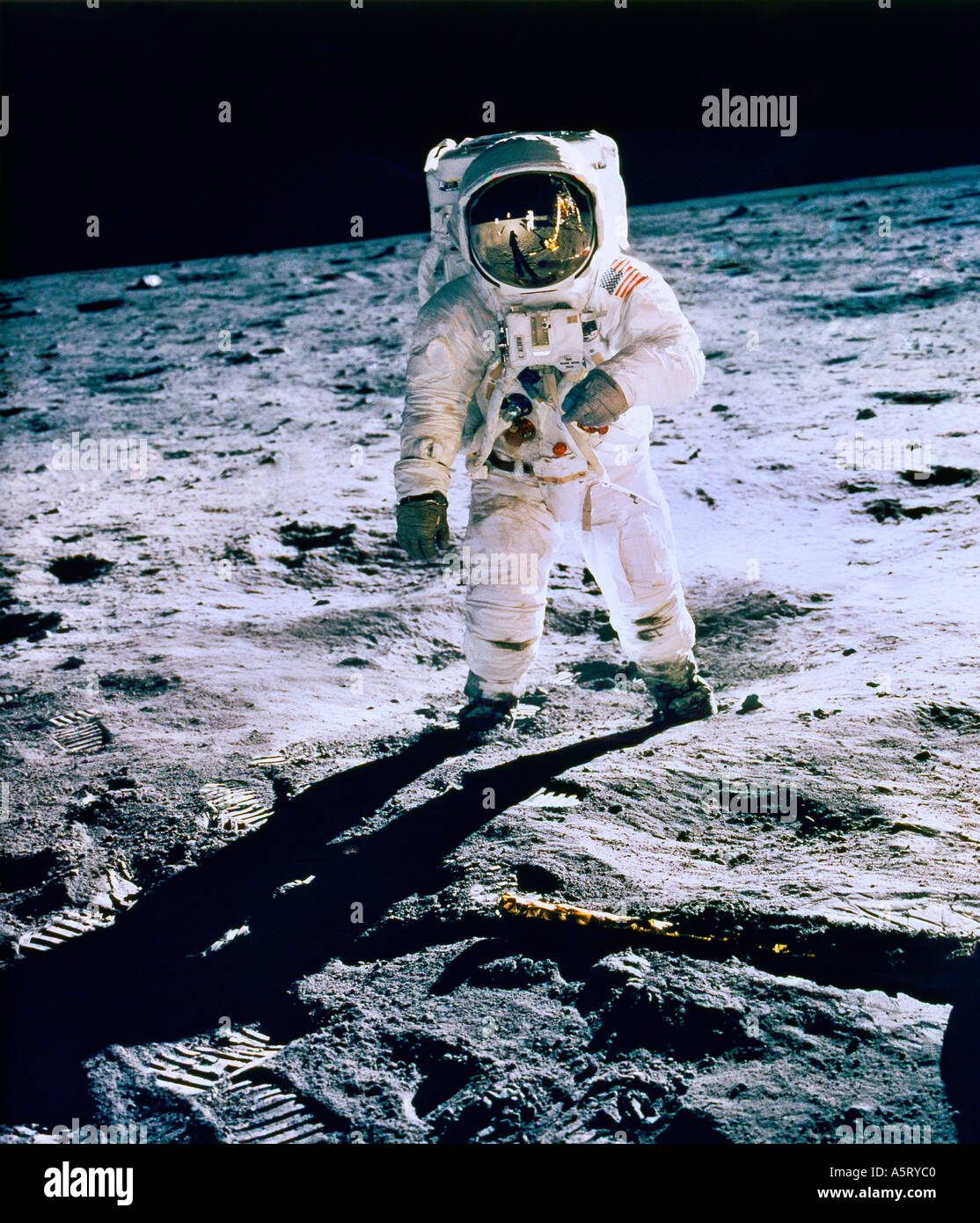
“It is also conceivable that further LF investigations could provide evidence about the possible interaction of single particles in space with brain function, impacting with the crew ability to optimally perform a mission,” researchers stated in a study hosted by the National Center for Biotechnology Information. The ongoing analysis of these events serves as a cornerstone for evaluating the cumulative biological dosage of radiation, ensuring that future mission profiles account for the neurological fatigue and potential sensory interference caused by the persistent, invisible barrage of high-energy particles.
Find more reporting in our Technology section.
