
NASA is preparing for the United States’ 250th anniversary through its Freedom 250 initiative, highlighting the agency’s role in expanding space exploration. As of June 13, 2026, the agency continues to manage a $24.4 billion budget and a workforce of 18,400 civil servants to support ongoing missions ranging from the International Space Station to the Artemis program.
NASA’s Ongoing Mission and Budgetary Scope
The National Aeronautics and Space Administration operates as an independent agency of the United States federal government, tasked with the nation’s civil space program and aeronautical research. According to Wikipedia, the agency is currently led by administrator Jared Isaacman, who has held the position since December 2025. With a fiscal year 2026 budget authorized at $24.4 billion, NASA maintains ten field centers across the country and employs approximately 18,400 civil servants.
The agency’s operations are structured into three primary mission directorates: Human Spaceflight, Research and Technology, and Science. Its infrastructure includes the Deep Space Network and the Near Earth Network, which support a wide array of activities from Earth observation to deep space exploration. The allocation of the annual budget is determined through the federal appropriations process, where the executive branch submits a request followed by congressional review and final authorization. This financial framework supports not only flight hardware and launch operations but also the extensive network of university research grants and private sector partnerships that define the modern aerospace economy.
The Freedom 250 Initiative
As the United States approaches its semiquincentennial, NASA has launched Freedom 250 to mark the nation’s 250th birthday. According to NASA’s official documentation, this initiative serves to highlight the agency’s history of innovation, courage, and scientific leadership. The program aims to reflect on past milestones—such as the first steps on the Moon—while emphasizing how the agency continues to push boundaries for future generations. The initiative is designed to coincide with broader national celebrations, positioning space exploration as a central pillar of American identity and technological advancement. By linking historical achievements to contemporary goals, Freedom 250 serves as a public engagement platform intended to foster interest in STEM fields among the next generation of engineers, scientists, and explorers.

Current Spaceflight and Exploration Priorities
NASA’s current activities focus on both human and robotic exploration. The agency leads the multi-national Artemis program, which includes the development of the Orion spacecraft and the Space Launch System rocket. These efforts are part of a broader commitment to long-term space presence, specifically targeting the establishment of a sustainable lunar infrastructure that can support future crewed missions to Mars. The Artemis program represents a shift from the temporary sortie-based missions of the 20th century toward permanent, scalable exploration models.
For more on this story, see Sun’s True Color Revealed: Why It Looks White in Space, Not Yellow.
- Astrophysics: Utilizing space-based observatories such as the James Webb Space Telescope and the Hubble Space Telescope to probe the origins of the universe and characterize exoplanetary atmospheres.
- Solar System Exploration: Conducting robotic missions like the New Horizons probe and the Perseverance rover, which analyze geological samples and search for indicators of past biological activity on Mars.
- Earth Observation: Researching Earth systems through the Earth Observing System, providing critical climate data and environmental monitoring that informs global scientific policy.
International collaboration remains a cornerstone of these operations. NASA works alongside organizations including the European Space Agency (ESA), the Japan Aerospace Exploration Agency (JAXA), the Canadian Space Agency (CSA), and Russia’s Roscosmos for International Space Station operations. Domestically, the agency coordinates with the National Oceanic and Atmospheric Administration (NOAA) for weather and climate data, the United States Geological Survey (USGS) for land imaging, and the United States Space Force for matters concerning space situational awareness and launch range operations.
Historical Context and Structural Evolution
NASA’s roots trace back to the National Advisory Committee for Aeronautics (NACA), which was established in 1915. At that time, the United States recognized a significant gap in aviation capability compared to Europe. The creation of NACA was intended to foster research and development to regain American leadership in the field. This foundation allowed the U.S. to rapidly advance its aeronautical capabilities through the mid-20th century, providing the technical expertise that would eventually enable space flight.
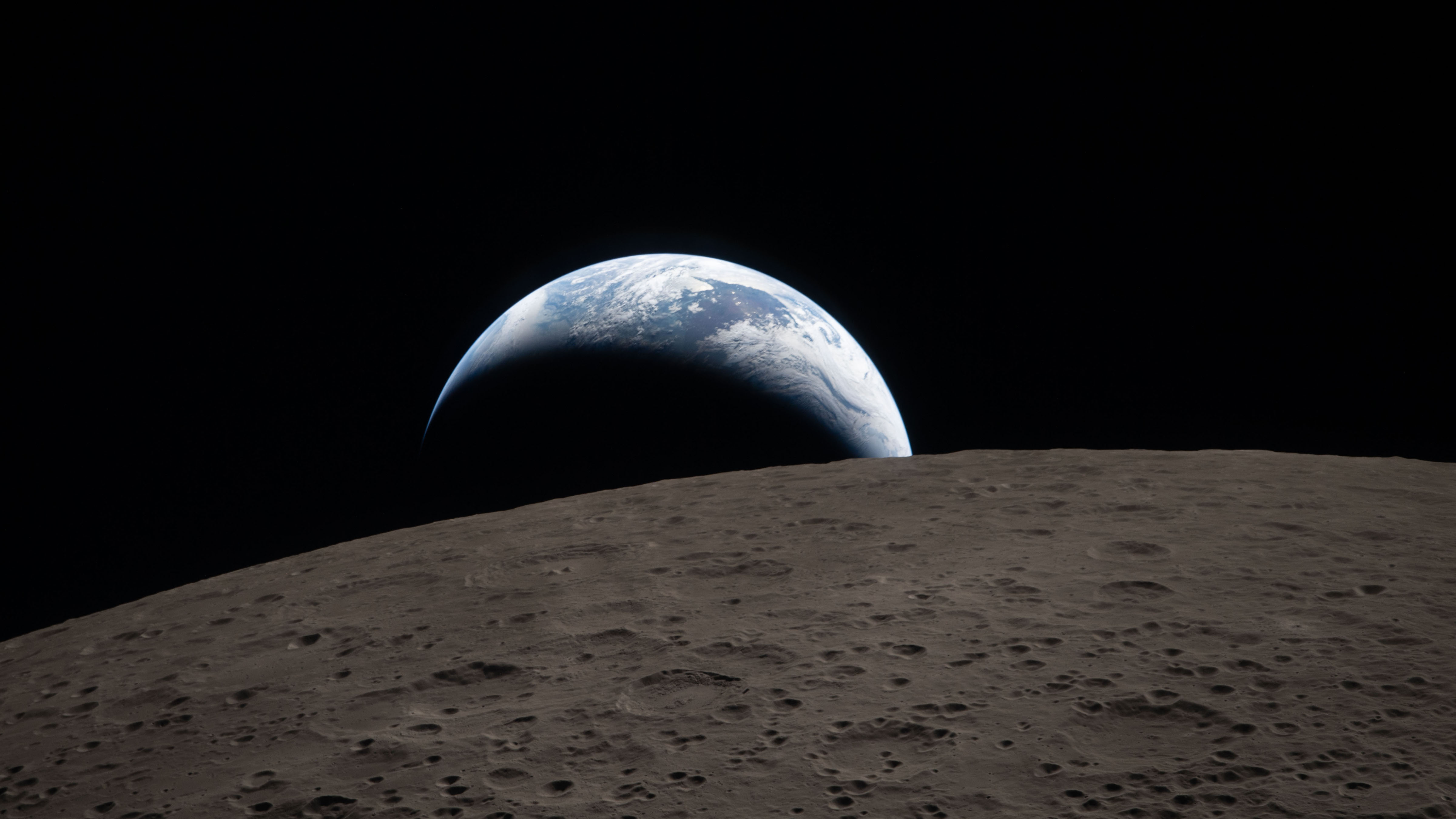
In 1958, amid the Space Race, NASA was established to succeed NACA, providing the U.S. space program with a distinct civilian orientation. The transition from NACA to NASA marked a strategic pivot from atmospheric flight research to the pursuit of orbital and deep-space capabilities. Since its inception, the agency has overseen major programs including Project Mercury, Project Gemini, the Apollo program, and the Space Shuttle, solidifying its influence on popular culture since the 1969 Apollo 11 Moon landing. The agency continues to operate from its headquarters located at 300 E St. SW, Suite 5R30, Washington, DC, as noted by USAGov. Today, the agency’s role has evolved to include the management of complex public-private partnerships, working with commercial entities to lower the cost of access to low-Earth orbit while retaining focus on deep-space scientific discovery.
Find more reporting in our Technology section.
