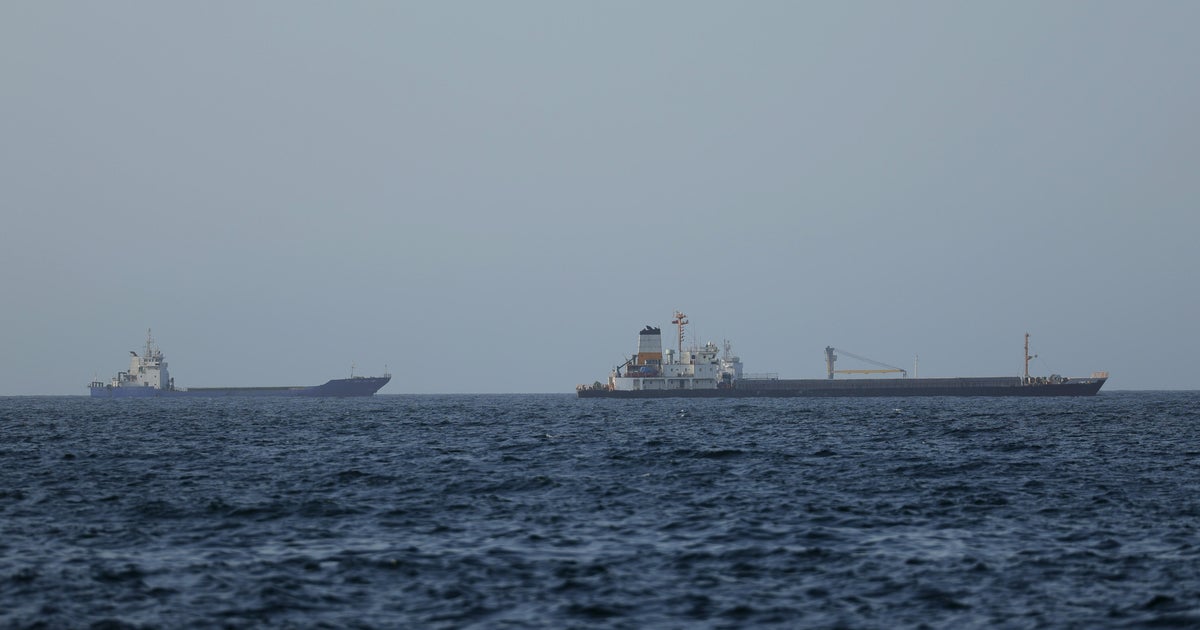
Iran closed the Strait of Hormuz on Saturday, June 20, 2026, in retaliation for Israeli strikes in Lebanon, while U.S.-Iran nuclear talks—delayed by escalating violence—are set to begin Sunday in Switzerland with Pakistan and Qatar mediating. The move threatens to disrupt global oil flows just as negotiators scramble to salvage a fragile interim deal that already faces skepticism from Tehran’s supreme leader.
Why Iran shut the Strait of Hormuz—and what it means for oil markets
Iran’s joint military command announced the closure of the Strait of Hormuz on Saturday, citing Israel’s continued attacks in Lebanon as a “clear breach” of a U.S.-Iran interim agreement meant to halt hostilities. The move comes as Iran’s state broadcaster confirmed a high-level delegation—including Parliament Speaker Mohammad Bagher Ghalibaf and Foreign Minister Abbas Araghchi—was en route to Switzerland for talks with the U.S., originally scheduled for Friday but postponed due to the violence.
While Iran’s military warned of “serious risks” to ships entering the strait, the U.S. Central Command dismissed the closure as ineffective. “Iran does not control the Strait of Hormuz,” Capt. Tim Hawkins, a U.S. military spokesperson, told reporters. “Traffic continues to flow, and U.S. forces are monitoring the situation to ensure this remains the case.” According to the AP, 55 merchant vessels—carrying over 17 million barrels of oil—transited the strait on Saturday alone, with U.S. forces maintaining a presence to deter disruptions.

The timing of Iran’s move is deliberate. With Israeli strikes in Lebanon killing at least 32 people on Saturday—up from 83 the day prior—Iran’s Supreme Leader Mojtaba Khamenei has framed the conflict as a test of U.S. commitment. In a statement released Saturday, Khamenei acknowledged signing the interim deal but made clear his reservations: “The American president who, out of desperation, used all kinds of leverage to bring this about,” he wrote, adding that Iran would not submit to “excessive demands.” His statement, carried by CBS News, echoed a broader Iranian stance: compliance hinges on U.S. actions, not promises.
Yet the risk of economic fallout looms. The Strait of Hormuz handles roughly 20% of global oil shipments, and while Iran’s announcement may be more symbolic than operational, markets are watching closely. Mohammad Mokhber, an adviser to Khamenei, warned that “the flow of energy in the Middle East would halt so long as the U.S.-Iran agreement remains only on paper.” The threat underscores a paradox: Iran’s leverage over oil flows is limited, but the perception of instability could trigger a self-fulfilling crisis.
Switzerland’s high-stakes talks: What’s at risk if negotiations fail
The U.S.-Iran talks, set to begin Sunday at the Burgenstock Resort in Switzerland, are the most critical test yet of the interim memorandum of understanding (MoU) signed last week. The deal, brokered after months of indirect negotiations, commits both sides to a 60-day window to finalize a broader nuclear agreement—though Iran’s Foreign Ministry spokesperson, Esmail Baghaei, has made it clear that progress depends on U.S. adherence to the ceasefire terms. “If they are not [upheld], the memorandum of understanding as a whole will be jeopardized,” Baghaei told state media, as reported by Al Jazeera.
For more on this story, see Iran Blocks Hormuz Strait After U.S. Claims Secret Ceasefire Deal.

The stakes are high. The MoU unfroze Iranian assets and lifted U.S. sanctions on Iranian oil exports, but Congress has already voiced skepticism about the deal’s terms. Meanwhile, Israel’s refusal to fully halt strikes in Lebanon—despite a ceasefire agreement with Hezbollah—has eroded trust. “From this moment on, we—that is, you, the proud nation, and this humble servant—will await the realization of the aforementioned conditions,” Khamenei’s statement declared, framing the talks as a referendum on U.S. seriousness.
U.S. Vice President JD Vance, who confirmed his arrival in Switzerland “in the next couple of days,” acknowledged the fragility of the moment. “It’s always a delicate coordination dance,” he told Fox News, reflecting the tightrope both sides must walk. The technical-level talks will focus on Iran’s nuclear program, but the broader question is whether the U.S. can deliver on its promises—particularly the unfreezing of Iranian assets—while Israel continues its military campaign.
The Lebanese factor: How Israel’s strikes are derailing diplomacy
Israel’s refusal to fully halt strikes in Lebanon—despite a ceasefire with Hezbollah—has become the dealbreaker in U.S.-Iran negotiations. While both sides signed the MoU last week, Israel’s military campaign has shown no signs of slowing. On Saturday alone, Israeli attacks killed at least 32 people in southern Lebanon, according to state media, bringing the death toll to over 100 in two days. The violence has given Iran a pretext to stall talks, with Tehran arguing that the U.S. has failed to rein in its ally.
“The American side seeks to make excessive demands, and they will not submit to them,” Khamenei’s statement warned, echoing Iran’s long-standing position that any agreement must include Israel’s withdrawal from the region. The challenge for U.S. negotiators is that Israel’s government—led by Prime Minister Benjamin Netanyahu—has made clear it will not accept any deal that doesn’t include Iran’s complete withdrawal from Syria and Lebanon. This creates a Catch-22: Iran demands concessions from the U.S., but the U.S. cannot deliver without Israel’s cooperation.
This follows our earlier report, Trump claims Iran war ‘settlement’ reached-Tehran calls deal still ‘unfinalized.
The human cost is mounting. In Qannarit village, southern Lebanon, relatives of victims gathered Saturday at the site of destroyed buildings hit by Israeli airstrikes, their grief underscoring the real-world consequences of diplomatic deadlock. “The war was worth it?” asked one lawmaker in Congress, referencing the U.S. decision to lift sanctions on Iranian oil exports—a move that has left some in Washington questioning the wisdom of engaging Tehran at all.
Who’s mediating—and why Pakistan and Qatar are playing kingmaker
The role of Pakistan and Qatar in brokering the talks cannot be overstated. Both countries have deep ties to Iran and the U.S., giving them unique leverage. Pakistani Interior Minister Mohsin Naqvi met with Iran’s Foreign Minister Abbas Araghchi in Tehran on Saturday, while Qatar’s Prime Minister Sheikh Mohammed bin Abdulrahman bin Jassim Al Thani has been holding preliminary meetings in Switzerland. According to Al Jazeera, their involvement reflects a broader regional effort to prevent the crisis from spiraling further.
Pakistan’s foreign ministry confirmed that technical-level talks would begin Sunday, with Qatari mediators joining the discussions. The choice of Burgenstock—a neutral Swiss resort—was deliberate, offering a low-key setting for high-stakes negotiations. Yet the delay from Friday to Sunday highlights the fragility of the process. “Things are moving backwards,” one Iranian official told state media, signaling frustration with the U.S.’s inability to curb Israeli actions.
For Pakistan and Qatar, the stakes are personal. Both countries have faced economic pressures from the war, and a collapse of the talks could lead to further instability in the Gulf. Their ability to keep the negotiations on track will determine whether the MoU survives—or if the region slides further into conflict.
Read also: Iran Accuses US of “Grave Violation” of Ceasefire.
What happens next: Three scenarios for the coming days
The next 72 hours will be decisive.
- Scenario 1: A fragile ceasefire holds. If Israel halts major strikes in Lebanon and the U.S. delivers on unfreezing Iranian assets, talks could proceed toward a final nuclear deal. The risk? Iran’s hardliners may still reject any agreement as insufficient.
- Scenario 2: Escalation triggers a regional crisis. If Iran’s threats to disrupt the Strait of Hormuz become operational—or if Israel escalates further—global oil prices could spike, and U.S. forces may face pressure to intervene directly.
- Scenario 3: Talks collapse, but the MoU survives. A partial deal—focused on nuclear limits but not broader regional security—could emerge, leaving Israel’s campaign against Hezbollah unresolved. This would buy time but not resolve the core conflicts.
The most likely outcome? A combination of the first and third scenarios: limited progress on nuclear issues, but no resolution to the Lebanon crisis. Iran’s supreme leader has made it clear that any deal must include Israel’s withdrawal—a demand the U.S. cannot meet without Israel’s consent. Meanwhile, Israel’s Netanyahu faces domestic pressure to avoid any perception of surrender, making a full ceasefire unlikely.
What is certain is that the window for diplomacy is narrowing. With Iran’s patience wearing thin and Israel’s military campaign showing no signs of abating, the U.S. faces a choice: double down on pressure or risk losing the fragile gains of the past week. The talks in Switzerland are not just about nuclear weapons—they’re about whether the region can avoid all-out war.
The next move belongs to the negotiators. But the clock is ticking.
Find more reporting in our News section.
