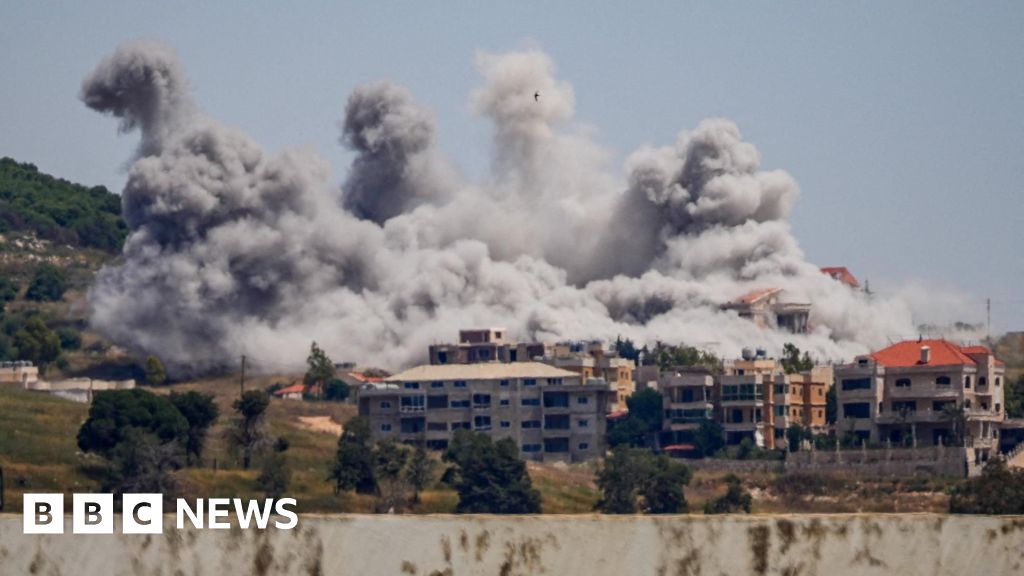
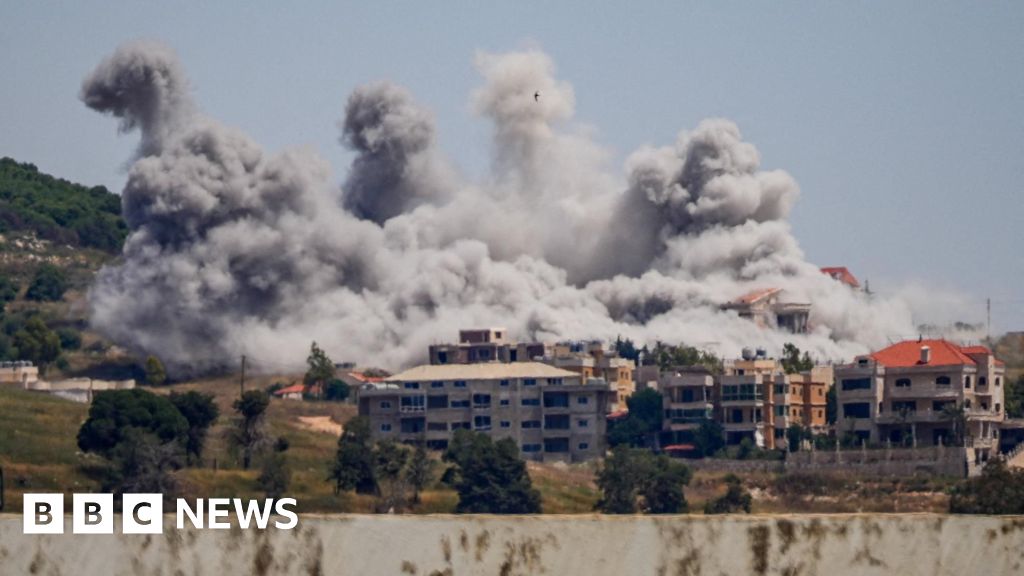
Representatives from Lebanon and Israel met at the US Department of State in Washington, DC, this week for high-stakes negotiations aimed at halting the ongoing Israeli invasion. While Beirut seeks a total ceasefire and troop withdrawal, Prime Minister Benjamin Netanyahu has signaled that military operations will continue, casting doubt on the diplomatic process.
Washington Negotiations and the Stalled Path to Peace
The diplomatic mission in Washington, which began on Tuesday at 9am local time, represents the first session of a two-day series of talks. According to Al Jazeera, Lebanese negotiators arrived with a clear list of objectives: an immediate end to the Israeli assault, a full withdrawal of forces from southern Lebanese territory, and the eventual return of more than 1.2 million displaced people to their homes. The Lebanese delegation, led by senior government officials coordinating with caretaker Prime Minister Najib Mikati, reportedly presented a framework demanding strict adherence to United Nations Security Council Resolution 1701 as the sole mechanism for de-escalation.
These discussions follow a series of earlier meetings held since April, involving ambassadors and, more recently, military representatives from both sides. Despite these sustained efforts, a resolution remains elusive. The current conflict has reached a scale unseen since 2000, and the human cost is mounting. Since March 2, the Lebanese Ministry of Public Health reports that 3,468 people have been killed in the conflict. In a briefing released to the press on Wednesday, a State Department spokesperson confirmed that U.S. envoy Amos Hochstein is facilitating the sessions, though the spokesperson declined to provide a timeline for a potential memorandum of understanding, citing the “fragile nature of the ongoing discussions.”
Netanyahu’s Military Strategy and Dahiyeh Strikes
While diplomats in Washington search for a breakthrough, the reality on the ground remains defined by kinetic force. Prime Minister Benjamin Netanyahu has publicly maintained that Israel’s military campaign will proceed, explicitly rejecting the notion of a pause. On Monday, the Prime Minister announced that strikes on Beirut’s southern suburbs, known as Dahiyeh, would resume after a period of relative quiet that had held since April. Israeli military spokesperson Rear Admiral Daniel Hagari stated in a televised address that the IDF had identified “new command-and-control nodes” within the neighborhood, justifying the resumption of airstrikes despite the ongoing Washington summit.
cluster (priority): Al Jazeera
The Israeli position appears focused on securing long-term security guarantees, specifically the disarmament of Hezbollah. However, analysts observe that this goal is complicated by the ongoing occupation of southern Lebanese regions. Some reports suggest that Israel is attempting to leverage internal sectarian divisions within Lebanon to destabilize the political landscape, further complicating the central government’s ability to exert control or reach a durable settlement. According to a leaked cabinet document obtained by local Israeli media, the Netanyahu government is conditioning any ceasefire on a “permanent buffer zone” extending five kilometers north of the Blue Line, a demand that Lebanese officials have flatly rejected as a violation of sovereignty.
Casualties and the Targeting of Emergency Services
The intensity of the fighting has drawn international concern regarding the protection of non-combatants and medical infrastructure. In a recent incident in the Chehour area, approximately 14km (9 miles) to the east, two paramedics were killed and a third was seriously wounded. The BBC reported that the victims were affiliated with the Risala Scouts Association, a group linked to the Amal movement, which is an ally of Hezbollah. The International Committee of the Red Cross (ICRC) issued a statement on Tuesday calling for “immediate respect for the neutrality of medical personnel,” noting that the Chehour strike was one of four confirmed attacks on civilian emergency response vehicles in the last 72 hours alone.
Trump announces 10-day ceasefire between Israel-Lebanon
Ministry of Public Health statement, via BBC
The Ministry of Public Health condemns the continuous targeting of health workers who are performing their humanitarian duties, noting that these actions constitute a grave violation of international humanitarian law and the Geneva Conventions.
cluster (priority): news.google.com
This incident underscores the precarious nature of the current conflict zone. For the Lebanese government, the destruction is not just a matter of immediate casualties but of long-term state survival. During previous meetings, Beirut officials presented detailed maps documenting the widespread destruction of homes and civilian infrastructure, arguing that the scale of the damage necessitates a return to the parameters of the 1949 armistice agreement rather than the current, less formal arrangements. UNIFIL (United Nations Interim Force in Lebanon) confirmed in a recent situation report that their patrols in the Bint Jbeil district have been severely curtailed due to the intensity of the exchange of fire, rendering them unable to verify civilian casualty reports on the ground in real-time.
The gap between the two negotiating parties remains wide. Israel has floated the prospect of future trade agreements and tourism exchanges, aiming to shift the bilateral relationship toward normalization. Yet, these overtures are met with intense skepticism in Beirut, where the priority remains the cessation of hostilities and the restoration of state sovereignty in the south. Lebanese Foreign Minister Abdallah Bou Habib stated during an interview on Tuesday that any diplomatic solution must be “decoupled from regional normalization agendas” and focused strictly on the withdrawal of the IDF to pre-conflict positions.
Party
Primary Goal
Stance on Hezbollah
Lebanon
Total ceasefire and troop withdrawal
State-led disarmament
Israel
Security guarantees and disarmament
Continued military pressure
As the Washington talks conclude, the immediate future rests on whether the diplomatic pressure from the United States can bridge the chasm between Netanyahu’s military objectives and the Lebanese state’s necessity for territorial integrity. With Hezbollah excluded from the negotiations, the risk remains that any agreement reached in Washington may fail to influence the actual combatants on the ground, leaving the region in a state of volatile uncertainty. Observers in Washington note that the absence of a direct Hezbollah representative at the table means that even if a diplomatic framework is signed, the “on-the-ground implementation” remains highly susceptible to sabotage by hardline factions within the militia, who have vowed to continue resistance operations until a full withdrawal is verified by independent monitors.
Claire Donovan coordinates breaking-news coverage across global time zones. She has reported on elections, social movements, and investigative stories in over ten countries. Known for her calm leadership under pressure, Claire guarantees Globally Pulse delivers news that is fast, factual, and fair.