Türkiye’s National Intelligence Academy (MIA) reports that the recent U.S./Israel-Iran war has fundamentally altered regional security, necessitating a shift in Ankara’s military and energy strategies. As diplomatic ties with Israel remain strained, trade data reveals a complex reality of persistent economic flows despite official government rhetoric and public hostilities.
A Conflict Defined by Data and Electronic Dominance
The National Intelligence Academy, or MIA, recently released a report analyzing the strategic implications of the conflict that began on February 28 and spanned nearly 40 days. According to MIA President Professor Talha Kose, the war signaled the end of platform-centered warfare, moving toward a structure reliant on data networks, operational sustainability, and algorithmic analysis.
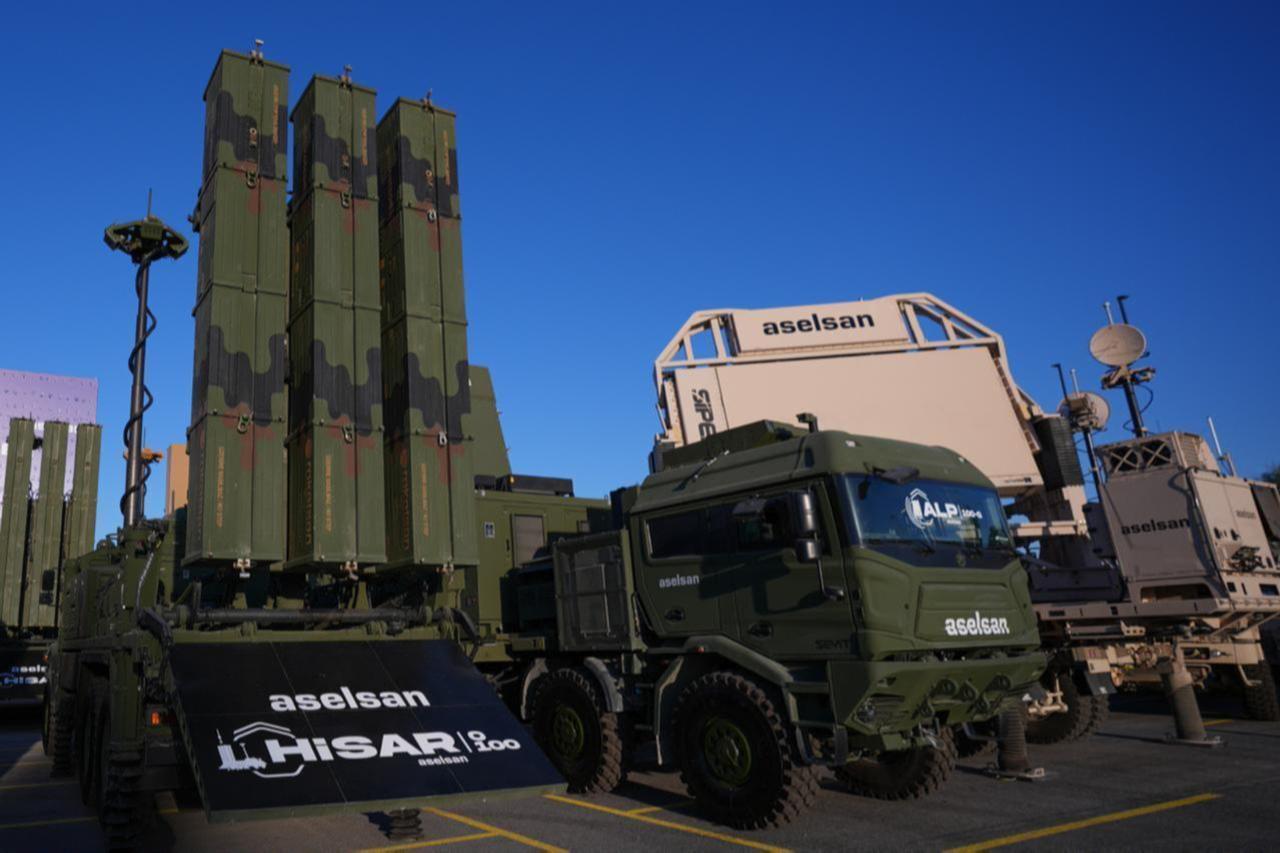
The report, titled “The U.S./Israel-Iran War and Türkiye from a Military and Geopolitical Perspective,” emphasizes that modern battlefield outcomes are increasingly decided by electromagnetic spectrum dominance. With radar systems, satellite communication, and electronic warfare now at the forefront, the academy notes that reliance on high-cost platforms like aircraft carriers has become a liability under intense missile fire. For Ankara, this has accelerated the importance of the Steel Dome project—a multi-layered defense initiative designed to integrate air and missile defense systems into a single, cohesive network.
The Paradox of Embargoed Trade
cluster source: The Jerusalem Post
While the AKP-led government in Ankara has positioned Israel as a primary adversary, economic data suggests a different narrative. Hungarian Conservative reports that despite a formal embargo, Israel imported $924 million in goods from Türkiye throughout 2025. This trade continues even as President Erdoğan’s administration utilizes third-party nations—including Greece, Albania, Bulgaria, Georgia, and Azerbaijan—to facilitate the movement of essential Israeli products, a process that adds significant logistical costs.
The volume of trade moving in the opposite direction tells a story of drastic decline. Israeli exports to Türkiye plummeted to nearly $11 million in 2025, a sharp drop from the $598.6 million recorded in 2024. Analysts suggest that Ankara’s attempt to pressure Azerbaijan into severing energy and defense ties with Israel has met resistance, as Baku maintains a policy of neutrality, viewing its alliance with Tel Aviv as a reliable and necessary strategic partnership.
Consolidating Hegemony in the Northern Levant
Could Türkiye Stop a Foreign Invasion? | Türkiye’s Modern Military Arsenal
Beyond the immediate military concerns of the Iran conflict, the regional power balance is shifting due to the collapse of the Assad regime in December 2024. The Jerusalem Post argues that the subsequent power vacuum is being filled not by Western stabilization, but by a rapid consolidation of Turkish influence. Ankara is building a regional architecture that relies on Islamist network-building and economic monopolization rather than direct military occupation.
This strategy centers on the Syrian Muslim Brotherhood, which acts as an ideological client for the Justice and Development Party. By positioning the Brotherhood to dominate the emerging governing coalition in Damascus, Ankara secures local legitimacy and administrative infrastructure while avoiding the optics of a colonial power. This network extends into Lebanon, where Ankara is reportedly cultivating influence through the local affiliate Jamaa Islamiya. Lebanese security officials have raised alarms regarding Turkish intelligence operations and the movement of cash and weapons into the Akkar region, signaling a long-term bid for a permanent foothold on the Mediterranean coast.
Future Implications for Regional Security
cluster source: Türkiye Today
The intersection of these developments creates a volatile environment for Turkish foreign policy. The MIA report highlights that energy facilities, logistics centers, and communication networks have become priority targets in modern warfare, turning trade routes and energy supplies into strategic competition zones.
As the region recalibrates, the refusal of Turkish leadership to communicate directly with Israeli counterparts is viewed by some as an erosion of influence. While the current trajectory suggests a deepening rivalry, historical precedent—such as the informal alignment of the mid-20th century—remains a point of reference for those who anticipate a future reconciliation in the interest of mutual security. For now, however, the focus remains on the rapid, quiet construction of Turkish regional power and the hardening of air defense systems against the backdrop of an increasingly automated and data-driven warfighting environment.
Rafael Moreno directs international correspondents from London to Singapore. A multilingual journalist born in Madrid, he spent 12 years covering diplomacy and conflict for Global Affairs Review. His background in political science strengthens Globally Pulse’s depth in world reporting.