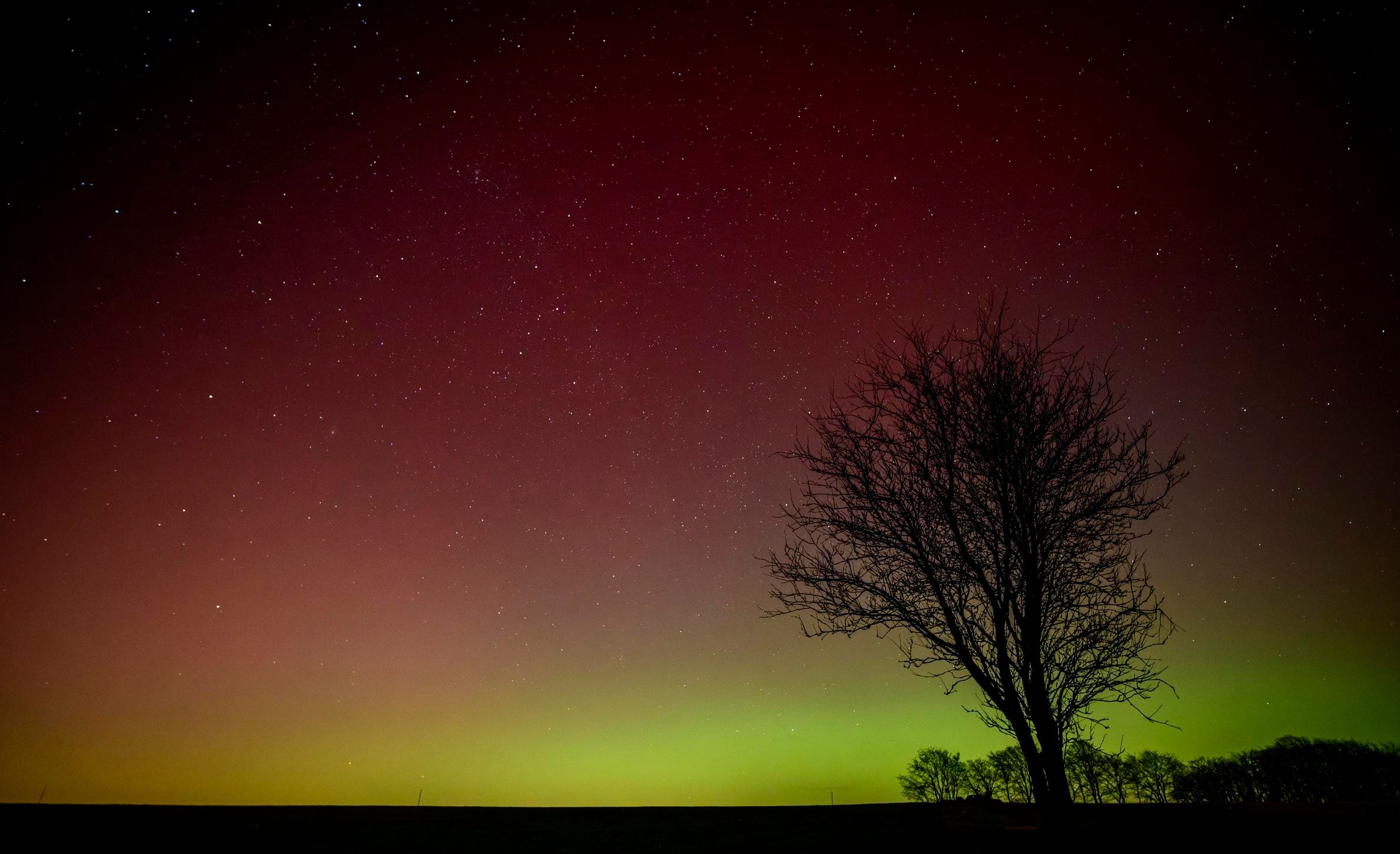
A G3 geomagnetic storm is barreling toward Earth this week, with NOAA forecasting the northern lights to dazzle across 23 U.S. states tonight and Friday—including rare visibility in the Midwest and Northeast—after three solar disturbances converge in a rare alignment.
Tonight, June 4, marks the first of two nights when the aurora borealis could paint the skies in vivid greens and purples, with the best viewing window between 10 p.m. and 2 a.m. local time. The storm, rated G3 (strong) on NOAA’s five-level scale, stems from three separate solar events—a coronal mass ejection (CME) launched May 30, a co-rotating interaction region, and a high-speed solar wind stream from a coronal hole—all expected to arrive in close succession. While the moon’s bright phase may dim fainter displays, the storm’s intensity could override that interference, offering a spectacle far beyond the usual northern-tier visibility.
Why This Storm Is Unusual: Three Solar Events Colliding
Geomagnetic storms typically result from a single solar disturbance, but this week’s G3 event is fueled by three simultaneous solar phenomena, according to NOAA’s Space Weather Prediction Center. The first, a CME ejected May 30, is expected to arrive mid-afternoon EDT today, with its effects lingering into Friday. A second disturbance—a co-rotating interaction region where fast solar wind compresses slower material—will follow, while a third high-speed stream from a coronal hole adds to the mix. When these arrive in tandem, their combined magnetic pressure can amplify auroral activity beyond what any single event would produce.
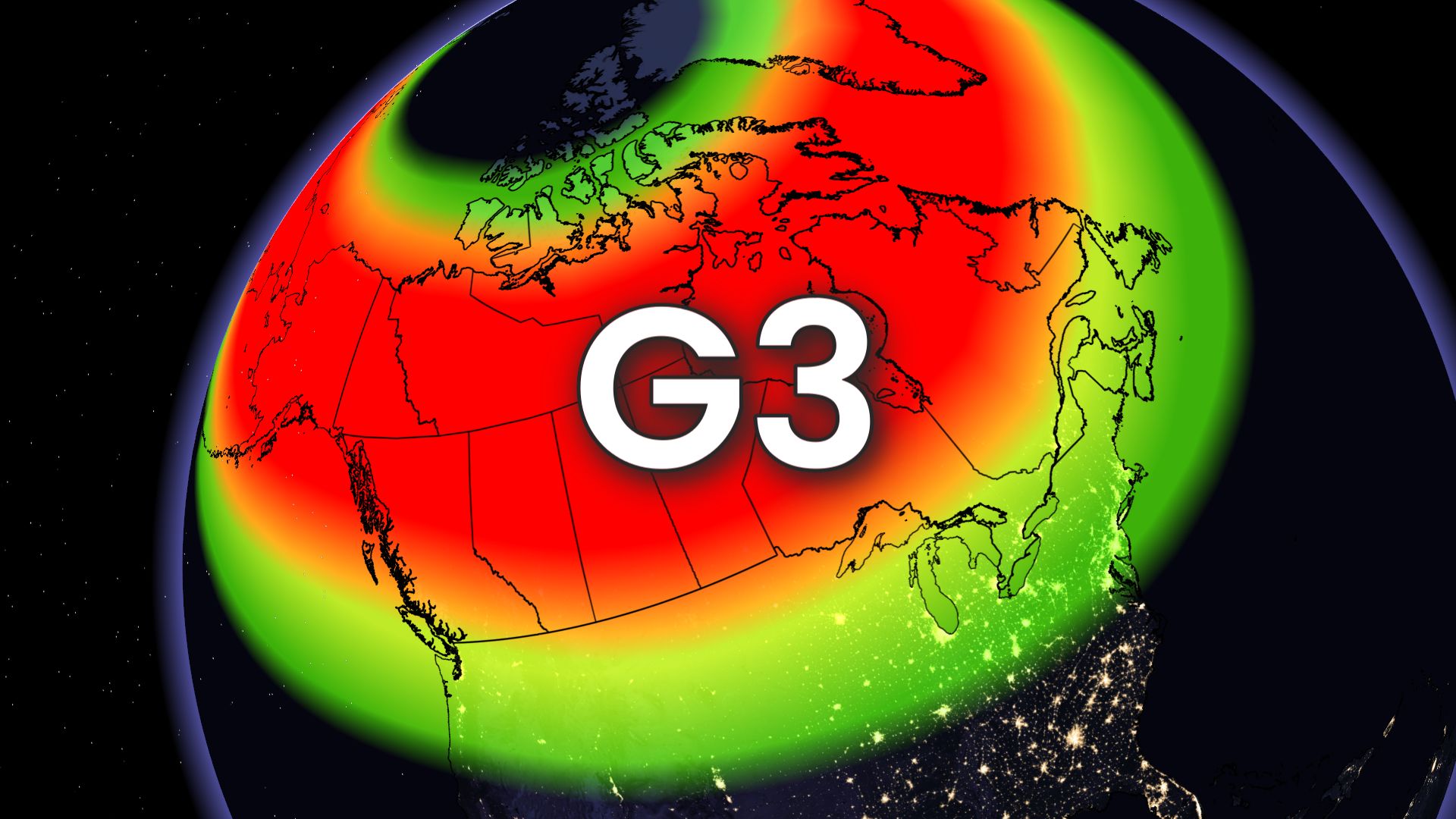

NOAA’s initial forecast for Wednesday night called for a modest Kp index of 4—a measure of geomagnetic disturbance—with auroras visible only in the far north. But by Thursday, the Kp index jumped to 7, expanding visibility to 23 states, from Washington and Oregon in the West to New York and Maine in the East. The U.K.’s Met Office echoed this, warning of possible G4 (severe) intervals, though NOAA has not yet upgraded its alert. The discrepancy highlights how space weather forecasts can shift rapidly; what began as a “low chance” event for Wednesday night has morphed into a near-certainty for tonight and Friday.
Where to Look: 23 States in the Crosshairs
For most of the U.S., the northern lights are a rarity—visible only during peak solar activity, which occurred in 2024. But this storm’s intensity could push the aurora as far south as Massachusetts, Connecticut, and Pennsylvania, regions that haven’t seen a display in years. The best viewing conditions will be in the Upper Midwest and Northeast, where cloud cover is minimal and light pollution is lowest.
- Pacific Northwest: Oregon, Washington (southwest regions), Idaho (northern tip)
- Mountain West: Montana, Wyoming, North Dakota, South Dakota, Nebraska
- Midwest: Minnesota, Wisconsin, Michigan (Upper Peninsula)
- Northeast: New York, New Hampshire, Vermont, Maine, Massachusetts, Connecticut, Rhode Island
- Great Lakes: Indiana, Ohio, Pennsylvania, Illinois, Iowa
Alaska, however, remains the gold standard for aurora viewing. The state’s proximity to the magnetic pole means it almost always sees displays during geomagnetic storms, though tonight’s event may be particularly vivid even there. The Forbes forecast notes that while the moon’s gibbous phase will rise after midnight—brightening the sky—its impact may be outweighed by the storm’s strength.
The Science Behind the Show: How Solar Storms Create Auroras
The northern lights are the result of charged particles from the sun colliding with Earth’s magnetosphere. When solar wind—streams of electrons and protons—interacts with our planet’s magnetic field, it funnels some particles toward the poles. There, they excite oxygen and nitrogen molecules in the upper atmosphere, releasing energy as visible light: green from oxygen, red or blue from nitrogen. The intensity of the display depends on two factors: the strength of the solar storm (measured by the Kp index) and Earth’s magnetic field’s ability to deflect or channel the particles.
This week’s storm is particularly potent because the three solar disturbances are arriving in rapid succession. Normally, Earth’s magnetosphere absorbs or deflects most incoming particles. But when multiple CMEs or high-speed streams hit at once, their combined pressure can overwhelm the magnetosphere’s defenses, pushing auroras farther from the poles. The SpaceWeather.gov update confirms that the CME’s arrival is expected around mid-afternoon EDT today, with effects lasting through Friday.
What to Expect: Timing, Moonlight, and Tech Impacts
The aurora will likely peak between 10 p.m. and 2 a.m. local time, when the interaction between solar particles and Earth’s atmosphere is strongest. However, the waning gibbous moon—rising after midnight—will add brightness to the sky, potentially obscuring fainter auroras. To maximize visibility, head to areas with minimal light pollution, such as rural regions or away from city centers. The KATU forecast for the Pacific Northwest advises looking north, as the aurora will likely appear along the horizon.

While geomagnetic storms can disrupt satellite communications and power grids, this G3 event is expected to have only limited or minor impacts on technology, according to NOAA. The agency’s Space Weather Prediction Center has not issued any warnings for infrastructure disruptions, though amateur radio operators and GPS users may experience brief signal fluctuations.
The Big Picture: Solar Cycle Peak and Future Outlook
The sun’s 11-year solar cycle reached its peak in 2024, meaning we’re now in the declining phase. While auroral activity will naturally diminish over the next few years, this week’s storm is a reminder of how dynamic space weather can be. The Forbes analysis notes that 2026 may be the last year with frequent strong displays before activity tapers off significantly.
For skywatchers, this is a rare opportunity to witness the northern lights without traveling to the Arctic. The storm’s intensity and the moon’s timing create a high-stakes gamble: will the aurora outshine the moonlight, or will cloud cover spoil the view? The Weather Network’s Canadian forecast suggests that Eastern Canada—particularly Ontario, Quebec, and the Maritimes—has the best chance due to clear skies and high pressure systems. Meanwhile, the U.S. Midwest and Northeast must hope for similar conditions to avoid disappointment.
If you miss this week’s display, don’t despair. While the solar cycle is winding down, unexpected storms can still occur. The key is to stay informed: NOAA’s Space Weather Prediction Center updates forecasts in real time, and tools like SpaceWeatherLive provide live aurora maps. For now, set your alarms, bundle up, and head outside—you might just witness one of the most spectacular natural light shows of the year.
