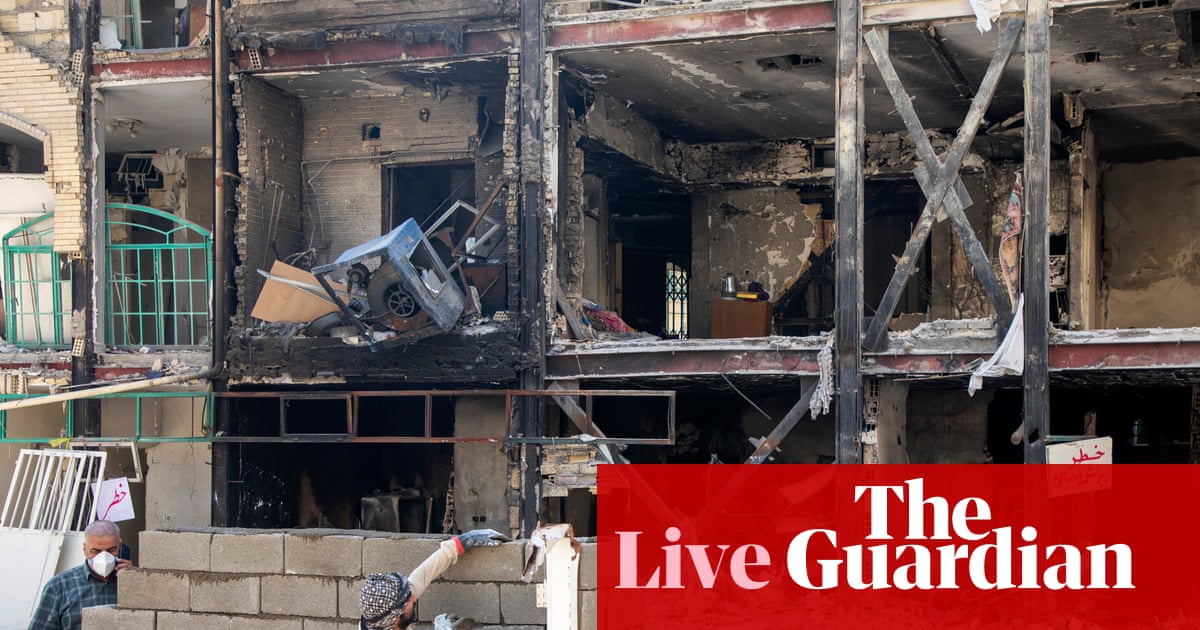
President Donald Trump announced Wednesday that the United States will conduct further military strikes against Iran following the collapse of peace negotiations and the downing of a U.S. Apache helicopter. Trump also claimed a successful secret mission escorted 100 million barrels of oil through the Strait of Hormuz to stabilize global energy prices.
Military Retaliation and Stalled Peace Talks
Tensions in the Middle East escalated sharply on Wednesday as President Trump signaled a hardening stance against Tehran. Following the destruction of a U.S. Apache helicopter in the Strait of Hormuz, the President confirmed that the U.S. military had already engaged in combat operations and signaled further action was imminent, according to reporting by Reuters.
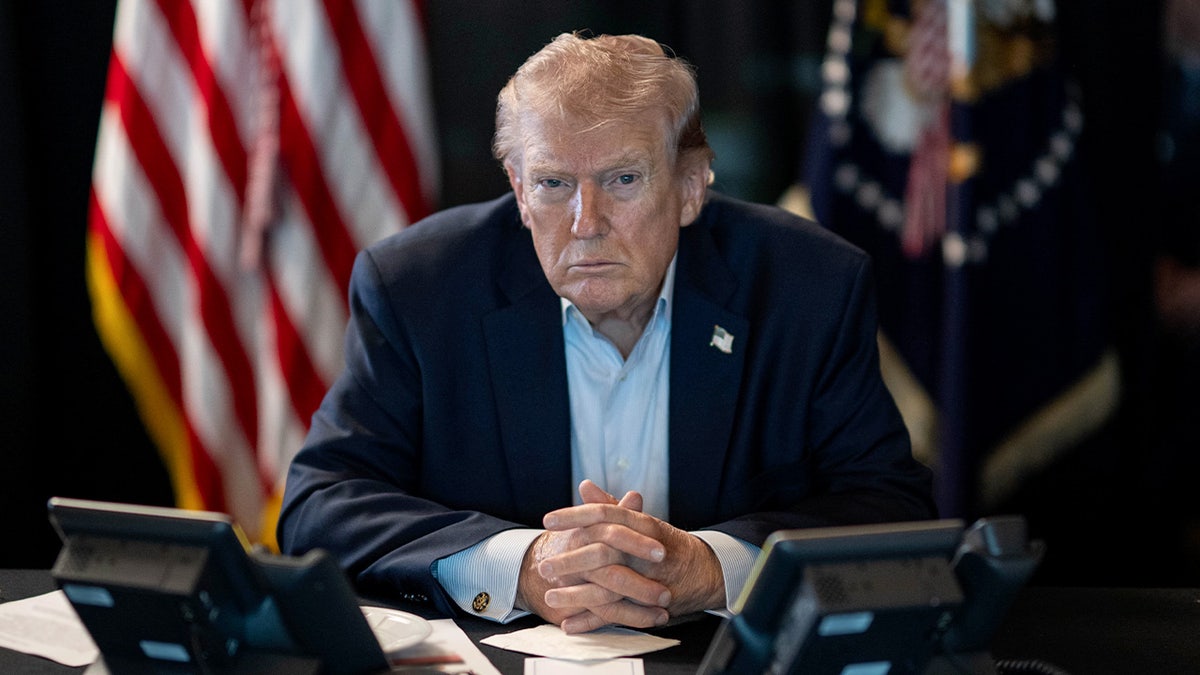
“We’re going to be attacking them, attacking them very hard,” Trump told reporters at the White House. The President expressed frustration with the diplomatic process, accusing Iranian leadership of bad-faith negotiations. “We were really close to a deal. But they keep tapping us along. They keep playing us for suckers,” Trump said, as noted by The Guardian.
The Strait of Hormuz serves as a critical maritime chokepoint, connecting the Persian Gulf with the Gulf of Oman and the Arabian Sea. Historically, international law and the U.S. Navy have maintained the position that the strait is an international waterway, essential for the global economy. Disruptions to transit in this region are traditionally met with increased naval presence, a strategy known as “freedom of navigation” operations, which the U.S. has utilized for decades to ensure the flow of global energy supplies remains uninterrupted by regional actors.
The Secret Strait of Hormuz Mission
Beyond the immediate combat threats, the White House claims a covert operation has successfully protected global oil supplies. Trump stated that he directed the U.S. military last month to escort commercial tankers through the narrow waterway, which historically handles 20% of the world’s oil and gas flow.
Trump credited this mission with curbing price volatility, asserting that crude values are currently trading between $85 and $90 a barrel, a figure he contrasted against a hypothetical $250 per barrel price point. He further claimed that the U.S. military neutralized 22 Iranian vessels during the operation. “We took out the other night 22 ships, late at night with no lights, because they don’t have any radar because we blasted the crap out of it,” Trump said.
U.S. Energy Secretary Chris Wright corroborated the presence of increased military activity in the waterway during a congressional hearing on Wednesday. Wright confirmed that the U.S. military has been “using the U.S. military to increase flows of oil” in the region, though he clarified that the vessels successfully transiting the strait were not Iranian-owned.
Regional Impact and Humanitarian Allegations
The military exchanges have resulted in significant civilian infrastructure damage. On Wednesday, Esmaeil Baghaei, a spokesman for Iran’s ministry of foreign affairs, accused the U.S. of a “calculated war crime” following strikes on two water reservoirs in the Bemani area of Sirik. According to Iranian officials, the attack has deprived 20,000 residents of potable water.
“This is not collateral damage — it is a calculated war crime and a flagrant violation of human rights and international humanitarian law,” Esmaeil Baghaei, Iran’s ministry of foreign affairs spokesman, via The Guardian.
The conflict has also extended into northern Israel, where an Iranian missile strike caused damage to the Ramat David airbase. An Israeli military official confirmed to AFP that the base sustained an impact, though they are currently investigating whether the damage was caused by a direct hit or shrapnel. Meanwhile, Saudi Arabia has condemned Iran for targeting U.S. bases in Kuwait, Jordan, and Bahrain, labeling the strikes as flagrant violations of territorial sovereignty that threaten regional stability. These nations, which host significant U.S. military assets, have long been central to the regional security architecture, providing the logistical backbone for U.S. operations throughout the Central Command area of responsibility.
Uncertainty in Future Negotiations
Despite the ongoing military strikes, the White House maintains that a diplomatic off-ramp remains possible. Trump stated that the U.S. is still seeking a “meaningful” deal that would permanently prohibit Iran from acquiring nuclear weapons. While the President claims Iran has already agreed to such terms, the final agreement remains unsigned. As the region navigates this volatility, the primary question remains whether the current “hard” military pressure will force a signature or lead to a broader, sustained conflict.
In international relations, the collapse of such high-stakes negotiations often precedes a period of prolonged instability, as parties struggle to redefine the status quo. The current reliance on military force to achieve diplomatic compliance is a departure from traditional statecraft, which typically favors multi-party mediation to address the proliferation of nuclear capabilities. The international community, including the United Nations Security Council, frequently monitors these developments, though the current path of escalation has left the timeline for any return to the negotiating table entirely unconfirmed.
Find more reporting in our News section.
