Ukrainian President Volodymyr Zelenskyy confirmed on Thursday that drones struck the Syzran oil refinery deep inside Russia, marking a significant escalation in Kyiv’s long-range attack strategy. The strike, which set the facility on fire, came as part of a broader campaign targeting Russian oil infrastructure, with Zelenskyy stating, “Overall, our long-range plan for May is being carried out largely in full. The key targets are Russian oil refineries, storage facilities, and other infrastructure tied to these oil revenues.” The Guardian reported the attack, while Russia’s Astra news outlet corroborated the strike on the Rosneft-owned refinery.
Strategic Shift in Ukrainian Warfare
The Syzran attack underscores Ukraine’s evolving military strategy, leveraging domestically developed midrange and long-range drones to strike deep into Russian territory. This capability has allowed Kyiv to disrupt Moscow’s oil revenues, a critical lifeline for the war effort. “Our long-range capabilities are significantly changing the situation—and, more broadly, the world’s perception of Russia’s war,” Zelenskyy said in a statement, highlighting the psychological and economic toll on Russia. AP News noted that such strikes have become “almost daily occurrences,” targeting facilities that fund Russia’s invasion.

The Institute for the Study of War (ISW) assessed that Ukraine’s “intensified midrange strike campaign” since early 2026 has “degraded Russian forces’ ability to conduct offensive operations across the theatre and has also likely supported recent Ukrainian advances.” This shift has allowed Kyiv to push back Russian troops along parts of the frontline, achieving its “most significant battlefield gains since 2024,” according to the think tank. NBC News highlighted the role of midrange drones in hitting logistical hubs and troop concentrations, a tactic that has forced Moscow to divert resources to defend its interior.
Domestic and International Reactions
Russian officials have struggled to contain the fallout. The Samara region’s governor, Vyacheslav Fedorishchev, confirmed two deaths in Syzran but did not address the refinery strike. Meanwhile, Russia’s defense ministry reported downing 1,054 Ukrainian drones in a single day, the highest tally since the war began. Yahoo noted that Moscow’s air defenses, while formidable, have been unable to fully neutralize Kyiv’s drone campaign. The attacks have also disrupted daily life, with Moscow’s mayor, Sergei Sobyanin, reporting 81 drones intercepted near the capital and three civilian deaths. One drone struck a refinery, while another ignited a blaze at an oil storage facility.
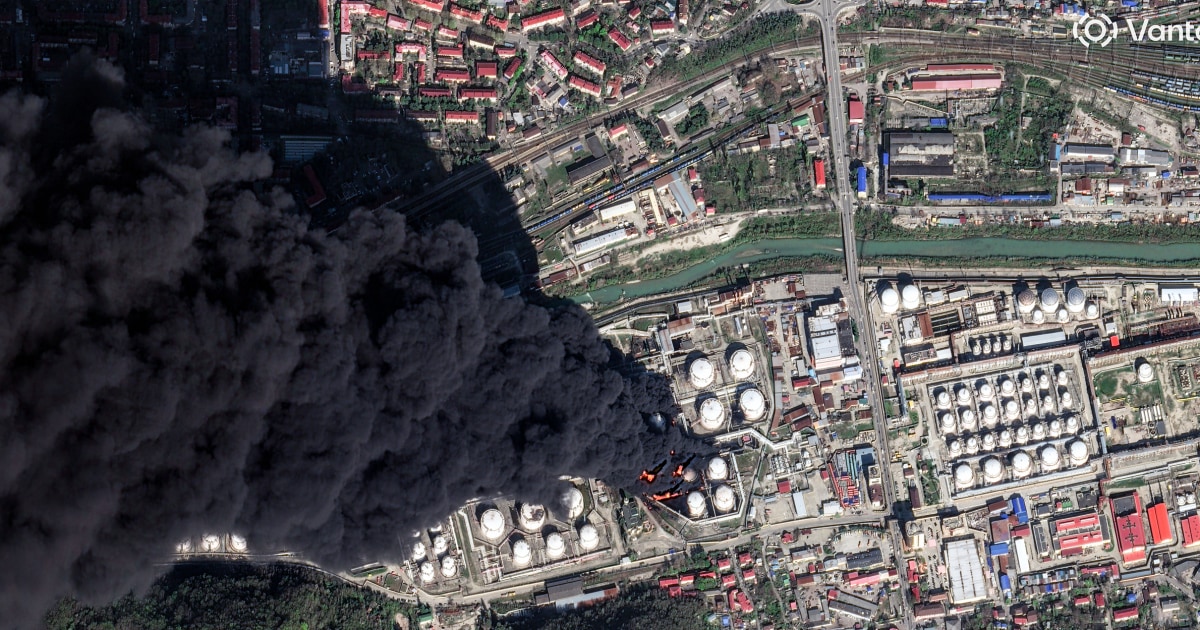
The strikes have also intensified pressure on Russian President Vladimir Putin. Analysts argue that the attacks are not just tactical but symbolic, signaling Ukraine’s growing ability to project power into Russia’s heartland. “The Moscow region is the most heavily saturated with Russian air defense systems,” Zelenskyy acknowledged, “but our long-range capabilities are changing the situation.” The psychological impact is evident: Russian citizens, once insulated from the war’s direct effects, now face a “new normal” of vulnerability, as reported by BBC News.
Starlink and the Battle for Technological Superiority
A key factor in Ukraine’s success has been its reliance on Starlink, the satellite internet service provided by SpaceX. Defense Minister Mykhailo Fedorov stated that Russia has “not been able to find a full replacement for Starlink,” granting Ukraine a critical advantage in guiding drones and coordinating strikes. “This has allowed us to slow Russia’s battlefield advance and gradually regain the initiative,” Fedorov said, though his comments were embargoed until Thursday. The Guardian emphasized that Starlink’s disruption has crippled Russian drone operations, which previously relied on GPS for navigation.
Russia’s attempts to counter Starlink have been limited. While the defense ministry has tested hypersonic missiles and ballistic systems, including the Yars and Zircon, these efforts have not yet offset Ukraine’s technological edge. The U.S. thinktank ISW noted that Russia’s “limited progress in developing alternatives” has left Kyiv with a “critical battlefield advantage.” This asymmetry underscores the broader implications of the war, as Ukraine’s success in adapting domestic technology could reshape global perceptions of hybrid warfare.
EU and Geopolitical Implications
The attacks have also spurred diplomatic shifts. German Chancellor Friedrich Merz proposed that Ukraine be granted “associate membership” in the EU, allowing it to participate in meetings without voting rights. This move, detailed in a letter to EU officials, aims to revive stalled peace talks. The Guardian reported that the proposal would grant Ukraine non-voting status in the European Commission and Parliament, reflecting a cautious approach to integration.
Meanwhile, the war’s fifth year has seen a growing sense of inevitability. Zelenskyy framed the Syzran strike as a “just retribution” for Russian attacks on Kyiv, including a recent missile strike that destroyed a nine-story apartment building.
