Iran has emerged from its war with the U.S. and Israel with a new leverage point: control over the Strait of Hormuz. On June 20, 2026, Tehran’s parliament speaker, Mohammad Bagher Ghalibaf, declared the waterway would never return to its pre-war status, signaling Iran’s intent to impose fees on commercial shipping—a move that could reshape global energy markets. A 14-point memorandum of understanding (MOU) between Iran and the U.S. temporarily suspends tolls for 60 days, but the long-term stakes are far higher: Iran’s ability to weaponize the strait as an “economic nuclear weapon,” as U.S. Secretary of State Marco Rubio put it in April, now hangs over the fragile peace.
The Strait of Hormuz as Iran’s New Deterrent
The war that began in late February left Iran economically battered but strategically stronger. While U.S. and Israeli airstrikes damaged Iranian defenses, Tehran’s retaliatory threat—shutting the Strait of Hormuz—proved more devastating. The strait, through which 20% of the world’s oil passes, became Iran’s ultimate bargaining chip. As Foreign Affairs reported, Rubio’s acknowledgment of the strait as an “economic nuclear weapon” underscored its geopolitical weight: any closure would send oil prices surging, disrupting supply chains worldwide.
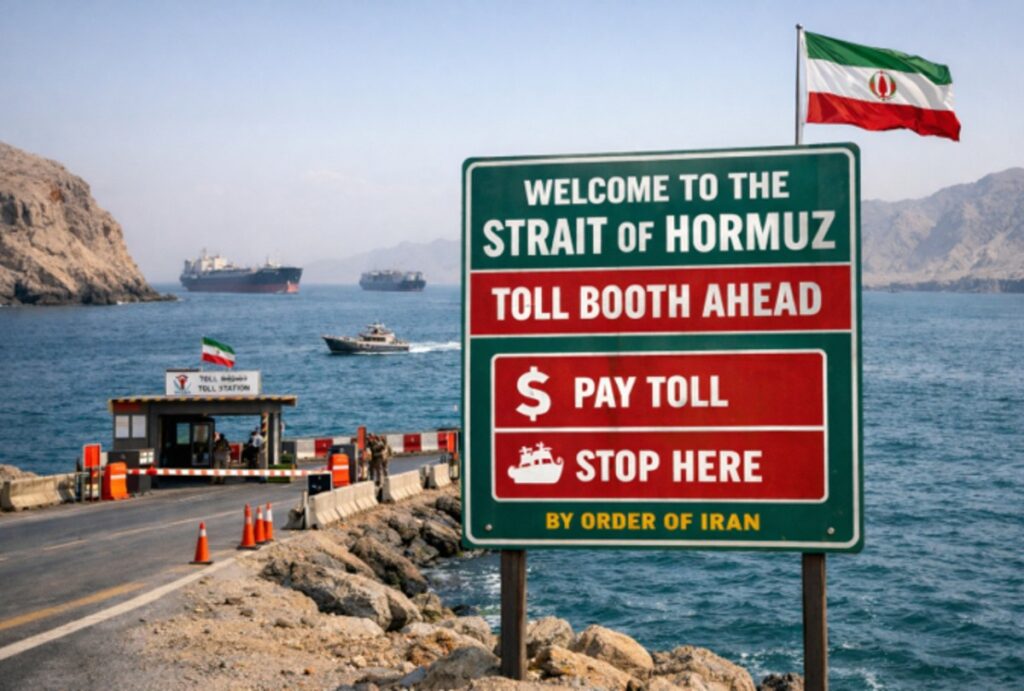
Ghalibaf’s warning—“the Strait of Hormuz will never return to its previous condition”—marks a shift from deterrence to monetization. Iran’s demand for fees on commercial vessels, confirmed in the MOU, reflects its post-war economic priorities. The 60-day reprieve on tolls is a tactical concession, but the underlying strategy is clear: Iran will no longer rely solely on threats to secure its interests. Instead, it plans to extract revenue from the very chokepoint that once served as a deterrent.
This approach carries risks. While Iran’s economy remains fragile—still recovering from sanctions and wartime damage—the strait’s new status quo could backfire. As Al Jazeera noted, Iran’s deputy foreign minister signaled readiness for diplomacy, but the MOU’s focus on shipping fees suggests Tehran is prioritizing economic recovery over political concessions. The danger? A prolonged standoff over the strait could accelerate the world’s shift toward alternative shipping routes, undermining Iran’s leverage over time.
A Ceasefire That Leaves Key Questions Unanswered
The 14-point MOU between Iran and the U.S. is a fragile truce, not a peace treaty. It halts hostilities in Iran and Lebanon, lifts U.S. naval blockades, and permits Iran to sell oil—but it defers the hardest issues to a 60-day negotiation period. Nuclear restrictions, sanctions relief, and the strait’s future administration remain unresolved. The MOU’s most critical provision: a temporary guarantee of free passage through Hormuz, with Iran reserving the right to impose fees afterward.

What happens when the 60 days expire? Iran’s insistence on fees—“naturally, we will charge fees in return for the services we provide,” Ghalibaf stated—suggests a permanent shift. The U.S. faces a dilemma: either accept Iran’s new terms or risk renewed conflict over shipping rights. Meanwhile, global markets are already bracing for volatility. The strait’s closure, even temporarily, could trigger a crisis worse than 2019’s tanker seizures, when oil prices spiked by 20% in weeks.
Yet the MOU’s ambiguity is deliberate. By postponing nuclear talks and sanctions relief, both sides buy time. For Iran, the strait’s economic leverage is a stopgap while it recovers. For the U.S., the MOU’s success hinges on whether Iran can deliver on its nuclear commitments—or whether the strait’s fees become a permanent flashpoint. As Foreign Affairs warns, Iran’s gamble could backfire if its adversaries adapt by diversifying supply routes, diluting the strait’s strategic value.
Why This War Ended Differently Than Expected
When the U.S. and Israel launched their campaign in February, Iran was at its weakest in decades. Protests, economic collapse, and internal divisions made Tehran appear vulnerable. Yet 40 days of war revealed a different reality: Iran’s resilience. Its ability to absorb strikes and retaliate—particularly through asymmetric threats like the strait—proved decisive. The war’s outcome was not a victory in the traditional sense, but a strategic draw that left Iran with a stronger hand.
For more on this story, see US Military Disables Cargo Ship Attempting to Breach Iran Port Blockade.
Key to this shift was Iran’s recognition of its vulnerabilities. The U.S. and Israel had hoped to degrade Iran’s military capabilities, but Tehran’s response was to weaponize its geography. By framing the strait as an economic battleground, Iran turned a liability—its dependence on oil exports—into an asset. The MOU’s terms reflect this calculus: Iran is no longer begging for sanctions relief; it is dictating the price of access to global trade routes.
This dynamic mirrors Iran’s playbook since the 1979 revolution. Then, as now, Tehran thrives on asymmetry. In 1984, it used tanker warfare to drain Iraq’s economy during the Iran-Iraq War. Today, it’s doing the same to the U.S. and its allies. The difference? The strait’s closure would have a global impact, not just regional. As Al Jazeera’s live updates highlighted, Iran’s deputy foreign minister’s call for diplomacy coexists with Ghalibaf’s hardline stance on the strait—proof that Tehran’s strategy is layered: engage in talks while leveraging its economic weapon.
What Comes Next: Three Scenarios for the Strait’s Future
The next 60 days will determine whether the MOU holds or collapses under the weight of unanswered questions.

- Negotiated Compromise: Iran and the U.S. reach a deal on nuclear restrictions and sanctions relief, with the strait’s fees phased out over time. This would require Iran to trust the U.S. to honor commitments—and the U.S. to accept limited Iranian influence over global shipping. Unlikely, but possible if both sides fear escalation.
- Stalemate with Fees: The MOU expires, and Iran imposes tolls on commercial vessels. Global shipping firms adapt by rerouting cargo or paying fees, but oil prices rise incrementally. Iran’s economy stabilizes, but the strait becomes a permanent source of tension.
- Renewed Conflict: If Iran’s fees trigger a U.S. or Israeli response—or if Iran perceives another attack—hostilities could resume. The strait’s closure would be the spark, with global markets reacting violently. This scenario risks a broader regional war.
The most probable outcome? A combination of the second and third. Iran will likely impose fees, but not immediately shut the strait—at least not yet. The goal is to normalize the new order while keeping the threat of closure alive. For the U.S., the challenge is to deter Iran without provoking a crisis. As Foreign Affairs argues, Iran’s mistake would be to overplay its hand; the U.S.’s would be to underestimate the strait’s new role in global power dynamics.
The Bigger Picture: Who Wins, Who Loses?
Iran’s post-war strategy hinges on one question: Can it turn the Strait of Hormuz into a sustainable source of revenue and influence? The answer will shape the next chapter of Middle East geopolitics.
Winners:
- Iran: Gains economic leverage, deters future attacks, and secures a revenue stream from global shipping.
- China and Russia: Both have invested heavily in Iranian oil and could benefit from stable (if fee-laden) shipping lanes.
- Global shipping firms (short-term): May adapt to fees by passing costs to consumers, but long-term risks include rerouting.
Losers:
- U.S. and allies: Face higher oil prices and reduced influence over regional energy flows.
- Oil-dependent economies: Countries like Japan and India, which rely on Hormuz-bound crude, could see supply disruptions.
- Israel: Loses its ability to pressure Iran through economic warfare, as Tehran now holds the upper hand.
The real losers, however, may be the global markets. A permanent fee structure on the strait could accelerate the shift to alternative energy sources, but in the short term, it guarantees volatility. Iran’s gamble is high-risk: if it pushes too hard, it risks provoking a U.S. response. If it holds back, it may not secure the economic recovery it desperately needs.
One thing is clear: The Strait of Hormuz is no longer just a waterway. It’s a pawn in a high-stakes game where the rules have changed. And for the first time in decades, Iran is calling the plays.
Find more reporting in our World section.
