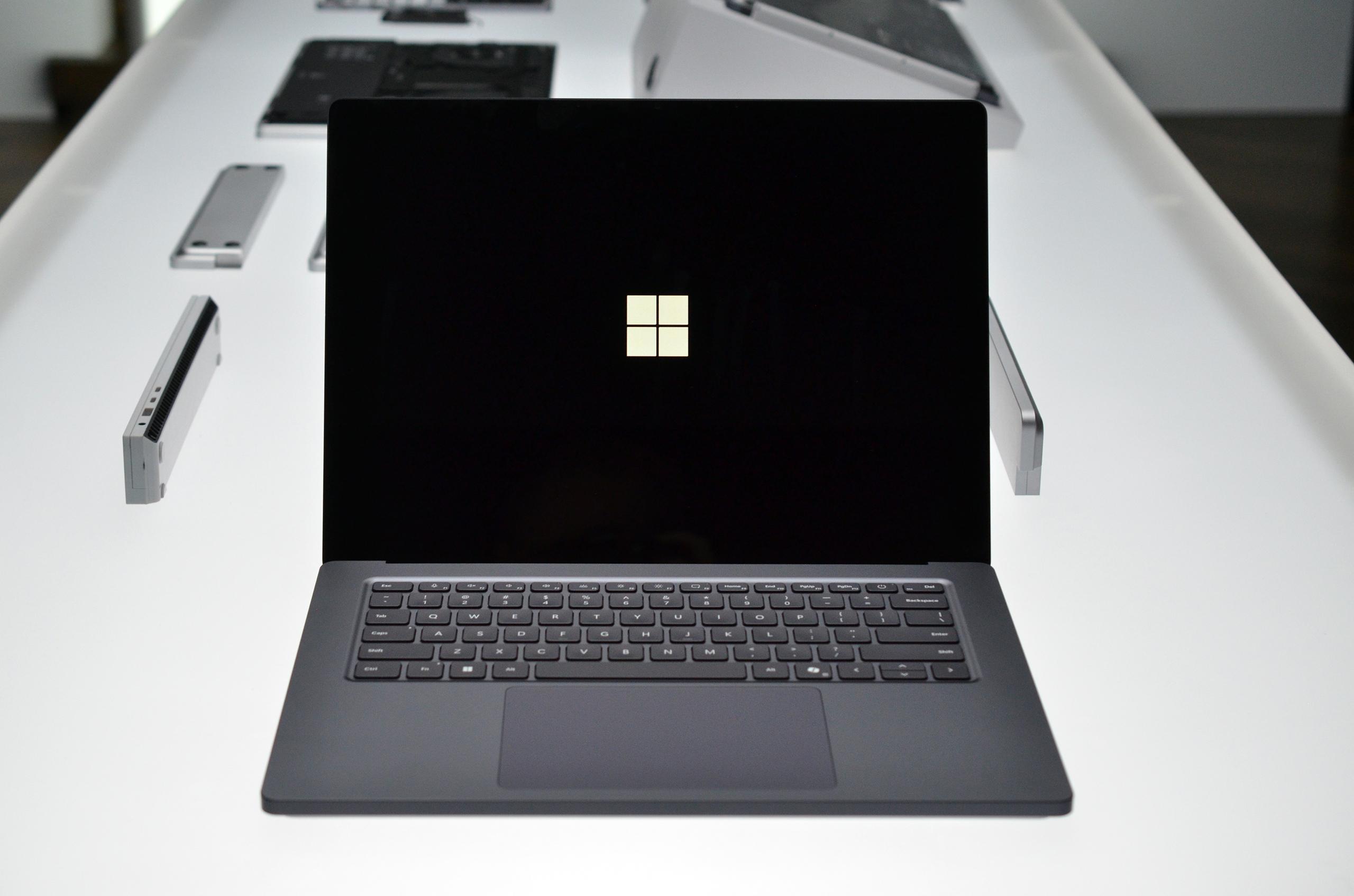
The Surface Laptop Ultra and NVIDIA RTX Spark chips have redefined the PC landscape, blending cutting-edge AI capabilities with performance-driven design. Microsoft and NVIDIA unveiled these innovations at the Computex 2026 conference, signaling a pivotal shift in how personal computing interacts with artificial intelligence.
The Surface Laptop Ultra: A MacBook Pro Rival Reimagined
The Surface Laptop Ultra, unveiled by Microsoft, positions itself as a direct competitor to the MacBook Pro, featuring a 15-inch mini LED display capable of 2,000 nits of HDR brightness. This display, the brightest ever on a Surface device, is paired with a larger trackpad that includes haptic feedback, enhancing user interaction with Windows 11. During a demonstration at Microsoft’s Build conference, the device showcased its ability to run local AI models using 128GB of unified memory while simultaneously playing resource-intensive games like *Indiana Jones and the Great Circle*. Despite its robust performance, the laptop’s heat dissipation, particularly near the keyboard, raised questions about long-term thermal management. “When we went through the priority order of what we’re going to design for, performance, performance, performance, battery life, battery life, battery life, display, display, display, making sure we’d nailed those things,” said Andrew Hill, corporate vice president of Surface product. <a href="https://www.theverge.

NVIDIA’s RTX Spark: A New Era of AI-Powered Computing
NVIDIA’s RTX Spark superchip, unveiled at the GTC Taipei conference, represents a leap forward in personal computing. Combining a 20-core NVIDIA Grace CPU with an NVIDIA Blackwell RTX GPU, the chip delivers 1 petaflop of AI performance, up to 128GB of unified memory, and full CUDA support. This integration allows for local execution of large language models (LLMs) and 3D rendering, marking a departure from cloud-dependent AI workflows. “The PC is being reinvented,” said Jensen Huang, CEO of NVIDIA. “For forty years, you launched apps. Click. Type. With RTX Spark and Microsoft Windows, you ask — and the PC does the work.” <a href="https://nvidianews.nvidia.

For more on this story, see Nvidia Unveils RTX Spark, Its CPU Challenge to Intel and AMD.
The RTX Spark’s capabilities extend beyond AI, enabling tasks like editing 12K video, rendering 90GB+ 3D scenes, and playing AAA games at 1440p with over 100 frames per second. Adobe has already begun rearchitecting Photoshop and Premiere for the chip, promising a 2x performance boost in AI and graphics tasks. The technology is set to power a range of devices, including Microsoft’s Surface Laptop Ultra, as well as models from ASUS, Dell, HP, Lenovo, and MSI. <a href="https://nvidianews.nvidia.
Market Implications and Competitive Dynamics
NVIDIA’s entry into the PC market has sent shockwaves through the industry. The company’s stock surged over 6% following the announcement, pushing its market cap past $5.4 trillion. This move challenges traditional PC chipmakers like Intel and AMD, as well as Apple, which has dominated the high-end AI market with its M1 and M2 chips. “Nvidia getting into the space is Jensen recognizing that he wants to own every bit of the AI stack in some shape,” said IDC analyst Tom Mainelli.
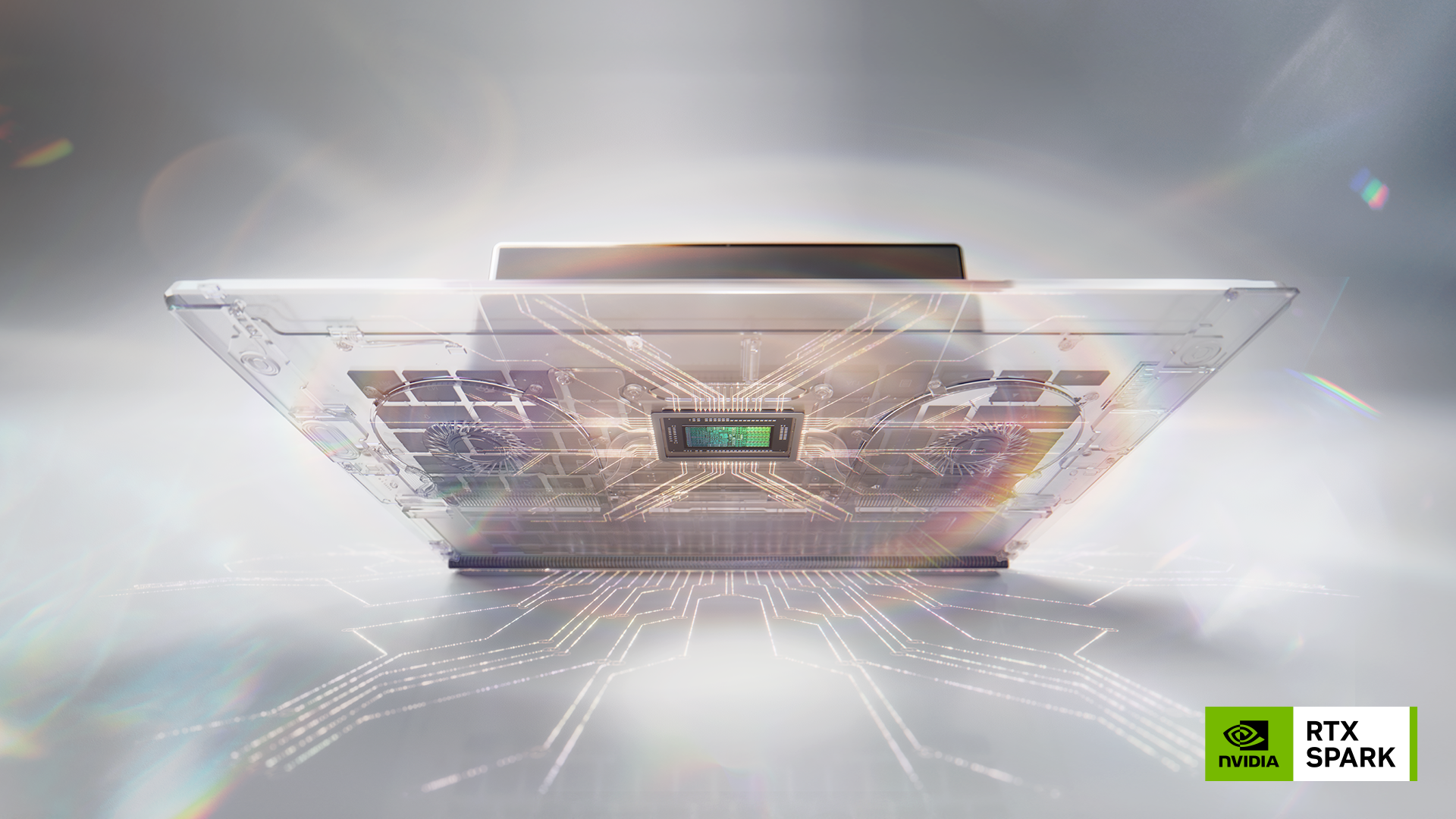
However, NVIDIA faces hurdles in a market long dominated by Intel and AMD. The company’s collaboration with MediaTek on the RTX Spark’s CPU design aims to address power efficiency and performance, but it remains to be seen how well the chip will compete with Apple’s M2 and Intel’s Core Ultra Series 3. “All AI computing, regardless where it is, that’s the prize,” said chip analyst Patrick Moorhead. “Jensen is not going to be happy if they just get data center or data center and auto. They want everything on the edge.
The Road Ahead: Challenges and Opportunities
While the RTX Spark and Surface Laptop Ultra represent significant advancements, several challenges remain. Pricing details for RTX Spark-powered devices are still pending, and the long-term reliability of the heat management system on the Surface Laptop Ultra will need testing. Additionally, the success of NVIDIA’s strategy hinges on widespread adoption by PC manufacturers and developers. “This reinvention of the computer is as big of a deal as the reinvention of the phone into what we now know as the smartphone,” Huang said, comparing the shift to the smartphone revolution.
For Microsoft, the Surface Laptop Ultra marks a return to performance-centric design after years of focusing on affordability. The device’s potential to rival the MacBook Pro could reshape the premium laptop market, especially as Apple’s own “MacBook Pro Ultra” is rumored to launch later this year. Meanwhile, NVIDIA’s push into the edge computing space underscores its ambition to dominate AI across all platforms, from data centers to consumer devices.
As the race to define the next generation of personal computing intensifies, the collaboration between Microsoft and NVIDIA sets a
