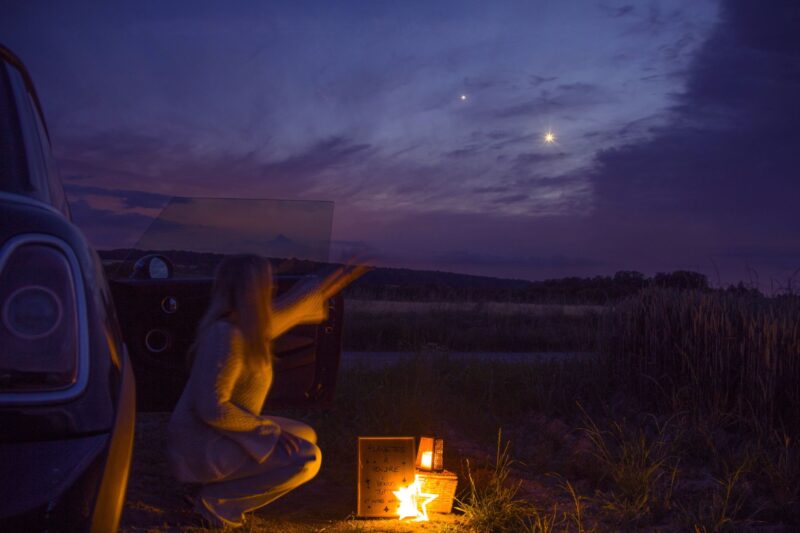
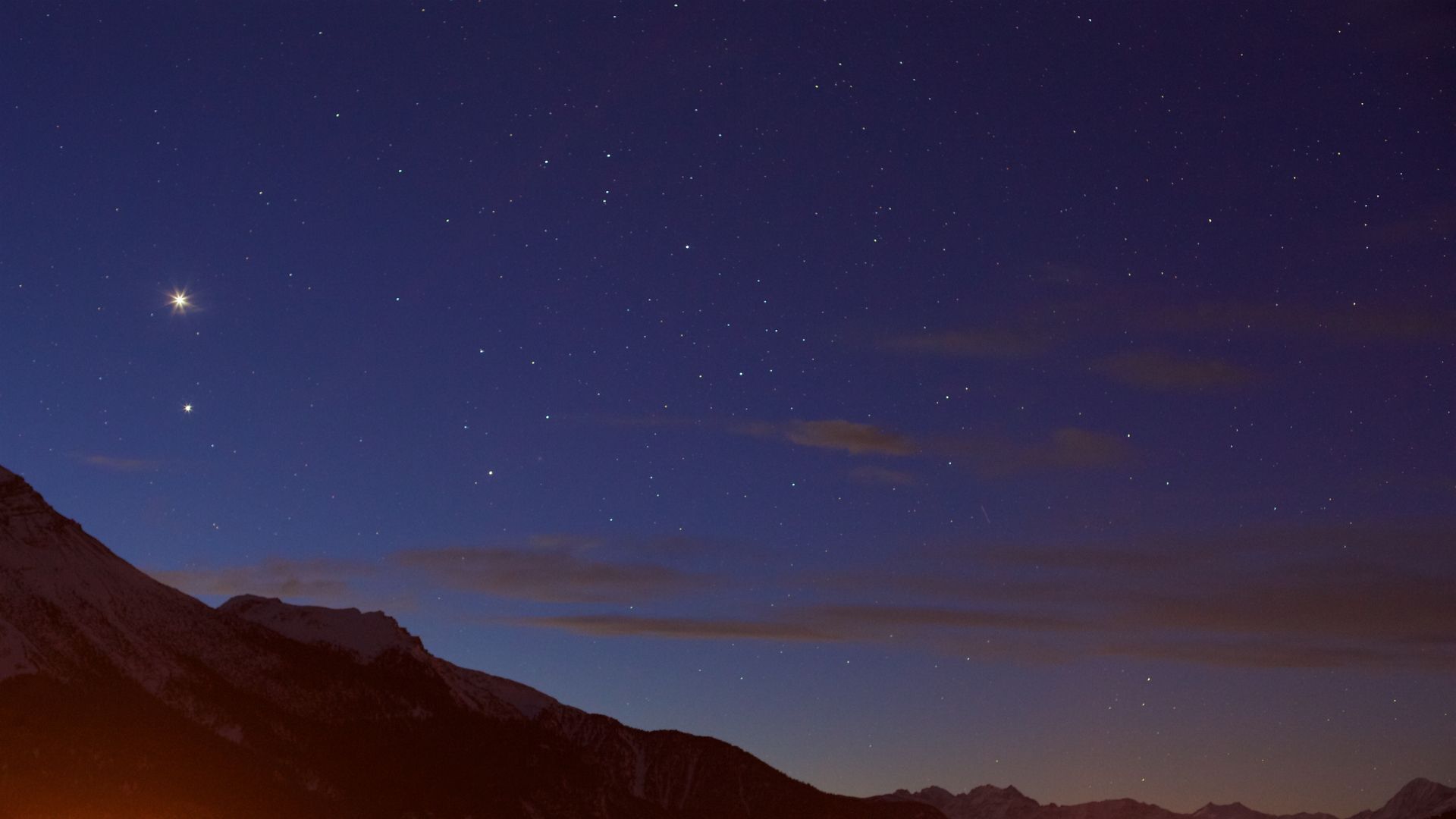
Venus and Jupiter reached their closest point of a rare conjunction on June 9, 2026, appearing just 1.6 degrees apart in the western evening sky. This celestial event, visible to the naked eye globally, was caused by the orbital paths of the planets as Venus rose while Jupiter gradually receded from Earth’s perspective.
A Rare Celestial Alignment
The conjunction of Venus and Jupiter, which occurred after sunset on June 9, served as one of the most visible astronomical highlights of 2026. According to Live Science, the two planets were separated by approximately 1.6 degrees—a distance equivalent to roughly three times the width of a full moon. While the event peaked on Tuesday, the planets remained in close proximity for several evenings throughout the week.
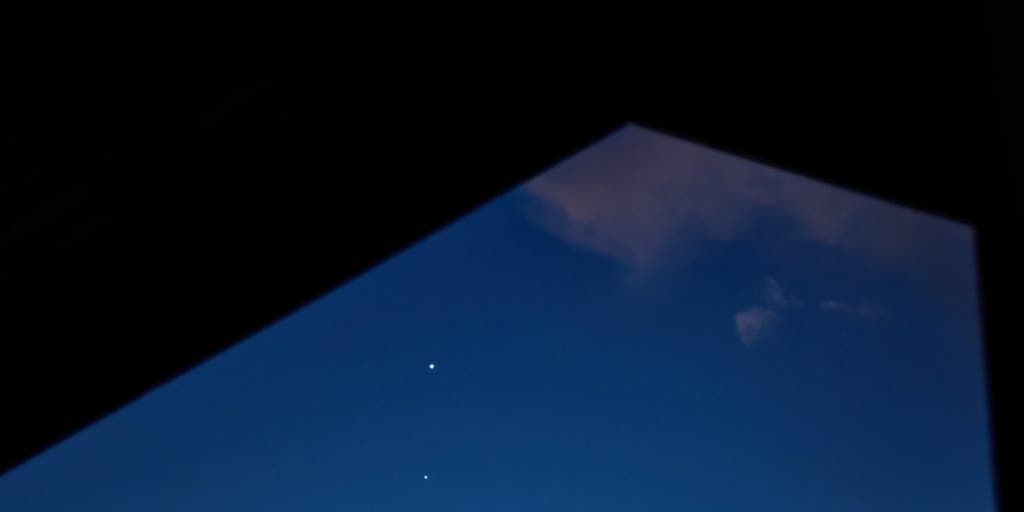
Observers were able to view the pair with the naked eye, though Space noted that a pair of 10×50 binoculars allowed for a more detailed view, potentially revealing Jupiter’s four Galilean moons: Io, Europa, Callisto, and Ganymede. These moons, first discovered by Galileo Galilei in 1610, are often visible in small optics, appearing as tiny pinpricks of light arranged in a line flanking the gas giant.
Why the Planets Appeared to Touch
Despite the visual proximity, the event was an optical illusion. FOX Weather reported that the planets remained millions of miles apart during the encounter. The perceived meeting occurred because Venus, an inner planet with a 224.7-day orbit, is currently rising in the evening sky, while Jupiter, an outer planet, is receding as Earth moves away from it in its 11.86-year orbit.
For more on this story, see Jupiter and Venus align in rare sky show tonight-here’s how to see it.
A planetary conjunction is essentially a line-of-sight phenomenon. Because the planets in our solar system orbit the sun on nearly the same plane—the ecliptic—they periodically appear to pass one another from our perspective on Earth. The frequency of these events depends on the orbital periods of the planets involved; because Venus moves much faster than Jupiter, it “laps” the gas giant in the sky periodically, creating these moments of apparent closeness.
The disparity in brightness between the two was significant. Venus shone at a magnitude of -3.9, making it approximately 7.5 times brighter than Jupiter, which registered at -1.7 magnitude. This brilliance is attributed not only to Venus’s closer proximity to Earth—roughly 1.2 astronomical units compared to Jupiter’s 6 astronomical units—but also to the high reflectivity of the thick cloud layers surrounding the planet, as detailed by Live Science. Venus’s atmosphere, composed primarily of carbon dioxide with clouds of sulfuric acid, has a high albedo, reflecting a significant portion of incoming sunlight back into space.
Global Observations and Photography
Stargazers from around the world documented the event, sharing images that captured the planets alongside other celestial markers. EarthSky compiled a gallery of community-submitted photos, including shots from Bengaluru, India; Monterrey, Mexico; and San Francisco, California. Many of these images also featured the stars Castor and Pollux in the constellation Gemini, as well as the elusive planet Mercury, which appeared near the horizon.
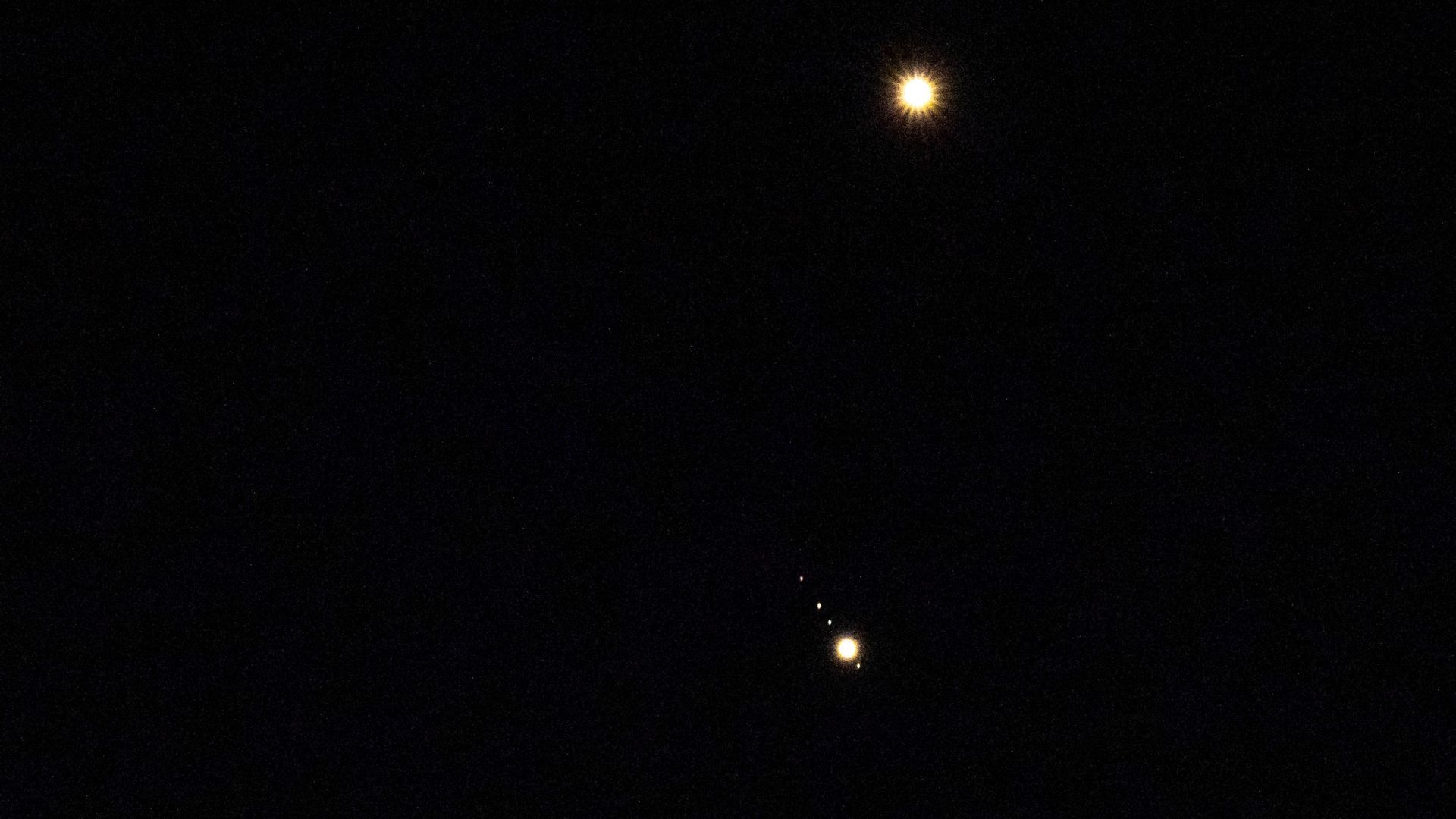
Capturing such an event presents unique challenges for amateur photographers. Because the planets are so bright compared to the surrounding twilight sky, shorter exposure times are required to prevent the light from “blooming” or washing out the details of the planets in digital sensors. Many observers utilized tripods and telephoto lenses to stabilize their shots, as the alignment occurred low on the horizon, where atmospheric distortion—often called “seeing”—can blur the image of the planets.
Looking Ahead: Future Conjunctions
Opportunities to view a Venus-Jupiter conjunction remain relatively infrequent. While the next major planetary alignment will occur on November 15, 2026, featuring Jupiter and Mars at a distance of 1.2 degrees, the next Venus-Jupiter pairing will not be easily observable. According to FOX Weather, the August 2027 conjunction will place the planets too close to the sun for safe viewing. Enthusiasts will likely have to wait until November 2028 for the next favorable opportunity to witness the two brightest planets meet again.
This follows our earlier report, Moon, Venus, and Jupiter Align Tonight in Rare Celestial Spectacle.
The study of planetary motion has been central to astronomy for millennia. Since the time of Johannes Kepler, who formulated the laws of planetary motion, scientists have been able to predict these conjunctions with high precision centuries in advance. These events serve as a reminder of the clockwork nature of the solar system, where the complex interplay of gravity and orbital mechanics results in predictable, yet visually striking, patterns in the night sky.
Find more reporting in our Technology section.
