
The U.S. military has completed its second day of strikes on Iran, targeting surveillance systems, communication networks, and air defense sites, according to U.S. Central Command (Centcom). The operation, described as a response to “Iran’s unwarranted and continued aggression,” marks a significant escalation in the ongoing conflict, with Iran retaliating by attacking U.S. bases in Bahrain, Kuwait, and Jordan, the BBC reported.
US Strikes and Justification
Centcom confirmed the strikes, which involved precision munitions from the U.S. Marine Corps, Air Force, and Navy, targeting Iranian infrastructure deemed a threat to U.S. forces and commercial shipping in the region. “The military was striking for stalled negotiations. U.S. Central Command said in a social media post that the military was striking,” a statement from Centcom read, emphasizing its commitment to “vigilant, lethal, and ready” operations. The action follows the downing of a U.S. Apache helicopter near the Strait of Hormuz, which the administration blamed on Iran.

President Donald Trump, who has repeatedly warned of further strikes, claimed the attacks were not a “restart of all-out war” but a targeted response to Iranian aggression. “They’ve taken too long to negotiate a deal that would have been great for them,” he wrote on social media, vowing that Iran would “pay the price.” However, U.S. officials have sought to downplay the significance of the strikes, stating that the April ceasefire remains intact and that negotiations are ongoing.
The Guardian noted that the attacks this week represent the most severe breach of the truce since its inception, with Trump’s defense secretary, Pete Hegseth, signaling that future strikes could be “strong and clear” if necessary.
Iran’s Retaliatory Actions
Iran’s Islamic Revolutionary Guard Corps (IRGC) claimed responsibility for attacking U.S. bases in Bahrain, Kuwait, and Jordan, describing the strikes as a “crushing and decisive” response to American military actions. The IRGC reported destroying four U.S. targets, including an F-35 fighter jet hangar in Jordan, though authorities in Bahrain, Kuwait, and Jordan stated all projectiles were intercepted without casualties. “Iran’s unwarranted and continued aggression” was the justification provided by the U.S., while Iran framed its actions as a defense of sovereignty.

Iran’s Foreign Ministry spokesperson, Esmaeil Baghaei, confirmed that a Qatari delegation was mediating discussions in Tehran to de-escalate tensions. “Iran has never negotiated under threats and pressure and will never submit to pressure or question,” Baghaei stated, reflecting the country’s skepticism of prolonged diplomacy. Al Jazeera’s Tohid Asadi noted that Iranian officials view the U.S. rhetoric as “the same old tune,” emphasizing their resolve to resist perceived coercion.
Al Jazeera highlighted the Gulf states’ concerns, with officials describing Iran’s strikes as an attack on their territorial integrity. “They see this as a war that they’ve been dragged into against their will,” said Osama Bin Javaid, a reporter in Doha.
Regional and Global Implications
The conflict has intensified regional tensions, with the Strait of Hormuz at the center of the crisis. Iran has leveraged its ability to disrupt oil shipments, a move that has driven global crude prices above $93 a barrel—a 25% increase since the war began. Trump claimed the U.S. has secretly bypassed Iranian radar systems to smuggle oil through the strait, though no independent verification of his “100 million barrels” figure has been provided. Capt. Tim Hawkins of Centcom stated that U.S. forces “communicate and coordinate” with commercial ships in the area but did not confirm military support.
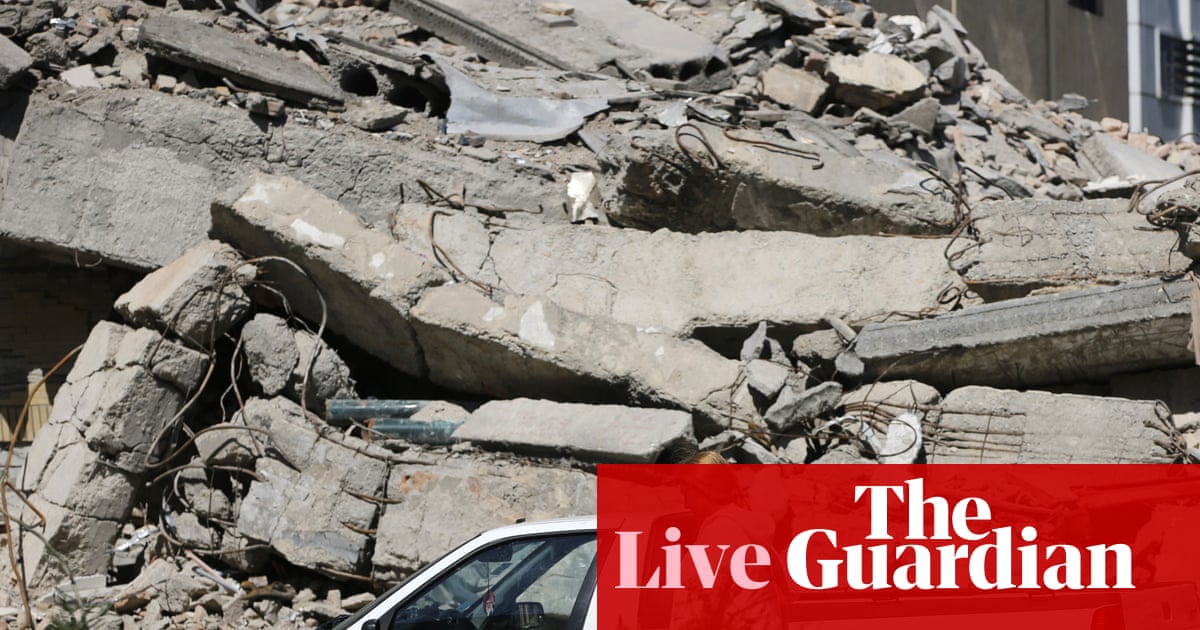
Analysts suggest Iran’s strategy reflects a new doctrine of “proportional, harsh, and swift” retaliation. “Otherwise, a new normal is established, one in which the United States can strike at Iran with more or less impunity,” said Trita Parsi of the Quincy Institute for Responsible Statecraft. The U.S. and Iran appear to be navigating a precarious balance, with both sides seeking to avoid full-scale war while advancing their strategic goals.
NPR noted that Iran’s resilience has been tested by weeks of bombing, but its leverage over the Strait of Hormuz remains a critical bargaining chip. The U.S. faces domestic pressure to resolve the conflict, with Trump’s approval ratings and economic policies under scrutiny ahead of the midterm elections.
What Comes Next?
The immediate future hinges on the success of Qatari mediation and the willingness of both sides to de-escalate. However, the U.S. and Iran’s conflicting priorities—Washington’s push for a comprehensive deal versus Tehran’s insistence on sovereignty—pose significant hurdles. Analysts warn that the cycle of strikes could continue, with each side using kinetic actions to signal strength.
For the Gulf states, the conflict represents a dire threat to regional stability. “They see these Iranian attacks as attacks on their territorial integrity, their sovereignty,” said Bin Javaid.
Find more reporting in our News section.
