Persistent, uncontrollable hiccups can serve as a rare but significant warning sign of a brainstem stroke, according to neurologists and vascular surgeons. While most hiccups are harmless, medical professionals advise that when they occur alongside other neurological symptoms, they should be treated as a potential emergency requiring immediate medical evaluation.
The Connection Between Hiccups and Brainstem Strokes
Hiccups are typically caused by involuntary contractions of the diaphragm, a process coordinated by a reflex arc within the brainstem. In specific clinical cases, a stroke affecting the medulla—often categorized as a lateral medullary or Wallenburg stroke—can disrupt this reflex pathway.

“In rare cases, a stroke affecting this region — most classically a lateral medullary (Wallenburg) stroke — can disrupt that reflex and trigger persistent hiccups.”
Dr. Christopher Yi, MemorialCare Orange Coast Medical Center, via AOL
Because these strokes occur in the back of the brain, they often present differently than the “classic” stroke symptoms most people recognize, such as one-sided arm weakness or facial drooping. According to HuffPost, experts emphasize that hiccups alone are rarely indicative of a stroke, but they become a critical diagnostic clue when accompanied by other neurological abnormalities. The medulla oblongata is responsible for autonomic functions, including breathing, heart rate, and swallowing. When a vascular event disrupts blood supply to this area, the brain’s ability to regulate the diaphragm reflex can be compromised, leading to the repetitive, involuntary spasms identified as persistent hiccups.
Updated Stroke Care Guidelines and Treatment Windows
As of June 2026, the American Stroke Association has implemented updated guidelines designed to expand the timeframe for life-saving interventions. Physicians are increasingly utilizing advanced CT technology to identify patients who may still benefit from clot-busting medication beyond the traditional 4.5-hour window.

“The new guidelines indicate we can rely on our CT scans and CT angiograms to help identify those patients who may still have the clot-busting medication, even beyond the 4.5-hour time window.”
Dr. Robert Jones, Ascension Medical Group, via WBAY
These CT angiograms allow clinicians to measure cerebral blood flow, specifically looking for a “penumbra”—an area of brain tissue that is at risk but not yet infarcted. If blood flow takes more than six seconds to reach tissue, it indicates an obstruction. By identifying this state, doctors can attempt to salvage brain function even when the exact onset time of the stroke is unknown, a common scenario for patients who wake up with symptoms. This shift in protocol represents a move toward personalized stroke care, where the physical state of the brain tissue—determined by imaging—takes precedence over the rigid time-based metrics that historically restricted eligibility for thrombolytic therapy.
Recognizing Symptoms and Reducing Risk
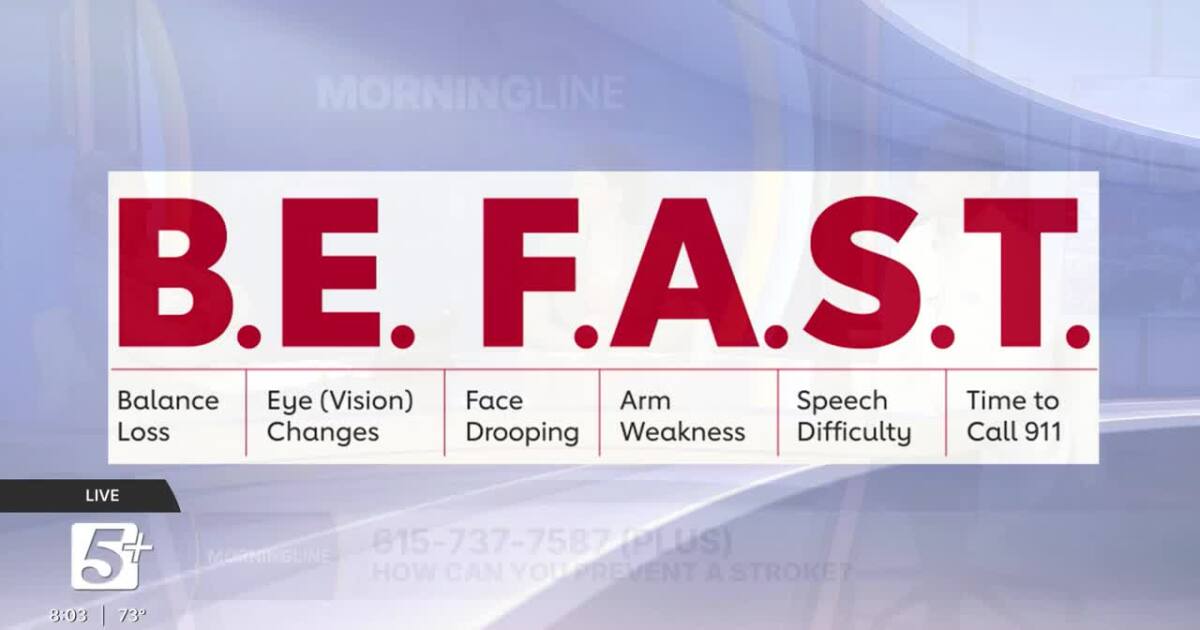
Medical experts continue to promote the BE FAST acronym to help the public identify the most common indicators of a stroke.
- Balance: Sudden loss of coordination.
- Eyesight: Changes in vision, such as double or blurry sight.
- Face: Drooping on one side.
- Arm: Weakness or numbness.
- Speech: Slurred words or difficulty speaking.
- Time: The urgent need to call emergency services.
Beyond these primary signs, physicians like Dr. Adeel Popalzai of Pomona Valley Hospital Medical Center note that patients should remain vigilant for severe, sudden-onset headaches. With stroke now ranking as the fourth leading cause of death in the United States, according to WBAY, preventative measures—such as managing blood pressure, cholesterol, and blood sugar—remain the most effective defense. The pathophysiology of strokes, whether ischemic (clot-based) or hemorrhagic (bleed-based), often involves long-term vascular degradation that can be mitigated through consistent primary care engagement.
For those in regions like Middle Tennessee, where nearly 1 in 3 adults live with high blood pressure, local health organizations are focusing on education to bridge the gap between risk and action. As noted on News Channel 5 Nashville, while stroke is a leading cause of disability, up to 80% of cases are considered preventable through proactive health management and early symptom recognition. Public health initiatives in these regions emphasize that understanding one’s own baseline health—knowing numbers for blood pressure and cholesterol—is a fundamental component of stroke preparedness.
The complexity of stroke presentation, particularly in brainstem cases where symptoms like hiccups may occur, underscores the importance of clinical observation. Because the brainstem controls vital pathways, even subtle changes in neurological function can be early indicators of vascular distress. Medical institutions stress that the “Time is Brain” mantra applies not just to the classic signs of paralysis, but to any sudden, unexplained neurological shift. Patients with persistent, unexplained symptoms should consult their healthcare provider immediately to rule out serious underlying conditions. Engaging a qualified medical professional is the only way to obtain a definitive diagnosis and ensure that diagnostic imaging or neurological assessments are performed if a stroke is suspected.
Find more reporting in our Health section.
