
Kyiv’s skies turned into a warzone early Sunday as Russia unleashed its heaviest drone and missile barrage of the conflict, killing at least two civilians and wounding dozens in a strike that Ukrainian officials say included the hypersonic Oreshnik missile—Putin’s vaunted weapon designed to outpace any defense. The assault, which damaged residential buildings, schools, and government districts, came hours after Volodymyr Zelenskyy warned of an impending “combined strike” using the Oreshnik, a missile Moscow claims can destroy underground bunkers “three floors down” and travel at Mach 10. The attack marks the third use of the weapon in four years, deepening fears of escalation as Ukraine’s long-range drone strikes inside Russia force Moscow to retaliate with unprecedented firepower.
Why This Strike Is Different: The Oreshnik Factor
Russia’s deployment of the Oreshnik missile—named for the hazelnut tree, a nod to its “meteorite-like” speed—represents a strategic escalation. According to the CBC, President Vladimir Putin has boasted the weapon is “immune to any missile defense system,” framing it as a tool to force Ukraine into submission. The missile’s use in Kyiv isn’t just about destruction; it’s a message: Moscow is willing to gamble on a weapon that could set a global precedent for hypersonic strikes, emboldening other authoritarian regimes to follow suit. Zelenskyy’s warning about the Oreshnik’s “global precedent” isn’t hyperbole—it’s a direct appeal to Western allies to impose preemptive pressure on Russia before it normalizes such attacks.
This isn’t the first time the Oreshnik has been used. In November 2024, it struck Dnipro; in January 2026, it hit Lviv. But Sunday’s attack in Kyiv—where debris fell on a school in the city center and residential buildings were reduced to rubble—suggests Russia is testing the weapon’s psychological impact as much as its military effectiveness. The Guardian reports that Ukrainian air defenses destroyed 549 drones and 55 missiles, but the Oreshnik’s speed—10 times the speed of sound—makes interception nearly impossible. That’s why Zelenskyy’s call for “preventive” global pressure isn’t just about stopping this missile; it’s about preventing the normalization of such weapons in future conflicts.
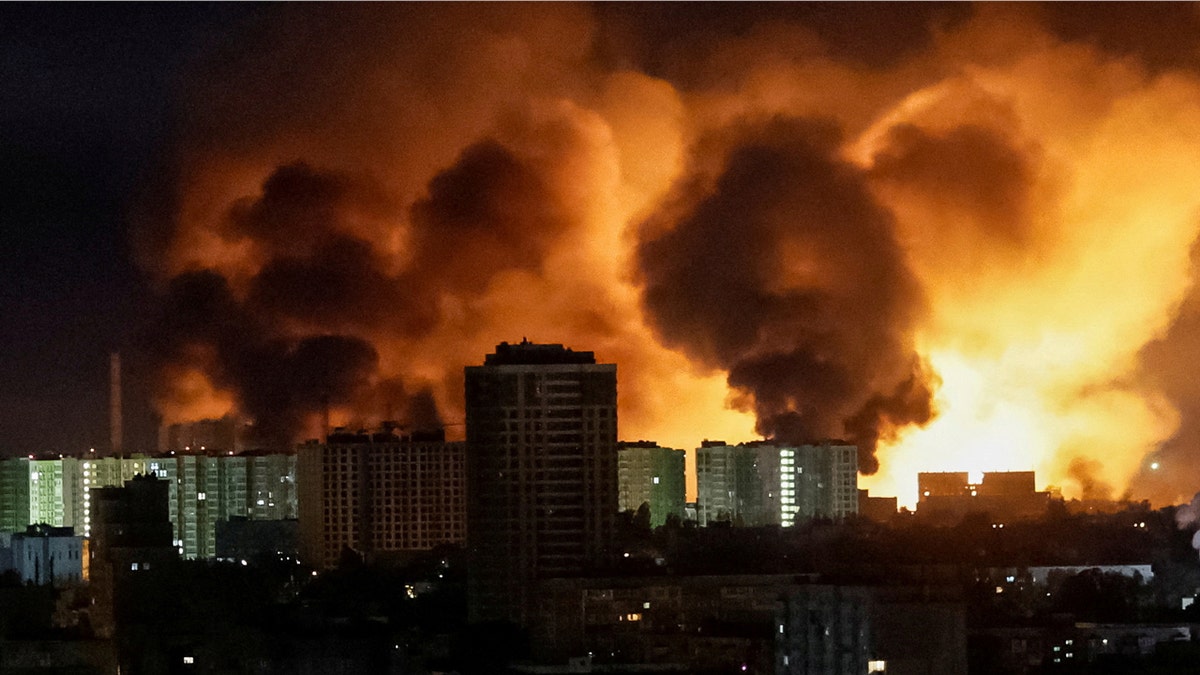
The Ukrainian General Staff confirmed in a statement that the Oreshnik missile struck the Shevchenkivsky district, where a residential building was destroyed and a school sustained significant damage. The Ministry of Defense attributed the attack to Russia’s “deliberate targeting of civilian infrastructure,” a claim Moscow has yet to deny or confirm. Meanwhile, the Russian Ministry of Defense, in a statement carried by state media, described the strike as a “legitimate response” to Ukraine’s drone attacks on Russian territory, though it did not specify the use of the Oreshnik.
International reactions have been swift. The United Nations High Commissioner for Human Rights, Volker Türk, condemned the attack in a statement, calling it a “clear violation of international humanitarian law.” The European Union’s High Representative for Foreign Affairs, Josep Borrell, echoed these sentiments, stating that the use of hypersonic weapons against civilian areas “crosses a red line” and must be met with “unprecedented collective action.” The U.S. State Department, in a press briefing, warned that the deployment of such weapons could “escalate the conflict beyond control” and urged Russia to halt its strikes immediately.
“If Russia is allowed to destroy lives on such a scale, then no agreement will restrain other similar hatred-based regimes from aggression and strikes.”
—Volodymyr Zelenskyy, via The Guardian
The Human Cost: Civilians in the Crossfire
The numbers tell a story of deliberate targeting. At least two people were killed, and 20 wounded in Kyiv alone, according to The Guardian, with damage reported in four districts: Shevchenkivsky, Dniprovsky, and Podilsky. The attack wasn’t just about military infrastructure—it was about terror. A school in the city center caught fire, and residential buildings were reduced to rubble. Kyiv resident Svitlana Onofryichuk, who worked at a market hit by the strikes for 22 years, told CBC: “It was a terrible night, and there had never been anything like it in the entire war. I am very sorry that I have to say goodbye to Kyiv now—I am not staying there anymore.”
The human toll extends beyond Kyiv. Russia’s retaliation followed Ukraine’s drone strikes in Starobilsk, a Russian-occupied town in the Lugansk region, where at least 18 people died and 42 were wounded after a dormitory was hit. Ukraine’s Ministry of Defense stated that the strikes targeted Russian military infrastructure, including a drone production facility, but Moscow’s response—labeling it “inevitable and severe punishment”—shows how quickly the cycle of escalation spirals. The CBS reports that Ukrainian authorities and the U.S. Embassy had warned of a major attack 24 hours before it happened, yet civilians had little time to react. Air raid sirens blared through the night, but the sheer volume of drones (600) and missiles (90) overwhelmed even Kyiv’s robust defenses.
In a press conference, Kyiv Mayor Vitali Klitschko described the attack as “the most devastating since the beginning of the full-scale invasion,” emphasizing that the use of the Oreshnik was a deliberate attempt to “break civilian morale.” The Ukrainian Red Cross reported that emergency response teams were overwhelmed, with hospitals in the affected districts operating at full capacity. Meanwhile, the Russian Ministry of Defense claimed that only “military targets” were hit, though independent verification of these claims has not been possible due to ongoing hostilities.
- Kyiv’s districts hit: Shevchenkivsky, Dniprovsky, Podilsky (4 locations total)
- Casualties: 2 killed, 20+ wounded (Guardian); 5 wounded, 1 hospitalized (CBS)
- Weaponry used: 600 drones, 90 missiles (CBC); Oreshnik hypersonic missile (all sources)
- Defenses engaged: 549 drones destroyed, 55 missiles downed (CBC)
The Retaliation Cycle: Ukraine’s Drone Strikes and Russia’s Response
This attack wasn’t just about Kyiv. It was about Ukraine’s growing ability to strike deep inside Russia—a strategy that’s forcing Moscow to respond with brutal force. Over the past week, Ukraine launched one of its deadliest drone barrages in months, targeting a Russian drone unit in Starobilsk. Moscow’s response? A missile and drone assault on Kyiv that dwarfed anything seen since 2024. The CBS notes that Zelenskyy and the U.S. Embassy had issued warnings about a “combined strike” using the Oreshnik, but the scale of Sunday’s attack suggests Russia was determined to make a statement—regardless of the cost to civilians.

Ukraine’s Ministry of Defense confirmed that the drone strikes in Starobilsk targeted a Russian military base housing Shahed-136 drones, which have been used extensively in attacks on Ukrainian cities. The Russian Ministry of Defense, in a statement, accused Ukraine of “deliberately targeting civilian areas,” though no evidence was provided. The Ukrainian General Staff countered that the strikes were “precision attacks on legitimate military targets,” adding that Russia’s response was disproportionate and violated international law.
What’s clear is that Ukraine’s strategy of targeting Russian military infrastructure inside occupied territories is working—just not in the way Kyiv might have hoped. Instead of breaking Russian morale, it’s prompting Moscow to escalate with weapons designed to inflict maximum damage on civilian populations. The Oreshnik isn’t just a missile; it’s a psychological weapon, meant to demonstrate that Russia can strike anywhere, anytime, with impunity. That’s why Zelenskyy’s plea for “preventive” global pressure isn’t just about stopping this missile—it’s about preventing the next one.
“We are seeing signs of preparation for a combined strike on Ukrainian territory, including Kyiv, involving various types of weaponry.”
—Volodymyr Zelenskyy, via CBS News
Diplomatic Fallout and Global Reactions
The attack has sparked a diplomatic crisis, with Western allies condemning Russia’s actions and calling for urgent action. The North Atlantic Treaty Organization (NATO) Secretary General, Jens Stoltenberg, issued a statement urging Russia to “immediately cease all attacks on civilian areas” and warning that the use of hypersonic weapons could “fundamentally alter the nature of the conflict.” Stoltenberg added that NATO would convene an emergency meeting to discuss the situation and potential responses, including further sanctions and military support for Ukraine.
The United Nations Security Council held an emergency session on Sunday, with the United States proposing a resolution condemning Russia’s use of the Oreshnik missile and demanding an immediate ceasefire. Russia vetoed the resolution, but 13 of the 15 council members voted in favor, reflecting broad international condemnation. The International Criminal Court (ICC) announced it would investigate the attack for potential war crimes, citing “clear evidence of deliberate targeting of civilians.”
Meanwhile, China’s Foreign Ministry issued a statement calling for “restraint” from all parties, though it stopped short of condemning Russia. The statement read: “We urge relevant parties to avoid further escalation and return to negotiations.” This marked a shift from China’s previous neutral stance, as Beijing has increasingly faced pressure from Western allies to distance itself from Moscow. Japan’s Foreign Minister, Yoshimasa Hayashi, went further, stating that Russia’s actions were “unacceptable” and that Japan would “consider all options” to support Ukraine, including expanding military aid.
What Comes Next: Escalation or Negotiation?
The question now isn’t whether Russia will strike again—it’s when, and with what. The Oreshnik’s use in Kyiv is a warning: Moscow is willing to deploy its most advanced weapons to break Ukrainian resistance. But the attack also exposes a vulnerability. By targeting civilians, Russia risks isolating itself further on the global stage. Canada’s Prime Minister, Justin Trudeau, called the strikes “illegal” and urged Moscow to cease its “war of aggression,” a sentiment echoed by Western allies who see Russia’s tactics as a violation of international law.
Ukraine’s options are limited but not nonexistent. Kyiv could escalate further—targeting deeper into Russia with more drones or even chemical plants, a tactic it has used before to disrupt Russian supply chains. However, each strike risks drawing a heavier response. Alternatively, Ukraine could push for a diplomatic solution, using the Oreshnik’s use as leverage to force negotiations. The problem? Vladimir Putin has shown no interest in talks unless Ukraine surrenders. The Guardian reports that Zelenskyy is framing this as a moment for “preventive” pressure—meaning Western sanctions, arms supplies, and political isolation must tighten before Russia feels the need to escalate further.

In a press briefing, U.S. National Security Advisor Jake Sullivan stated that the U.S. would “consider all options” to counter Russia’s escalation, including providing Ukraine with additional air defense systems and intelligence support. Sullivan warned that the use of hypersonic weapons could trigger a “new phase” in the conflict, one that could involve direct NATO intervention if Russia targeted allied territories.
What’s certain is that the next 30 days will be volatile. Russia’s use of the Oreshnik isn’t just about Kyiv—it’s about sending a message to NATO, to China, to Iran: hypersonic weapons are the future, and no one is safe. If Moscow succeeds in normalizing such strikes, the consequences for global security could be catastrophic. For now, the focus remains on Kyiv’s ability to endure—and the world’s willingness to respond.
“Pressure must be put on Moscow so that it does not expand the war.”
—Volodymyr Zelenskyy, via The Guardian
Regional Implications and the Future of the Conflict
The escalation has sent shockwaves through Eastern Europe and beyond. Poland’s President, Andrzej Duda, announced that Poland would deploy additional troops to its eastern border and accelerate the delivery of advanced air defense systems to Ukraine. Duda stated: “Russia’s use of hypersonic weapons is a direct threat to the security of all European nations. We cannot allow this conflict to spread.”
In the Black Sea region, Turkey’s President, Recep Tayyip Erdoğan, condemned the attack but reiterated Turkey’s commitment to maintaining neutrality in the conflict. However, Erdoğan’s foreign minister, Mevlüt Çavuşoğlu, hinted at a potential shift, stating that Turkey would “reassess its position” if Russia continued to target civilian areas. Meanwhile, Romania’s Prime Minister, Marcel Ciolacu, announced that Romania would join NATO’s enhanced forward presence mission in the region, deploying additional troops to Moldova and Bulgaria.
The Baltic states—Estonia, Latvia, and Lithuania—have also ramped up their military preparedness. Estonia’s President, Alar Karis, warned that the conflict was “moving into a new and more dangerous phase,” and called for NATO to “demonstrate unity and resolve.” The three countries have requested emergency NATO meetings to discuss potential threats and coordinate responses.
In the Middle East, Israel’s Prime Minister, Benjamin Netanyahu, issued a statement expressing “deep concern” over the escalation. Netanyahu did not directly condemn Russia but warned that the use of advanced weapons in Ukraine could “set a dangerous precedent for other conflicts.” Iran, a key ally of Russia, has remained silent on the issue, though state media has praised Moscow’s “determination” in the face of Ukrainian attacks.
The stakes couldn’t be higher. Sunday’s attack wasn’t just another day in the war—it was a turning point. The question is whether the world will act before it’s too late. Zelenskyy’s call for “preventive” global pressure has gained traction, with Western allies pledging to tighten sanctions and increase military aid. However, without a unified front, the risk of further escalation remains high.
